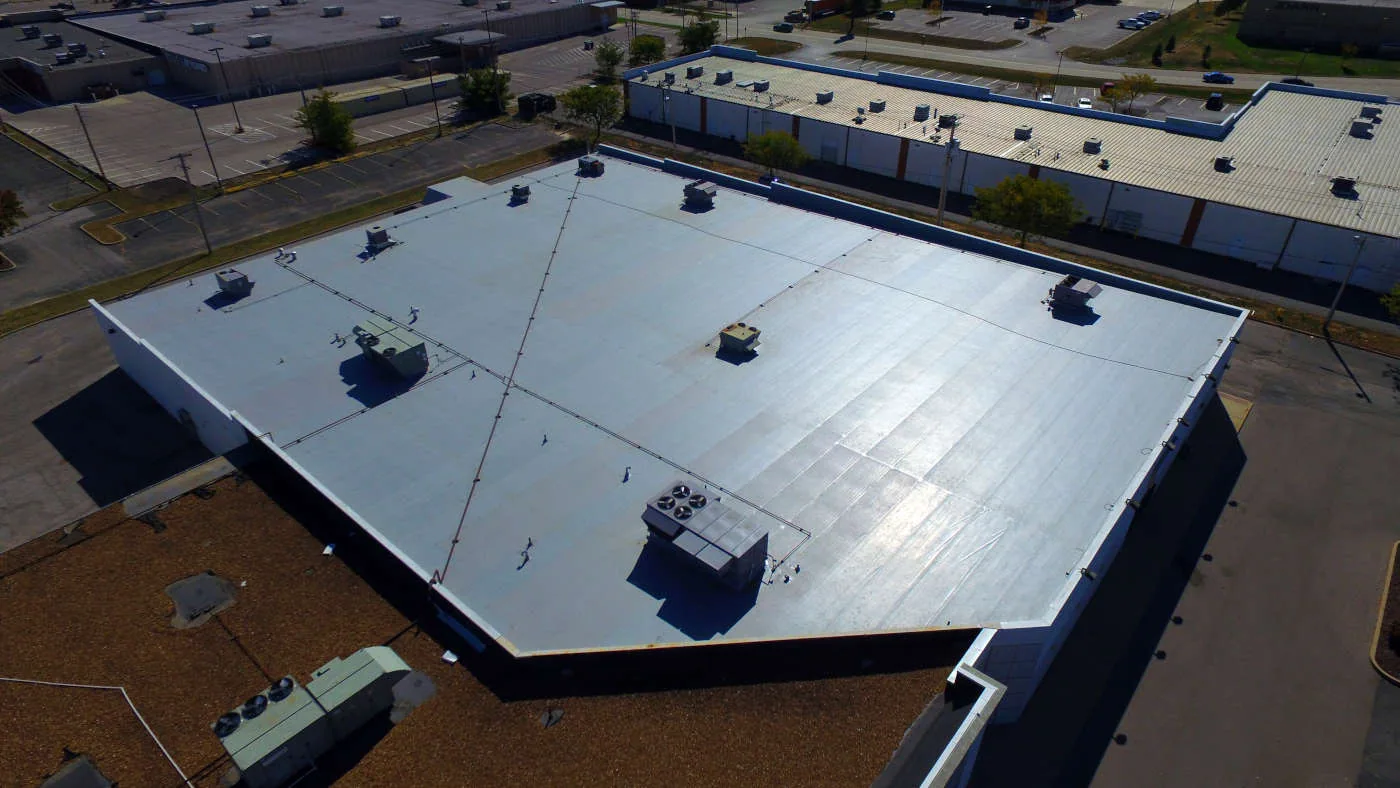
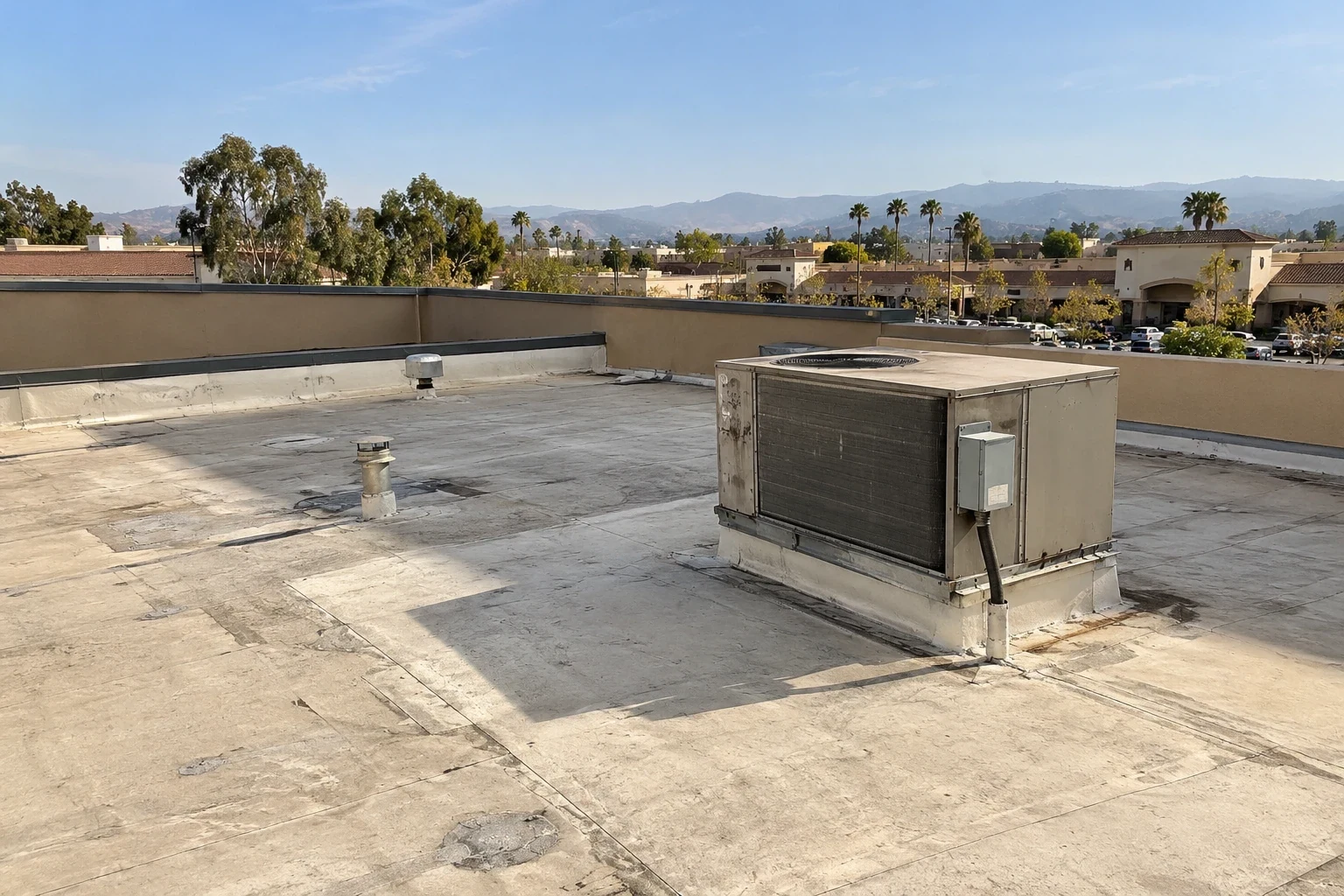
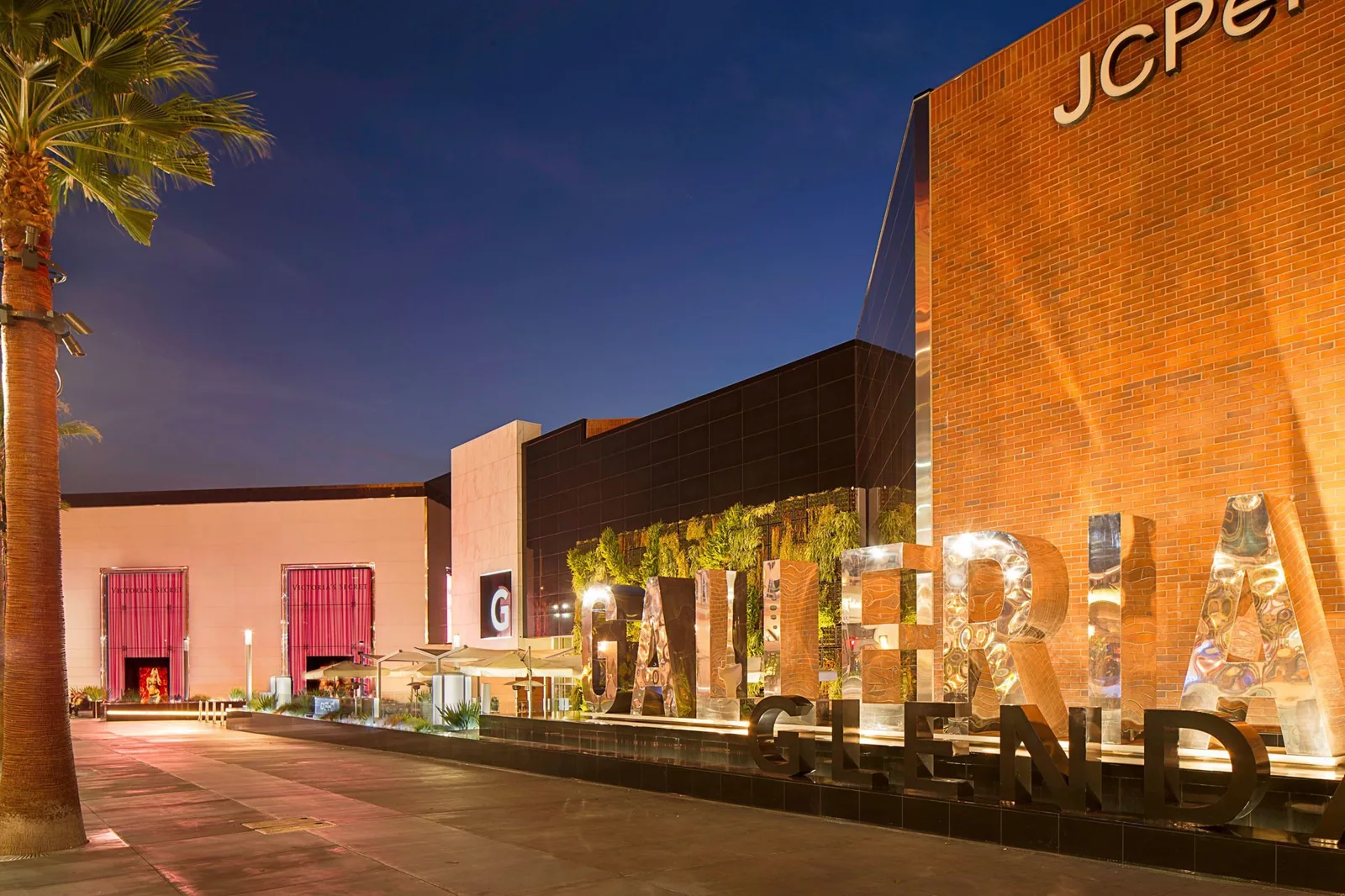
Downtown Glendale roofs often sit over shops, restaurants, offices and apartments all at once, so the repair has to be planned around the people below. We inspect the roof, explain what needs fixing and how we will get there, and give the asset manager a scope that puts tenant coordination right next to the construction cost. The new membrane is only part of it. Walls, rooftop equipment, the condition of the existing roof and any prep by other trades all need to be settled before materials are ordered.
Americana at Brand is the best-known mixed-use property downtown, combining retail, restaurants and residences. For any downtown building, we start with your building contact and the section of roof in question, and we plan around the occupied spaces and the hours work is allowed. A property elsewhere in the city, such as near the Glendale Transportation Center, gets its own inspection and plan.
Getting onto the roof may be easy, while getting materials there is not. We walk the delivery, storage and dumpster locations with your building representative, working around residents, deliveries and emergency exits. If there is little room to stage materials, we may need smaller deliveries or extra handling. Those costs go into the estimate because they change the labor it takes to finish the job.
When shops and apartments share a building, occupied building reroofing ties the work area to the specific units underneath. Management confirms work hours, tenant notices and access control. Your facility team reviews the products and methods, including any odor from adhesives. HVAC and other equipment are shut down or protected by the qualified contractors who maintain them. We plan our roof protection around those decisions.
A new tenant downstairs can change the schedule even when the roof work stays the same. Before opening the next section, we confirm what is going on below it. Materials, trash removal and any prep work by other trades have to fit the plan too. That way the manager is looking at the whole job, not finding out later that the price left out handling or tenant protection.
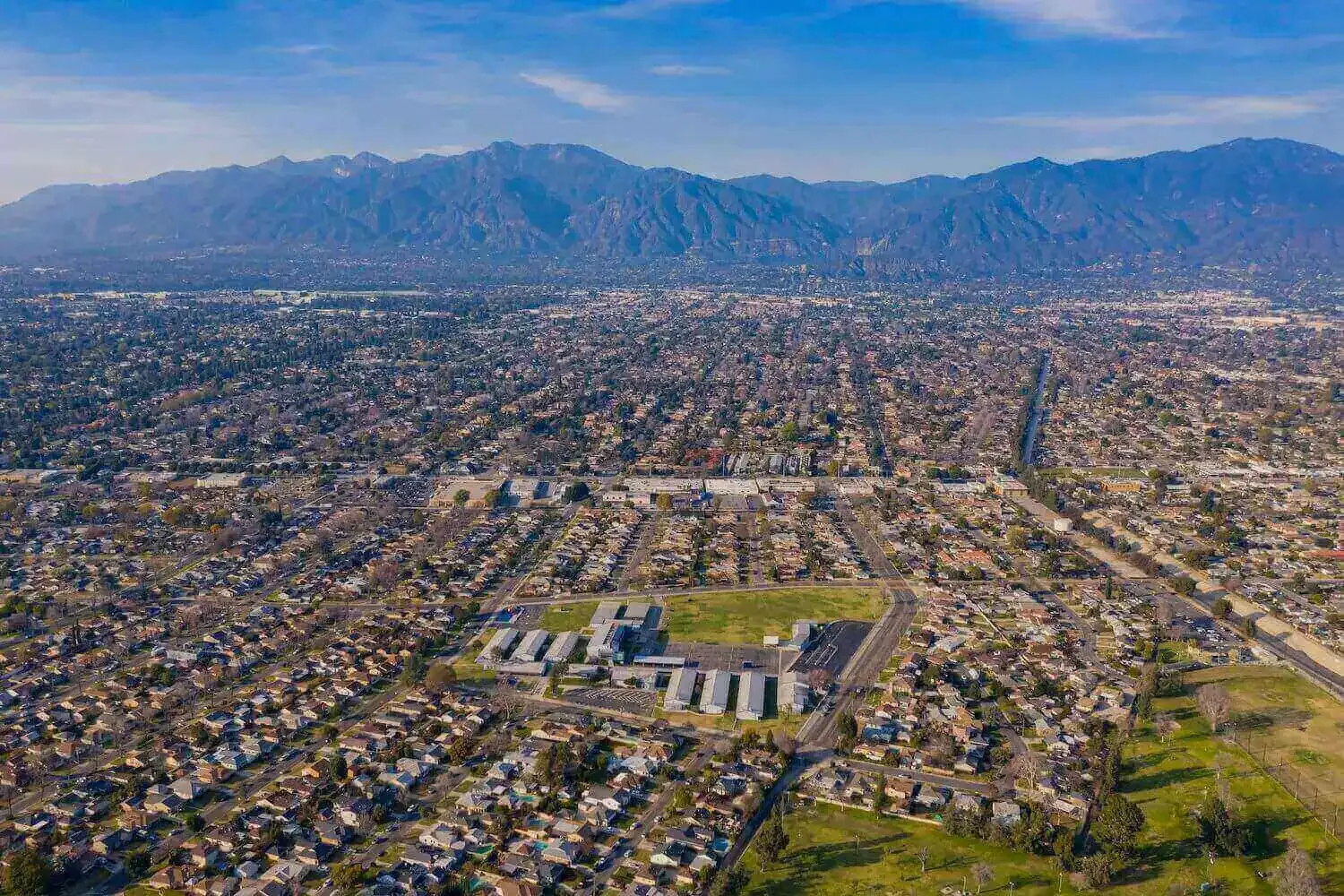
A leak beside a wall takes more than a photo of the stain. We look at the membrane, seams and the wall flashing the repair will tie into. Earlier patches and changes in material tell us where to look closer. Our photos show the problem along with recognizable rooftop landmarks. We compare drawings with what is really there and list any areas we could not reach.
Our commercial roof inspection starts by deciding what question a test needs to answer. A small core cut shows the layers, the condition of the insulation or how the roof is fastened at that spot. We photograph it and patch it the same day. If we suggest keeping or replacing a large area, we inspect enough of it to back that up. One sample tells us what to check next. It does not set the size of the whole job.
Infrared scans can be useful when the roof type and weather are right. HVAC units, shade and mixed materials all change surface temperatures, so we read the results carefully and confirm with cores. The findings set the repair area and any extra checks needed. You get a recommendation you can understand, not a colorful image passed off as the full answer.
A repair can stay small when the surrounding roof is in good shape to tie into. A coating needs a sound base and proper prep. A roof-over depends on the condition, fastening and strength of the existing roof. When those do not hold up, we price tear-off and a new roof. Each option is priced against the same problem, so you can see what you are getting for the money.
For retail properties, shopping center roofing includes the wall flashings, curbs and tenant coordination that affect price. Wall details take more labor than open roof. Thicker insulation can change drain heights and how equipment curbs line up. We price deck repairs and complicated details separately, so the manager can see why a small area can still be a sizable job.
Sometimes damage only shows up once the old roof comes off. We mark it, describe the extra work and send the quantity for approval. We also explain any effect on interior protection or the work schedule, and we photograph the repaired deck before the new roof covers it. That keeps the added cost tied to something management can see in the records long after the job is done.
When a rooftop unit is being replaced, the mechanical contractor and engineer give us the size and support requirements. We confirm there is room to flash it properly and build our part around their plan. If the unit moves, the old opening needs new decking or insulation and a patch. We name who handles each piece and check it before the new roof covers it.
Drainage work starts with the drains and the path water takes to get there. Clearing debris is often the fix. If water keeps sitting in a low spot, we check the slope and the layers underneath. Moving a drain or changing the slope needs a plumber and sometimes an engineer to confirm the details first. Routine cleaning and drain rebuilding are separate line items with separate approvals.
For interior leaks, we ask when and where it happened, and about the weather and any recent equipment service. In a mixed-use building, water can travel a long way under the membrane before it shows up in a unit. We inspect along that path. Condensation is only considered when the building's conditions support it. A confirmed roof problem gets a repair, and anything else goes to the right trade.
Glendale has hot, dry summers and gets most of its rain in the cooler months. We check the actual forecast and the condition of the roof surface before scheduling coatings or adhesives. Santa Ana winds make edge and perimeter flashing worth extra attention, though the fastening design comes from the roof system and project requirements. Permits go through the City of Glendale, and we confirm what your project needs before ordering materials.
A nearby building in the Glendale Galleria area or along the San Fernando Road corridor gets its own inspection and access plan. For an urgent leak, we first confirm safe access and what help we can get on site. Any temporary patch is recorded with its size, along with the permanent repair or extra testing still needed. Building management decides how to handle tenants and residents in the meantime.
When the job is done, our roof condition reports keep photos of the prep work and finished details, plus any approved changes. Remaining maintenance, equipment work or leak investigation is listed by location and who is responsible. Later visits are dated separately. The owner can explain what was spent and what comes next, with temporary patches clearly separated from permanent work.
Downtown jobs often involve shop entrances, apartments and offices on the same block. We look at your actual roof and tenants rather than treating the whole district as one property. The owner tells us where materials can be delivered and which spaces need protection. A building near Brand Boulevard may keep different hours upstairs and downstairs, so crane lifts and equipment work are scheduled before the crew arrives. In the rainy season, we plan each day so the roof is sealed before we leave. The finished areas and any open items go into the building file for the next manager or tenant buildout.
Tell us which building and roof problem need attention. We will inspect the roof and explain the repair in plain terms.
Other services, systems and conditions Glendale owners often review alongside this one.
Scope, conditions and planning details for Glendale commercial buildings.
Material deliveries, staging space and protecting occupied units all add labor. We plan them up front and include them in the estimate before the schedule is set.
Often, yes, if the membrane around it is in good shape. We check the surrounding roof and how the repair will tie in before recommending it.
We need evidence that the existing roof is dry, well fastened and strong enough to stay. That usually means several core samples across the area.
Curbs, supports and decking around equipment often need to be ready before we can roof. We name who handles each item and check it before covering it.