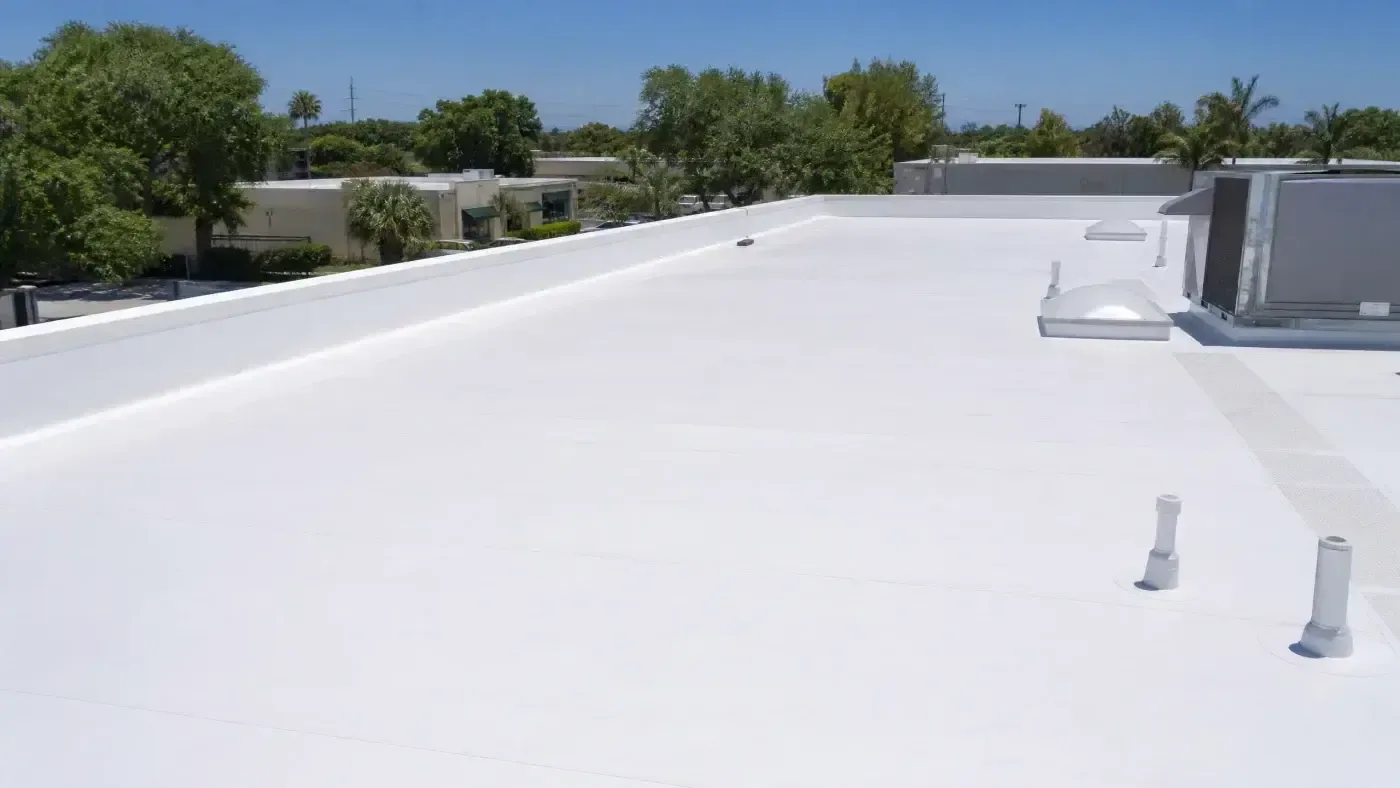
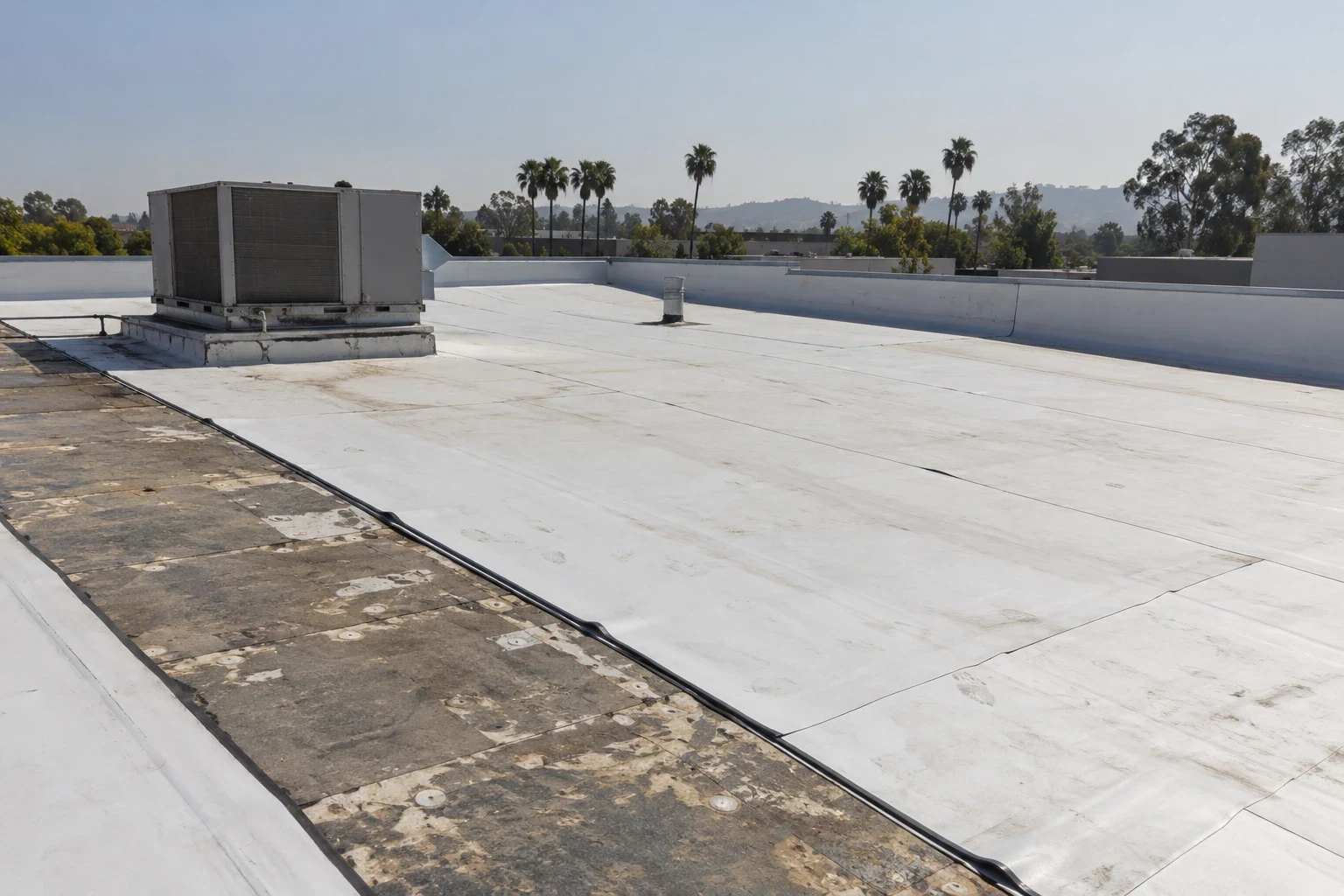
A retail owner weighing work on a built-up roof needs the layers explained before comparing prices. The asset manager should know what stays, what comes off and how the new roof ties into walls, curbs and drains. A single lump-sum roof allowance does not make those choices clear.
Built-up commercial roofing in Glendale, CA, is a multi-ply system of felts and bitumen, finished with gravel, a cap sheet or a coating. Products and application methods vary. We inspect the actual roof and talk through the owner's plans, then describe the prep, details and operating plan. Each recommendation ties the cost to what we documented and notes where we still need more evidence.
Modified bitumen roofing uses factory-made sheets with its own installation method, and PVC roofing is a single-ply membrane with heat-welded seams. When comparing options, the owner should see the prep and full detail work for each, not just a surface price.
We review installation records and past repairs where they exist. Different sections of the roof often have different histories. The building's age does not tell us what layers are on the roof today or what shape they are in.
Our inspection report says what we covered and what we could not see. Gravel surfacing hides much of the membrane, and an overview photo cannot show the hidden layers or the deck.
When core samples are appropriate and approved, we note why and where we took them. Cores show the build-up at those points, and we use them as part of the overall review rather than assuming a few cuts represent every section.
We measure the actual roof areas and details. Floor area is not a roof quantity. Different roof levels, additions and old alterations can each need their own prep.
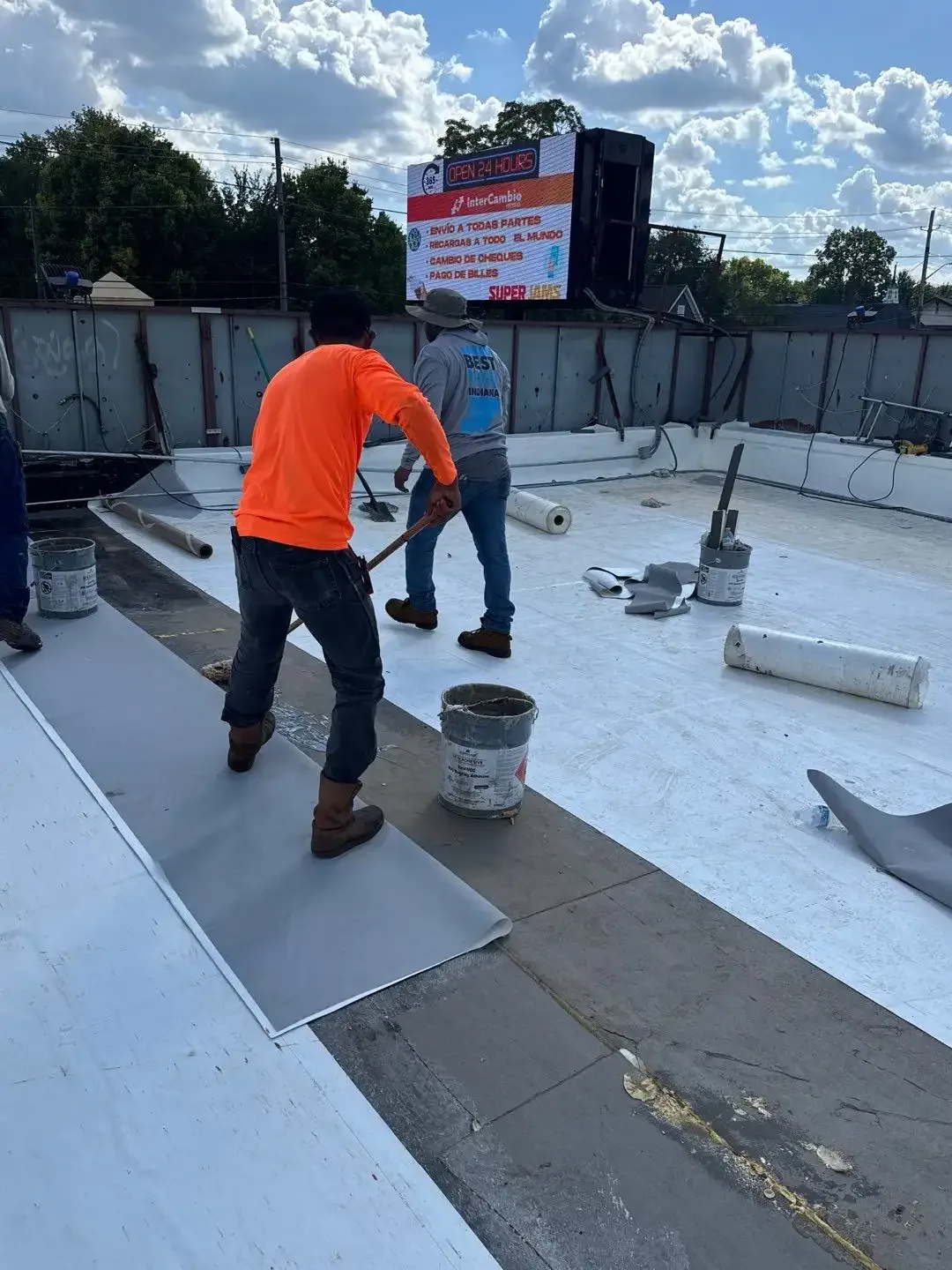
Cracking, bare spots in the gravel, blisters or failed flashings call for repair or a closer look. We describe what we saw and where. One visible problem does not prove the whole roof is wet or that full replacement is unavoidable.
For an interior leak, we compare the roof and nearby walls with the leak history. Water often travels before it shows up inside. Timing helps guide the search, but it does not rule out condensation or a plumbing source.
Infrared scans can point to wet insulation under the right conditions, but they need careful interpretation and confirmation with cores. We keep the scan's coverage and limits next to any repair quantity.
Where a commercial roof repair is the right answer, we specify the materials and the measured area. We explain any related issues outside that repair. There is no universal number of patches that decides when a roof should be replaced.
We compare realistic options against what we found and the owner's plans. A local repair, a recover over the existing roof and a full tear-off each have different prep and disruption, and we explain those differences.
A roof recover requires checking moisture, the number of existing layers, attachment and code limits. Cores are part of that evidence, but they cannot answer every question about what can stay.
When commercial roof replacement is chosen, we define how deep the tear-off goes and which areas are included. Deck problems may show up once the roof is open, so the estimate gives management a clear way to approve added work.
Measured quantities are listed separately from allowances. The owner can see what new information could change each line item. A big unexplained contingency makes it hard to compare one bid with another.
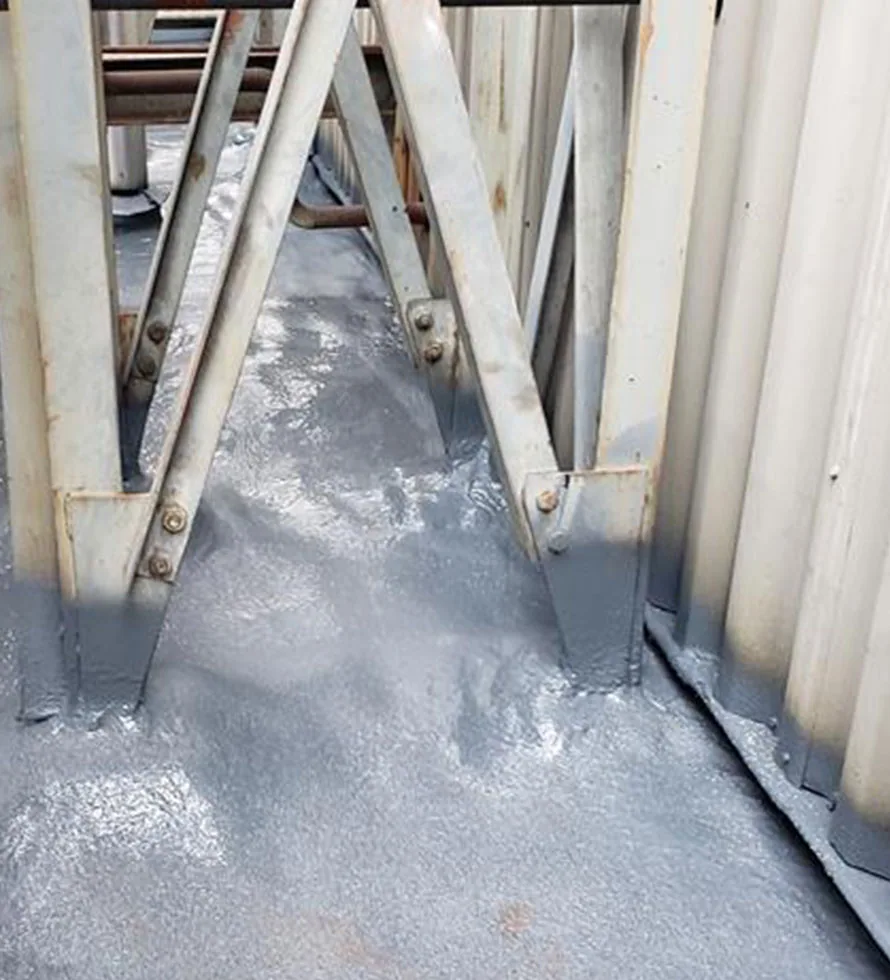
The specification names the ply sheets, the bitumen or adhesive, the application method and the surfacing. Built-up roofing is not one standard method, so the actual products and manufacturer instructions define the work.
The surface underneath has to be ready. It may need cleaning, repair or a separation layer. A new roof cannot make a bad deck or an unresolved structural issue acceptable.
If the system uses hot asphalt from a kettle or torch-applied sheets, we set up a fire safety plan with the building and our crew, including fire watch and fuel handling. A general claim about crew experience is no substitute for those controls.
Surface and weather conditions on the day control the work. Glendale's summer heat helps with scheduling but is not a rule for installation. Material temperature and a plan to finish each section matter more than daylight hours.
Curbs, pipes and walls need flashing details that match the new system. Repairs to curbs or equipment may change the prep, and any work for other trades is identified before the details are installed.
Our roof insulation and cover board scope names the products and how they are attached. Insulation we keep must be checked first, since the surface of the roof does not tell us what is underneath.
We coordinate edge metal, coping and gutters with the wood nailers and the membrane. A price for metal alone can leave important prep undefined, so the approved details are written into the specification and estimate.
We check drains and finished roof heights. Adding layers does not fix a low spot or a poorly placed drain, and measurements or design input may be needed for drainage changes.
For buildings in the Galleria District off West Broadway, we meet with the property and tenant contacts to agree on delivery routes and a realistic work window, rather than relying on a general retail calendar.
Buildings in the San Fernando Road area of south Glendale have their own staging and truck access, which we set with the facility contact. The neighborhood does not tell us the roof or operating plan.
Glendale's hot, dry summers and cool-season rain give a broad picture, but the forecast and product requirements set the actual schedule. Santa Ana winds can affect access and material handling.
Asphalt fumes near air intakes need the building's HVAC staff to decide on shutdowns. Sensitive rooms and food areas are handled with the operator, and we plan protection for unfinished areas and how changes will be communicated.
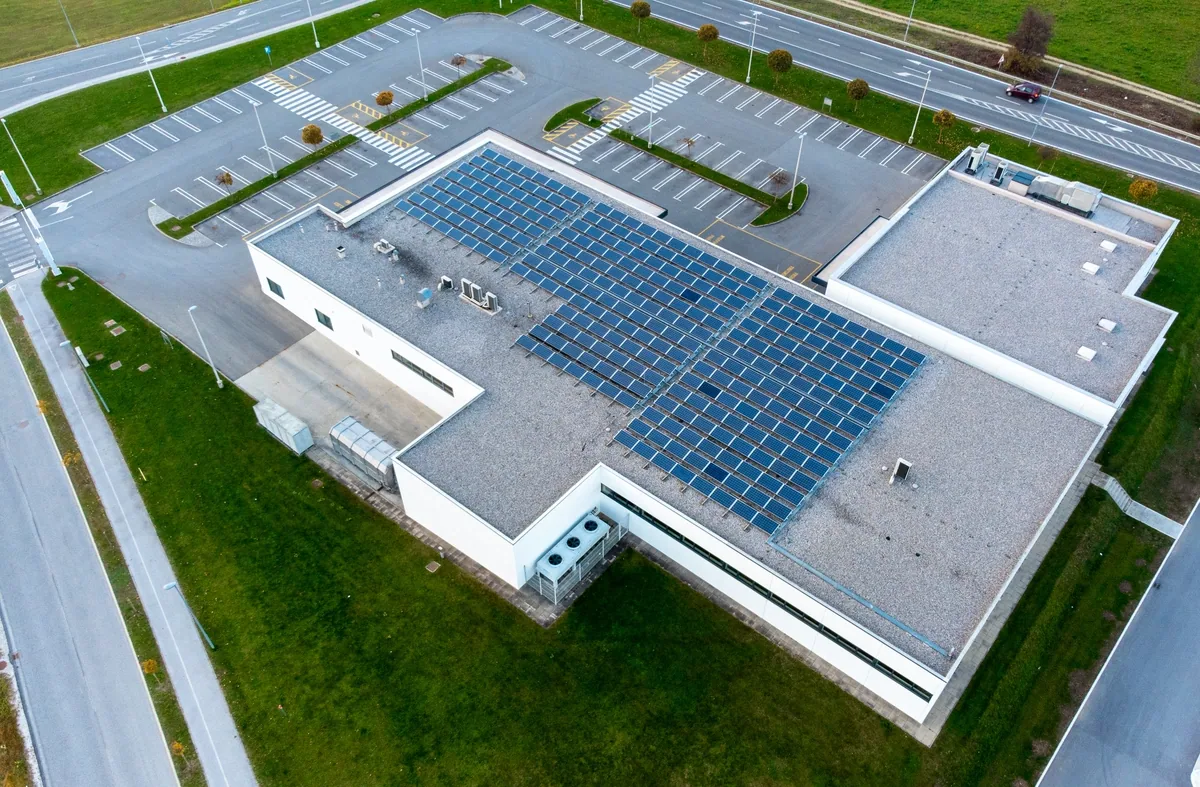
We compare bids on prep, insulation, plies, surfacing and details as a complete scope, along with material handling and equipment work. Two bids both described as built-up can hide big differences in work and cost.
We keep quality checks, photos and approved changes by location, and record how any hidden problem was resolved. Where extra deck or insulation work was approved, its quantity and location are recorded so future crews can tell new work from old. Any area we could not reach is noted so it can be checked on a later visit. A photo of the finished surface cannot show every hidden component.
We review the issued warranty terms and keep the installed-product information. Maintenance and alteration rules come from those documents, not from the roof type.
Regular maintenance keeps the condition and repair history current. Each recommendation names the next task and the evidence behind it, so management can connect future spending to documented work.
Built-up roofs have layers beneath the surfacing that cannot be judged from a single crack or blister. We inspect drainage, surface splits and flashing, then use an opening where the deck or insulation condition would change the recommendation. The scope should state which plies are removed, which remain and how the new work ties to walls and drains. Gravel can affect access and cleanup, so we coordinate debris control with the building below. A contractor should not infer roof condition from the building's age alone. We keep the layer description and repair locations in the final file. It gives the next inspection a reference if a core or leak repair exposes the roof.
A built-up roof in Downtown Glendale may sit above mixed-use spaces; a San Fernando Road industrial roof may have a different occupancy pattern. Selective openings and the verified layer build-up guide the recommendation for each property.
Send us your roof records and operating restrictions. We will explain what testing makes sense, what we would install and a clear scope for the work.
Other services, systems and conditions Glendale owners often review alongside this one.
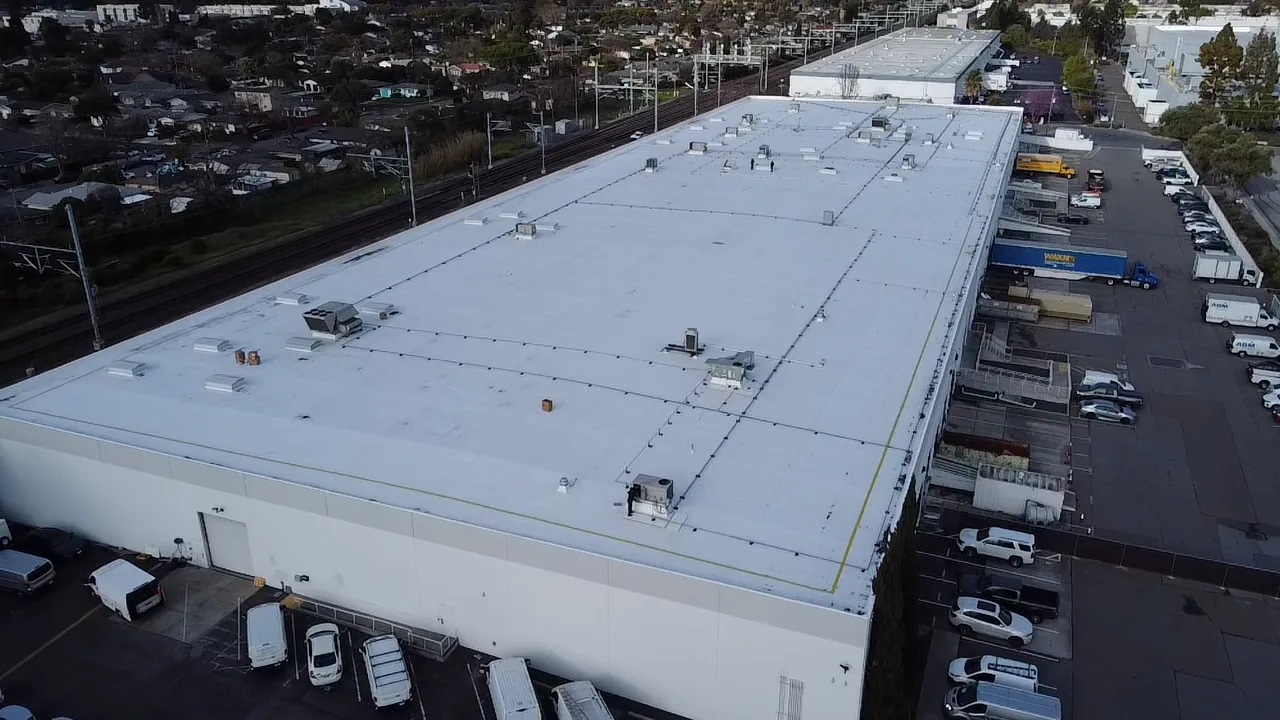
Scope, conditions and planning details for Glendale commercial buildings.
No. Gravel and cap sheets hide what is below. We use records and core samples where needed, and note where each sample was taken.
No. We assess the specific problem and whether it points to wider damage. A repair may be enough, and one symptom does not prove the whole roof has failed.
No. The ply sheets, bitumen, application method and surfacing vary. The fire safety and site controls follow the specific system chosen.
Compare prep, insulation, plies, surfacing and details, and look at which items are measured versus allowances. Material handling and other trades' work should be included too.