Get Answers Fast

Send the Building Details

Request an
Assessment

Call Our Team

555-555-5555
Request an
Assessment
555-555-5555

Commercial Roof Inspection

A creative office near Brand Boulevard may need a roof opinion before a tenant alteration or purchase moves ahead. The asset manager needs to know what was actually examined and which question remains open. A collection of photographs is useful only when those distinctions are clear.

Commercial roof inspection in Glendale, CA develops a condition record for the building and the decision at hand. We review accessible materials and details, available history and relevant reported problems. The findings identify supported next tasks in plain terms. Concealed conditions, structural capacity and future costs need suitable evidence rather than an assurance based on one visit.

The purpose and examination scope

Start with the owner's question. A recurring leak, planned equipment change and purchase review can need different emphasis. Define the roof areas and relevant documents before arranging access so the inspection supports an actual decision.

Obtain available installation and repair information. Different elevations or additions may have separate histories. A building's age cannot establish its current roof age, materials or condition.

Set feasible coverage and state access limits. Some details may be obscured by equipment or unavailable under current operating conditions. An inaccessible location should be recorded as a review limit, not quietly included in a whole-roof assurance.

At a commercial office, ask the operator about sensitive rooms and equipment restrictions. The meeting should identify who approves roof and interior access. The scope can then distinguish examination from any separate equipment or investigation task.
Commercial Roof Inspection in Glendale, CA

The accessible roof condition

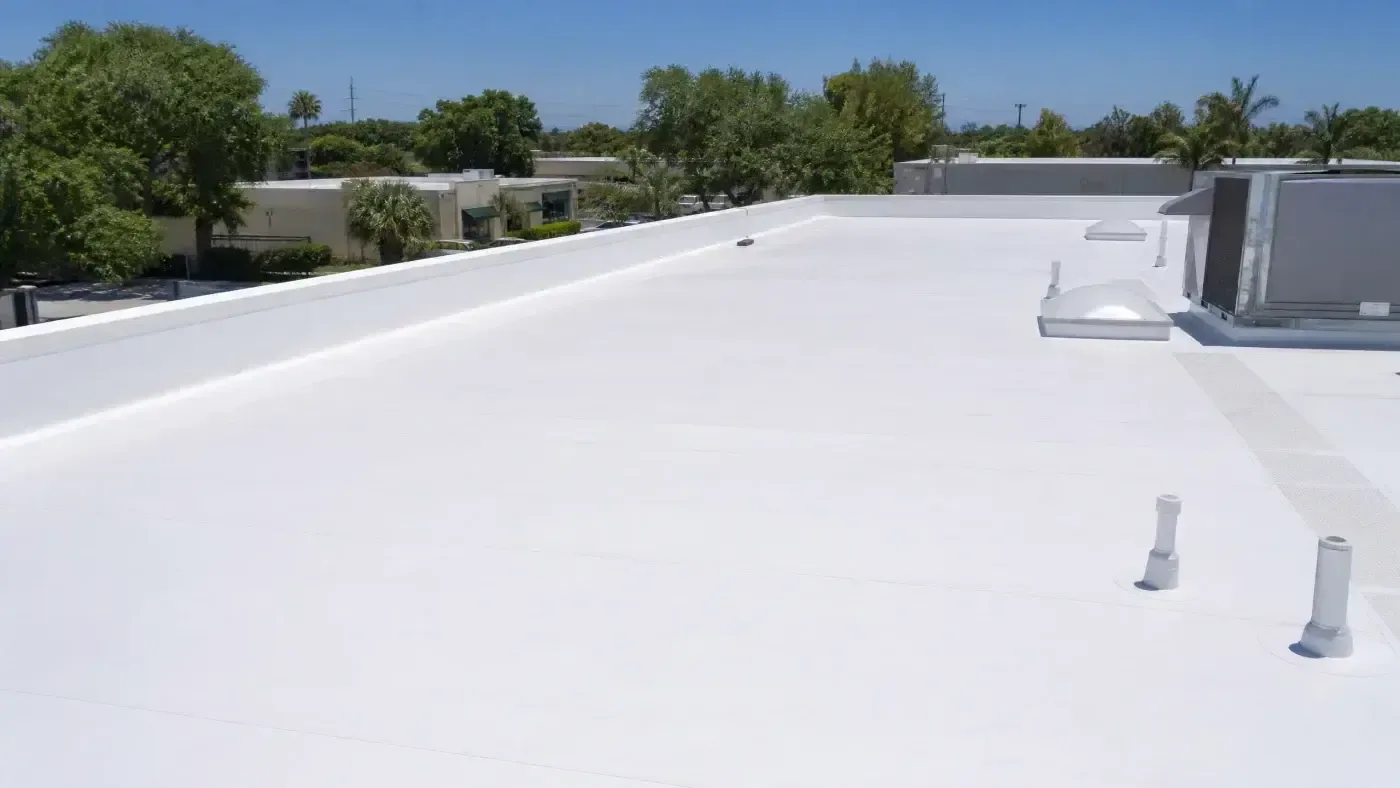
Review the membrane or covering, connections, penetrations and perimeter details using suitable methods. Material and condition affect the examination. Probing, sampling or manipulating components is not an automatic procedure for every roof.

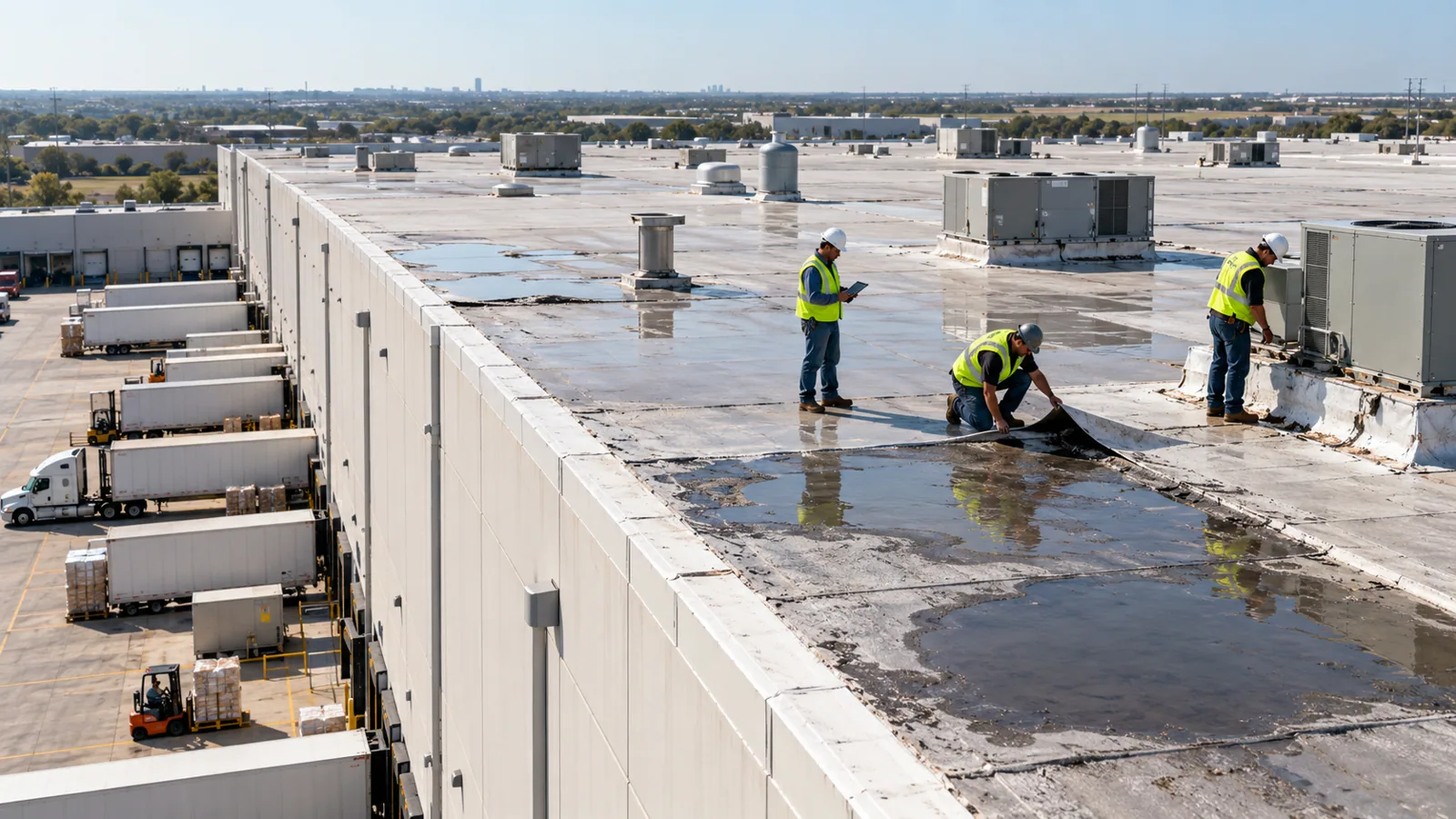
Record observed damage and its location. Surface wear, an open detail or a loose component may justify correction or further review. Those observations do not independently establish the condition of every underlying layer or a fixed remaining life.

Review outlets and relevant retained-water evidence. Appropriate debris removal belongs in a defined task if included. A visible outlet check cannot establish all downstream piping capacity or settle roof slope design.

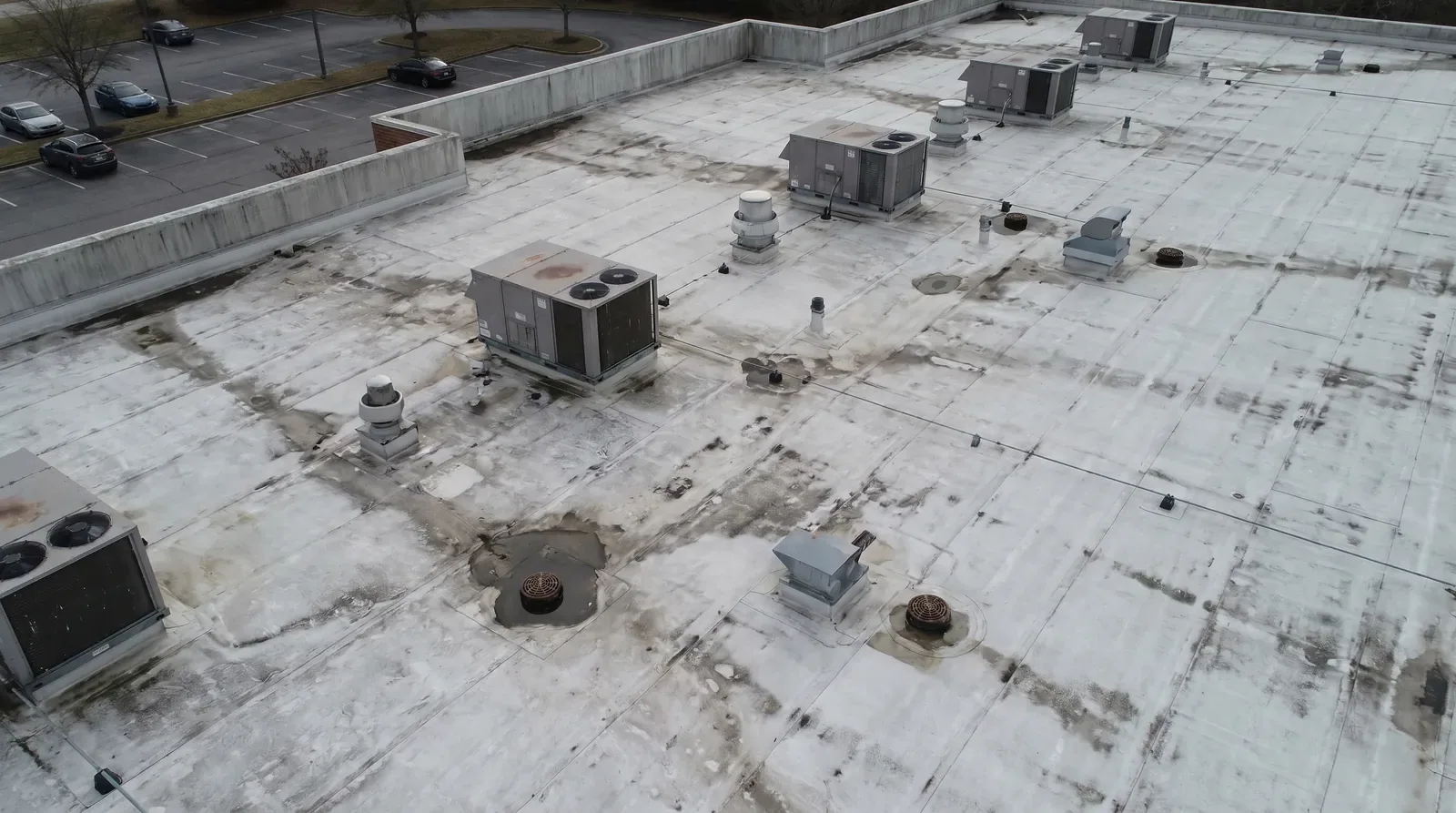
Where aerial images can improve coverage, identify their purpose. The images supplement accessible examination and show their own limitations. They do not establish that every seam is bonded or every concealed component is sound.

The concealed questions

Explain what additional investigation could answer where observations are insufficient. A softer-feeling area can prompt review without proving moisture quantity, age or structural safety. Access should follow suitable controls for the actual condition.

An infrared survey can provide interpreted patterns when conditions and the assembly permit useful examination. Appropriate confirmation is needed for moisture findings. Thermal contrast alone is not a complete concealed-material map.

Samples should have a defined purpose and suitable authorization. Record locations and local findings. A small set of samples cannot automatically settle retained-layer suitability, roof-wide moisture or every recover requirement.

Structural and equipment concerns need responsible qualified review. Roofing observations can provide useful inputs. The report should identify the task and contact rather than present inspection as independent approval of capacity or operating safety.
Commercial Roof Inspection in Glendale, CA

The tenant alterations

Review available information on rooftop units, pipes, supports and prior tenant work. A new component can change an interface or service route. Do not presume later alterations are always worse than original construction; examine the actual details.

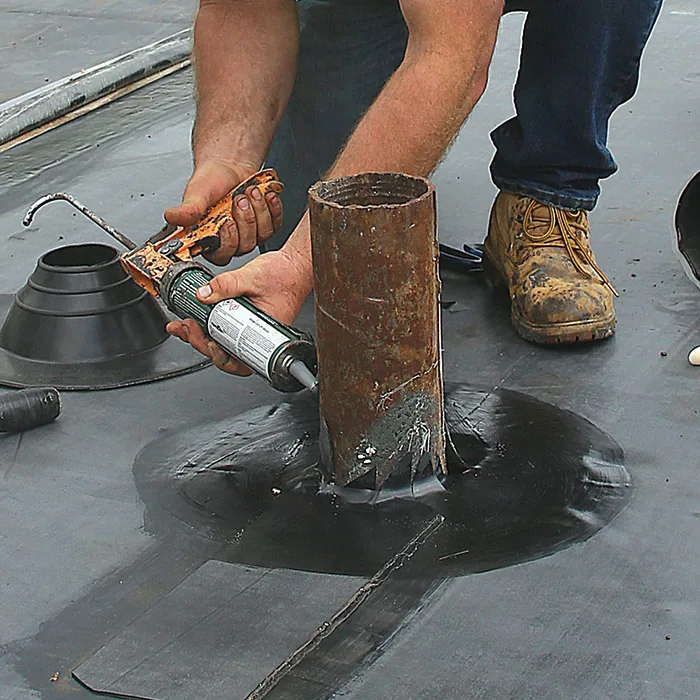
Compare penetration connections with installed materials and geometry. Where equipment or glazing is implicated, assign its question to the appropriate trade. An apparently abandoned component needs operator confirmation before removal is recommended.

Measure relevant clearances where another roof layer or equipment change is proposed. Typical details may not match the finished elevation. The report should identify needed coordination before procurement depends on an assumed interface.

A maintenance scope can address defined findings when suitable. Keep routine cleaning distinct from repair and investigation. The owner should know which line item resolves a condition and which merely supplies more evidence.

The local setting

Glendale has hot dry summers and cooler-season rain. These patterns help organize a seasonal review, while actual surface condition establishes the findings. Avoid attributing every crack or open connection to heat without supporting evidence.

Regional Santa Ana events provide a reason to assess reported or observed wind-related changes. They do not prove damage at a particular property. Document displaced materials and relevant before-and-after evidence where available.

At a Galleria District property, establish the actual building and roof sections under review. The mall's West Broadway setting helps coordinate the visit. Retail floor area does not supply roof dimensions or establish the installed construction.

For a building along San Fernando Road, obtain approved access and staging from the operator. South Glendale planning identifies this corridor among its distinct areas. The individual facility supplies its actual restrictions and examination arrangements.

The findings and owner decision

Organize findings by building and location. Pair photographs with a description of observed condition, interpretation and the recommended next action. The owner should be able to distinguish a supported repair from an unconfirmed cause needing investigation.

Priorities should follow consequence, condition and feasible next work. Avoid assigning a universal replacement threshold from patch count or surface appearance. Explain the recommendation and any information that could change it.

A condition report can preserve these findings for budgeting. Estimates should state scope and assumptions rather than promise fixed future costs. If pricing follows another review task, identify that dependency.

For capital planning, show repair and broader options where supported. Management can compare timing and operating needs with the condition basis. Lender acceptance and transaction decisions remain separate processes. Future expenditure still depends on conditions and the work ultimately selected.
Commercial Roof Inspection in Glendale, CA

The visit and follow-up record

Arrange access around confirmed operator requirements and current conditions. The work plan should identify suitable controls and weather limitations. An inspection request cannot establish immediate arrival or unrestricted roof access.

For a transaction, share the actual deadline early. Due diligence review needs feasible examination and clearly stated limits. The owner should know whether further access or testing remains necessary before relying on the findings.

Retain the date, coverage, observations and completed tasks. Later visits can compare the same locations where evidence permits. A changed photograph needs context before it is interpreted as deterioration or proof of a particular cause.

The closing recommendation should name the next useful task and its responsible party. That gives the manager something concrete to approve or schedule. Future work records can then connect the original finding to investigation, correction and later condition.

An inspection in Downtown Glendale may need to account for mixed-use access, while a San Fernando Road industrial property can have different receiving and equipment routes. Record the actual building and roof area before assigning follow-up.

Let us look at the building with you

Share the address, roof history and decision you need to make. We will arrange a suitable examination and explain the findings, limits and next practical task in plain language.

Related Roofing Pages

Other services, systems and conditions Glendale owners often review alongside this one.
aerial images
Drone Roof Inspection

Scope, conditions and planning details for Glendale commercial buildings.

infrared survey
Infrared Roof Moisture Survey

Scope, conditions and planning details for Glendale commercial buildings.

penetration connections
Skylight and Penetration Flashing

Scope, conditions and planning details for Glendale commercial buildings.

maintenance scope
Preventive Roof Maintenance

Scope, conditions and planning details for Glendale commercial buildings.

Questions About Commercial Roof Inspection

Define feasible coverage and record access limits. Some areas can require equipment coordination or another method. The report should identify what was examined and what remains unavailable.

Visible findings and records contribute evidence. Additional investigation may be necessary. Samples or thermal patterns require appropriate interpretation and documented limits.

Use a defined scope and stated assumptions for estimates. Separate investigation from supported repair quantities. Future cost and transaction outcomes depend on further decisions and conditions.

Use facility needs, actual findings and relevant events to set the next review. Seasonal conditions can inform planning. Avoid a universal schedule detached from the roof and its operating requirements.

Select suitable methods for the actual question and obtain necessary authorization. Destructive work and other testing need appropriate controls and closure arrangements. They are not automatic parts of every inspection.

ServicesRoof SystemsProperty TypesIndustriesService AreasDamage RepairCapabilitiesManufacturersAboutRequest a Roof Assessment555-555-5555
Call555-555-5555