Get Answers Fast

Send the Building Details

Request an
Assessment

Call Our Team

555-555-5555
Request an
Assessment
555-555-5555

Roof Recover and Overlay

Plenty of owners of flex-industrial buildings along San Fernando Road ask the same question when the roof starts failing: can we go over it instead of tearing it off? A recover skips most of the demolition and disposal, but it only works when the roof underneath is dry, well attached and sitting on a sound deck.

A roof recover in Glendale, CA means installing new insulation, cover board and membrane over the existing roof. Before we recommend one, we check for trapped moisture, count the existing layers, look at how the old roof is attached and confirm the structure can carry the added weight. Our estimate spells out the prep work and the detail changes at curbs, walls and drains, so you can compare it fairly with a full replacement.

The retained roof

We start with whatever drawings and repair records exist. Many Glendale buildings have been added onto, so one roof area may have a different membrane or a different number of layers than the area next to it.

A roof inspection covers the whole surface and notes what we could and could not see. A roof that looks fine from the hatch can still be wet or loose underneath, which is why the walk-through is only the first step.

Core cuts tell us what layers are there and whether they are dry at that spot. We pick core locations on purpose, near drains, around old leak areas and in sections that look different. A handful of dry cores is good news, but it does not clear the entire roof by itself.

We measure the roof itself, not the building's floor area. Parapet heights, level changes, curbs and drains all go into the takeoff, because each one adds labor and material that a square-foot price would miss.
Roof Recover and Overlay in Glendale, CA

The project eligibility review

California's building code limits how many roof layers can stay in place and when an existing roof must come off. We check the actual layer count and condition against those rules rather than going by a rule of thumb.

New insulation, cover board and membrane add weight. On older buildings, or where heavy rooftop units already sit on the deck, we bring in a structural engineer to confirm the framing can carry the recover.

For permits submitted on or after January 1, 2026, Glendale uses its 2026 Building and Safety Code, which adopts the 2025 California codes with local amendments. We confirm the permit requirements for your address and scope with the city before the work is scheduled.

Buildings near the Verdugo Mountains or other hillside areas may fall in a mapped fire hazard zone, which can affect what roof assembly is allowed. We check whether your parcel is affected rather than guessing from the neighborhood, and the approved choices go into the specification and the price.

The moisture evidence

Wet insulation is the main reason a recover fails. Covering it traps the water, it keeps rotting the deck and loosening the fasteners, and the new membrane can blister from below.

An infrared moisture survey, done on a clear evening after a sunny day, shows areas that hold heat differently and are likely wet. We confirm those areas with cores or moisture probes before calling them wet.

When the survey turns up wet sections, those areas get torn out and replaced to match the surrounding roof before anything goes over the top. If the wet area turns out to be a large share of the roof, a full tear-off usually makes more sense.

A partial tear-off with a recover over the rest can work well. The key is a clean edge between the two areas, matching insulation thickness so the new surface stays flat.
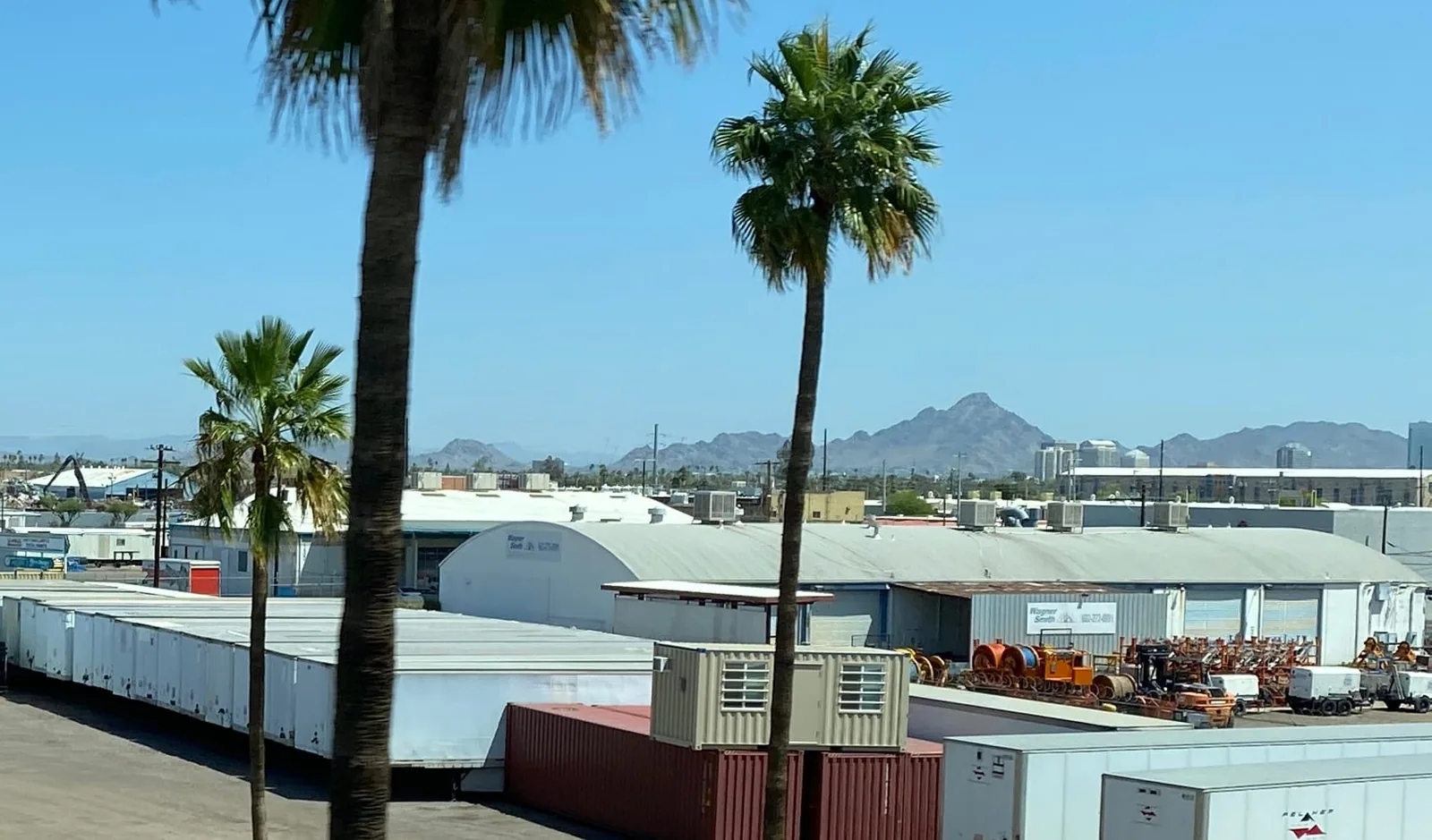
Roof Recover and Overlay in Glendale, CA

The new assembly

Most recovers here use a layer of insulation or cover board over the old roof, then a new single-ply membrane, either mechanically fastened or adhered. Which combination fits depends on the old surface, the deck type and the wind uplift requirements, and the proposal names each product.

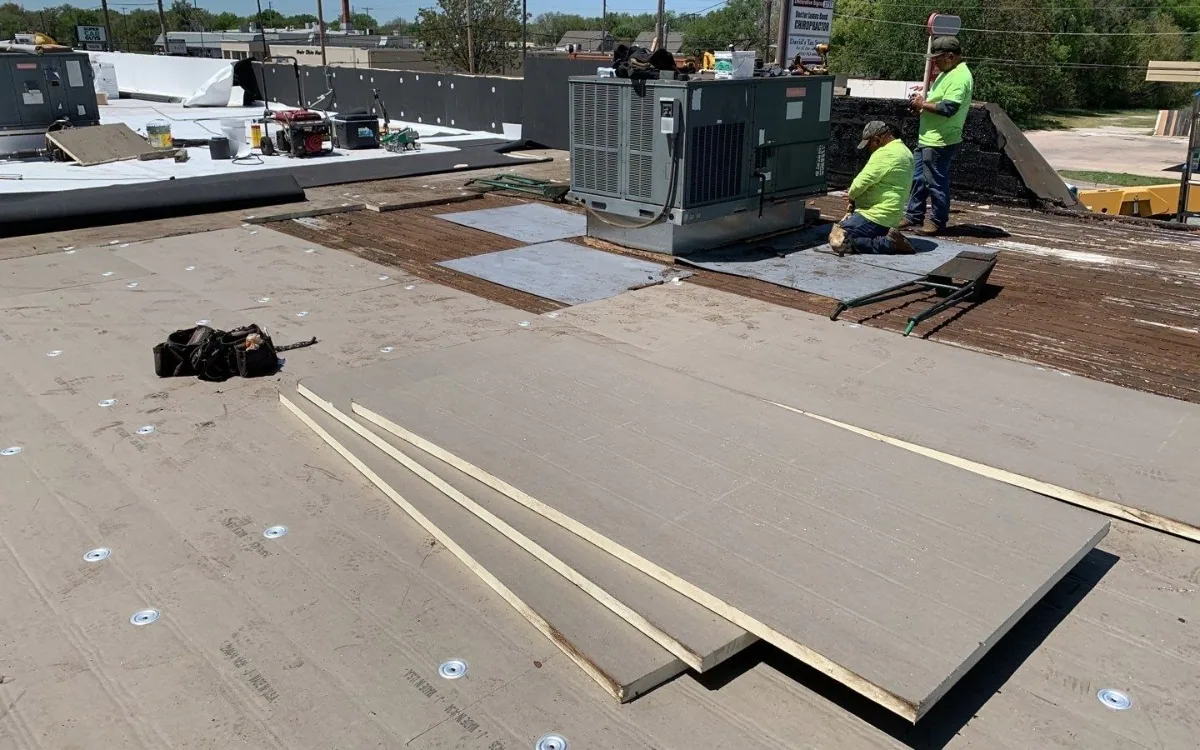
The insulation and cover board layer does two jobs: it gives the new membrane a smooth, clean surface and it adds insulation value. Old gravel may need to be scraped off, blisters cut out and loose patches removed first. A coated roof may need cleaning or a separation sheet, depending on the coating.

A TPO roof is a common choice for recovers in Glendale because it is light, reflective and has heat-welded seams.

On metal buildings, a metal roof retrofit can mean a new membrane over the old panels with filler insulation, or a new framed metal roof installed above them.

The finished elevations and details

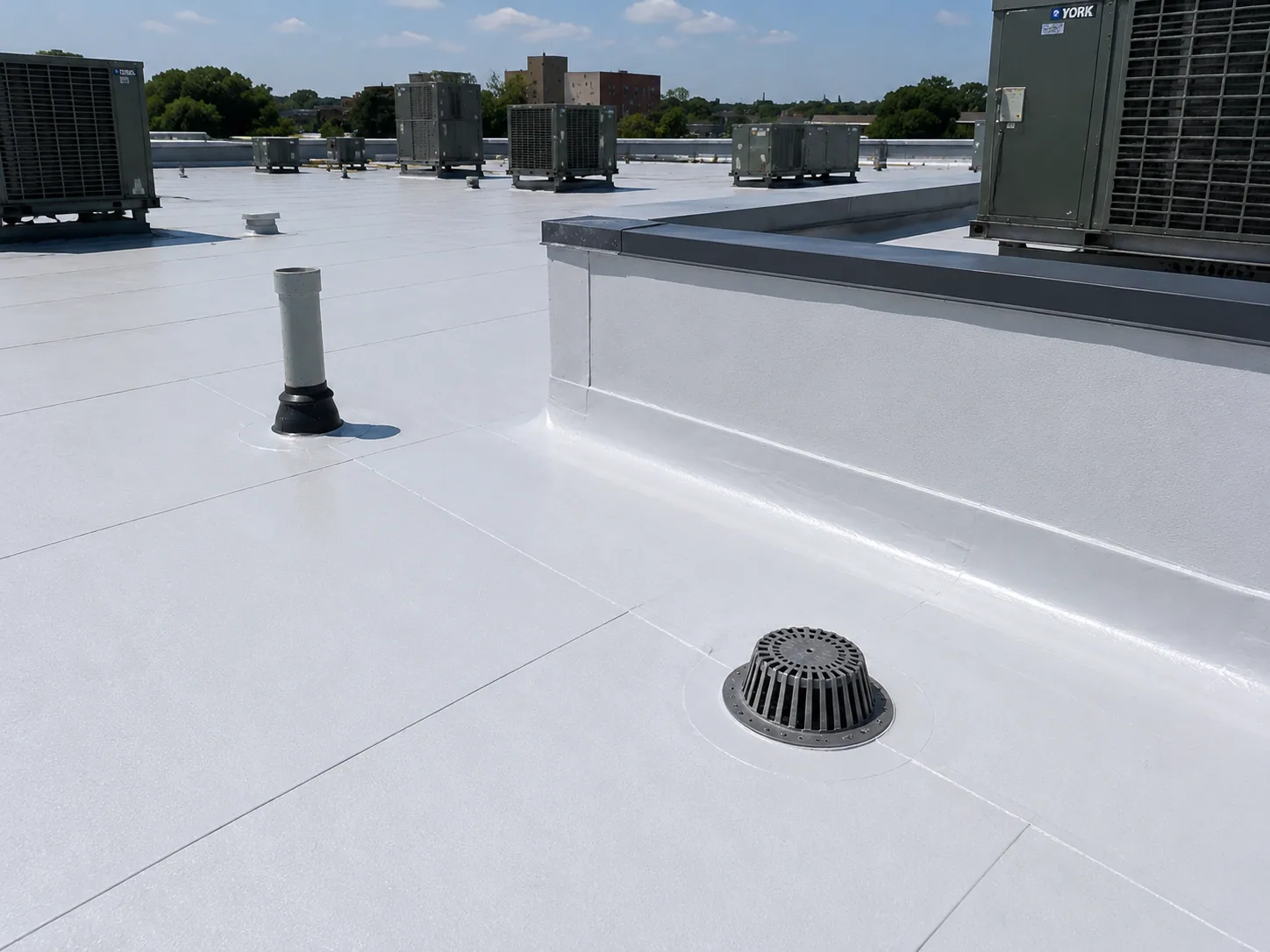
Adding a few inches of insulation and membrane raises the roof surface. At curbs, door thresholds, walls and drains that can leave too little flashing height. We measure each of those points and flag the ones that need to be raised or rebuilt.

Rooftop units often need their curbs raised during a recover. That means the mechanical contractor disconnects and lifts the unit, the curb gets extended, and the roof is flashed back up to it. We schedule that work with your HVAC and electrical contractors so units are not down longer than necessary.

A recover does not fix poor drainage on its own. If water ponds today, it will pond on the new membrane too, unless we add tapered insulation or move a drain.

Edge metal, coping and wall flashing usually come off and get replaced to suit the new roof height. We price that metal work with the membrane so there is no gap in the estimate where the new roof meets the edge.

The Glendale operating plan

For a San Fernando Road building, we work out the crane or hoist spot, the truck route and where materials can be staged without blocking loading docks.

Near the Glendale Galleria and along West Broadway, deliveries and noisy work usually have to fit around retail hours and tenant traffic. We meet with property management on site to learn the building's actual rules instead of assuming them.

Glendale's hot, dry summers and mostly winter rain make the long dry season the easier time to run a recover. When Santa Ana winds blow, we keep loose materials tied down and stop work if handling large sheets becomes unsafe.

Adhesive odor can reach rooftop air intakes, so we agree with building engineering on when units can be shut down or their intakes protected. If we open the roof and find something unexpected, such as rotted deck, we tell you the same day along with the cost before we continue.
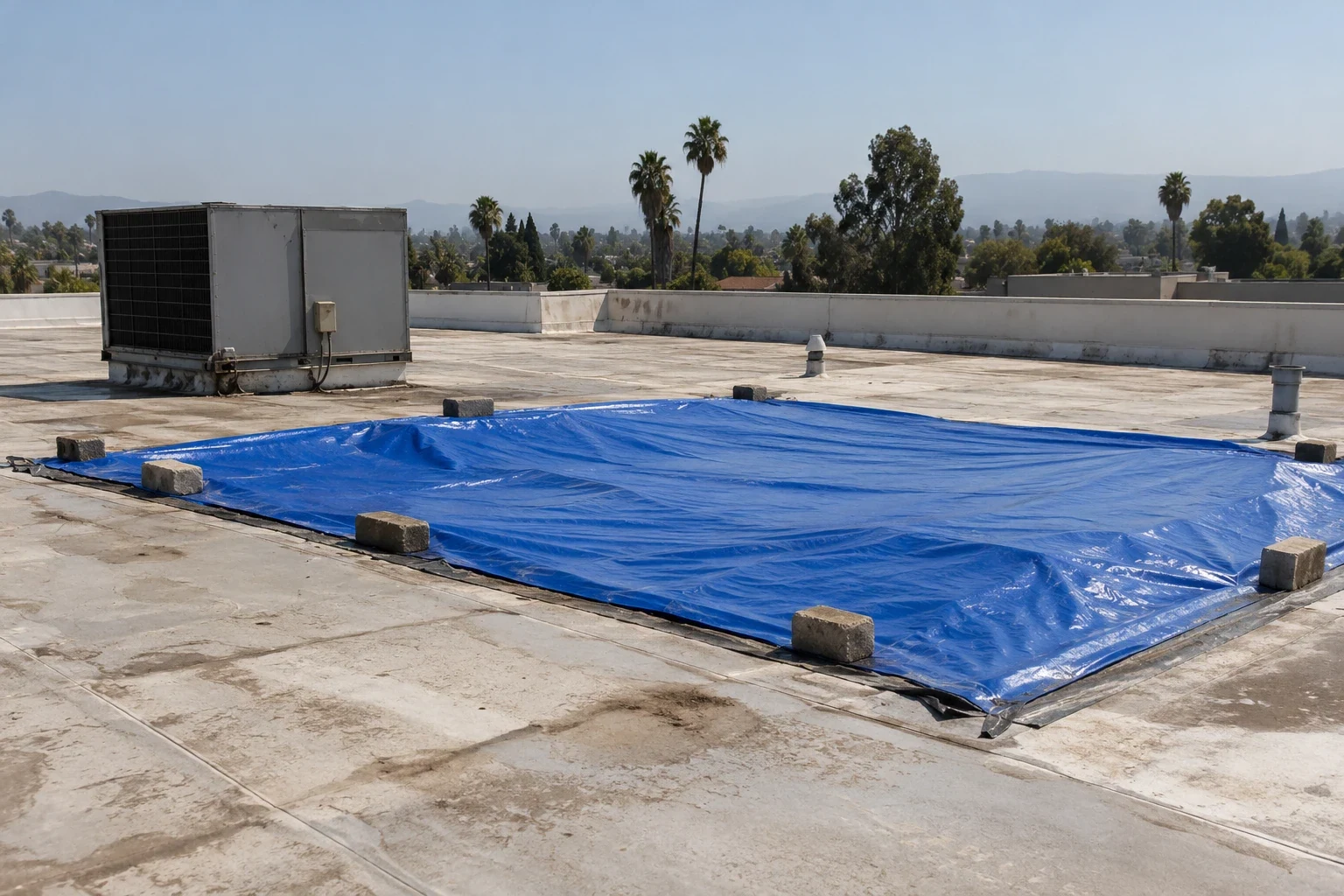
Roof Recover and Overlay in Glendale, CA

The owner comparison and record

Our estimate breaks the job into parts: testing, prep of the old roof, wet-area removal, new insulation and membrane, and flashing and metal work. Quantities are measured, and any allowances, such as deck replacement by the square foot, are listed separately so you can see what could change.

If a full replacement is a realistic option, we price that too. A tear-off costs more upfront, but it shows you the deck, resets the layer count and can be the better long-term answer when much of the old roof is wet.

Read the manufacturer's warranty for the recover system before you sign. Some warranties exclude problems that start in the old roof underneath.

When the job is done, you receive photos, core results, the product list and a roof plan showing which areas were recovered and which were replaced.

A mixed-use roof in Downtown Glendale and an industrial roof on San Fernando Road come with very different access, weight and scheduling limits. Whether a recover works still depends on the layers and attachment we find on each roof.

Talk through recover and removal at your building

Tell us about the roof's age, past leaks and any limits on work hours. We will inspect it, run the moisture testing it needs and give you a clear price for a recover alongside a tear-off.

Related Roofing Pages

Other services, systems and conditions Glendale owners often review alongside this one.
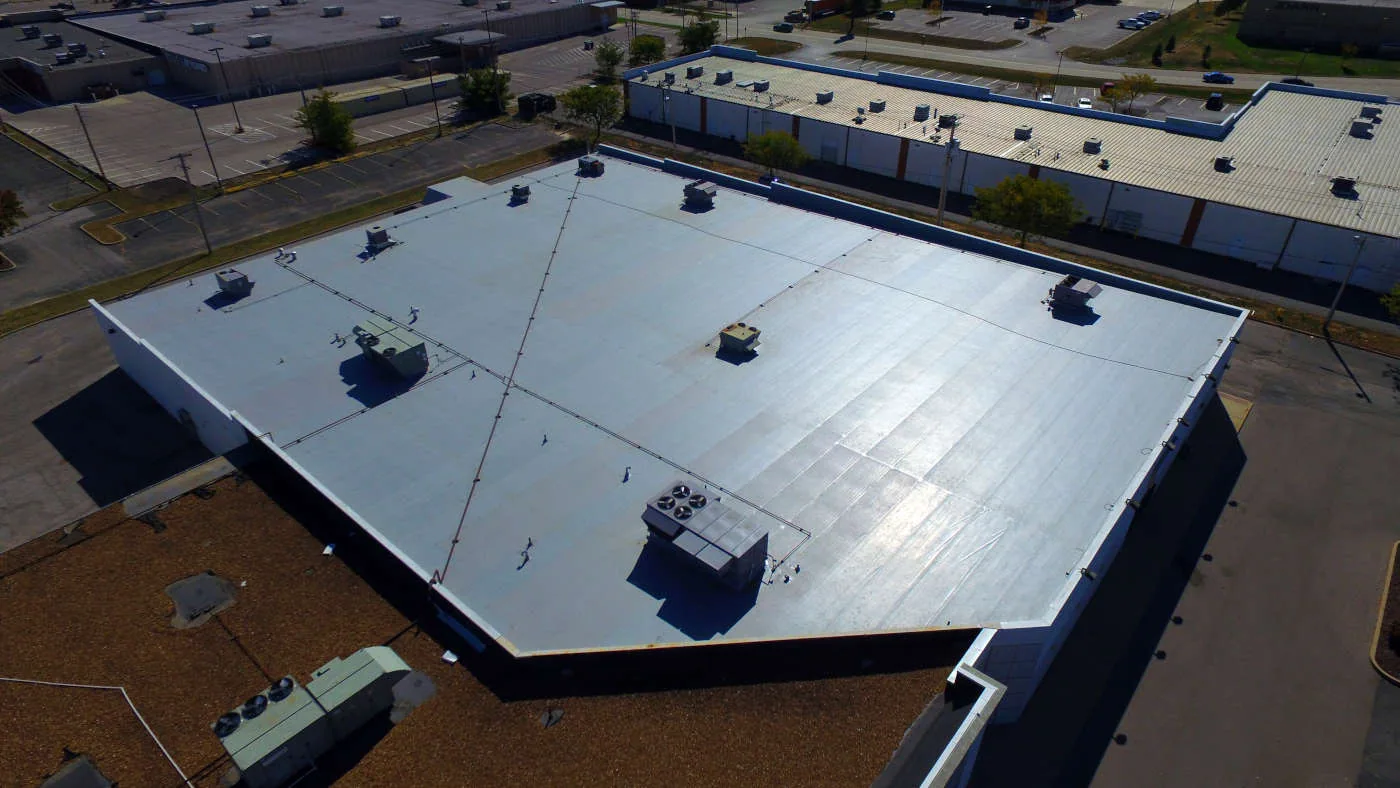
condition examination
Commercial Roof Inspection

Scope, conditions and planning details for Glendale commercial buildings.

infrared investigation
Infrared Roof Moisture Survey

Scope, conditions and planning details for Glendale commercial buildings.

insulation and board scope
Roof Insulation and Cover Board

Scope, conditions and planning details for Glendale commercial buildings.

TPO membrane
TPO Commercial Roofing

Scope, conditions and planning details for Glendale commercial buildings.

Questions About Roof Recover and Overlay

Often, yes, as long as the leaks have not soaked a large part of the insulation. We find the leak sources, map any wet areas with a moisture survey and cores, and tear out the wet sections before recovering the rest. If too much of the roof is wet, a tear-off is the better choice.

They are a big part of it, but not the whole answer. Cores show the layers and moisture at specific spots. We also look at the moisture survey, how the roof is attached, the deck condition, the code limit on layers and whether the structure can carry the added weight.

Usually quieter and less disruptive, since there is far less demolition. Usually cheaper too, but wet-area removal, curb raising and new edge metal can narrow the gap. We price both options so you can compare real numbers.

Not always. We measure the flashing height at each curb against the new roof height. Curbs that would end up too short get raised; those with enough height stay as they are. The estimate lists them one by one.

We identify the coating first. Some can be cleaned and covered with a separation layer or cover board; others react with the new membrane or adhesives and need more prep. A small test area or a check with the manufacturer settles it.

ServicesRoof SystemsProperty TypesIndustriesService AreasDamage RepairCapabilitiesManufacturersAboutRequest a Roof Assessment555-555-5555
Call555-555-5555