Get Answers Fast

Send the Building Details

Request an
Assessment

Call Our Team

555-555-5555
Request an
Assessment
555-555-5555

PVC Commercial Roofing

A restaurant roof raises a specific question when choosing a membrane: what comes out of the exhaust fans, and can the proposed PVC product handle it? The asset manager needs that answer, and the building's use alone does not provide it.

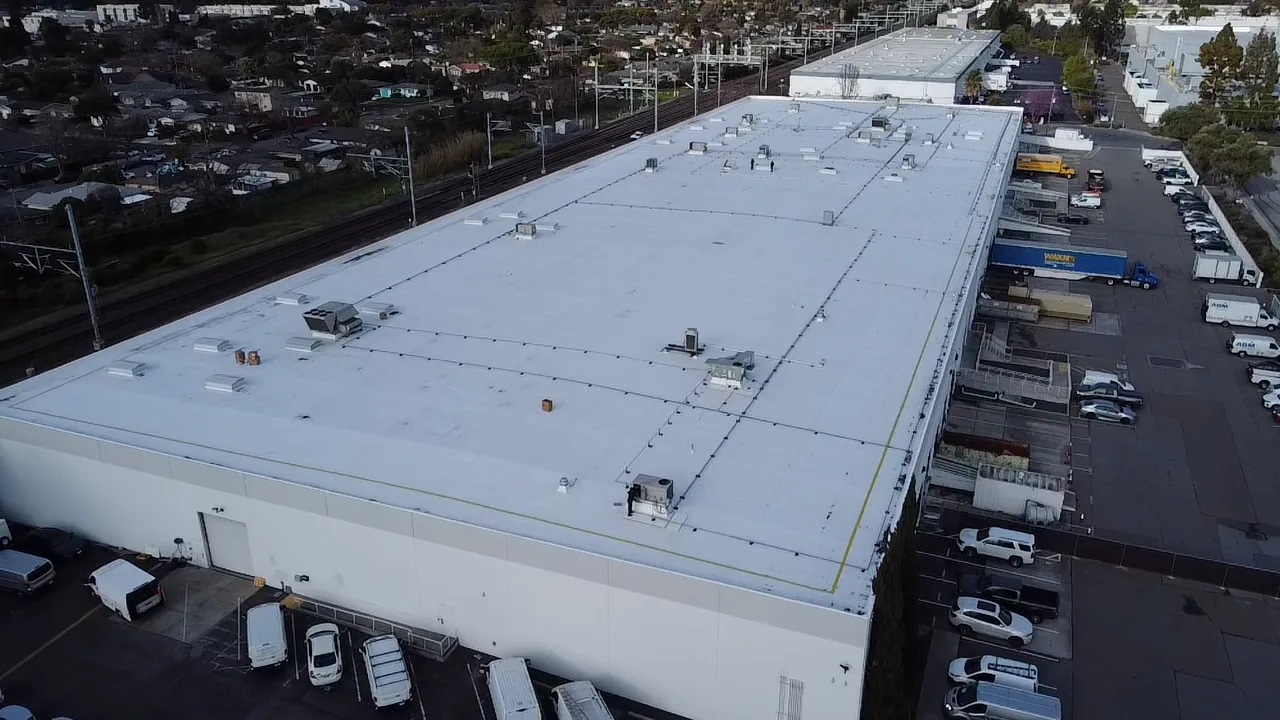
PVC commercial roofing in Glendale, CA, combines a PVC membrane with insulation, attachment and heat-welded seams. We review the existing roof and the rooftop equipment before describing the scope. The owner gets prep, flashings and any remaining coordination alongside the price, which makes the material choice easier to discuss without assuming every PVC product is the same.

A KEE membrane needs its own exposure data. For a TPO roofing alternative, we gather the same operator information and full system details. The owner can then see why the selected product fits, instead of treating a broad chemical resistance claim as approval for every residue on the roof.

Grease, Exhaust and Chemical Exposure

We ask the operator what is discharged onto the roof, which cleaning products are used, and how often. The substance, its concentration and how often it lands on the membrane all matter. Simply knowing there is kitchen exhaust leaves important questions open.

We check the manufacturer's guidance for the specific membrane. PVC products differ, so a general claim about grease or chemical resistance does not cover every formulation, and we get clarification from the manufacturer when the exposure question is unresolved.

Grease containment and hood cleaning are the restaurant's and its vendors' job. A good membrane does not stop grease from coming out of a fan, so the proposal names the operator or trade task needed before roof prep.

At restaurants we also plan equipment service access and walkway or grease-pad protection for that particular building. The roofer's scope cannot settle every hood cleaning or HVAC responsibility.
PVC Commercial Roofing in Glendale, CA

Checking the Existing Roof

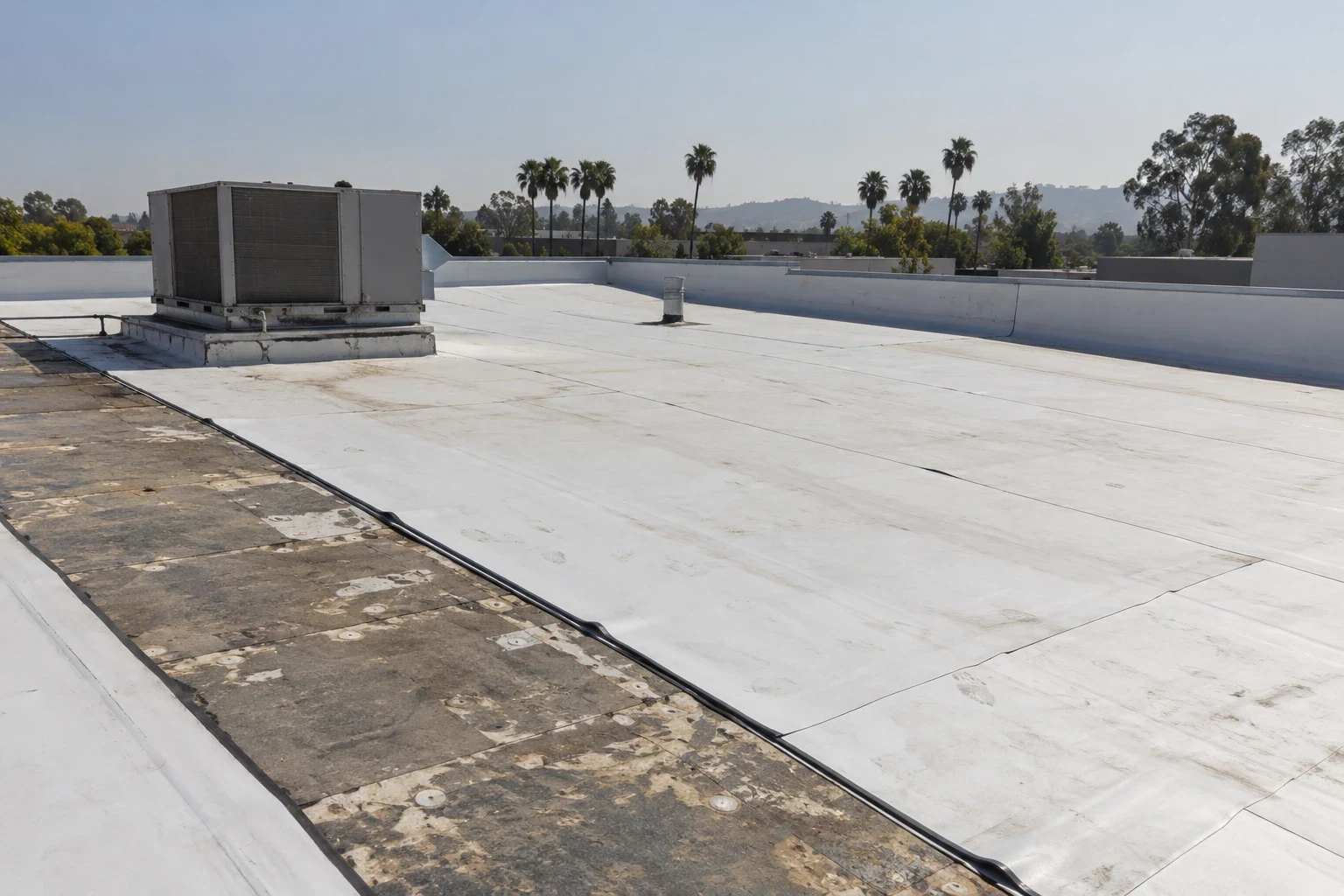
We review installation records and past repairs to understand what the new roof will go over. Separate roof levels may have different materials, and the building's age and location do not tell us the current membrane or its condition.

Our assessment explains what we inspected and what we could not reach, recording surface defects and hidden questions that affect the decision. An overview photo does not prove the insulation and deck are sound.

Where core samples make sense, we note their locations and findings and use them as part of a wider review. A few good samples cannot settle every question about moisture, attachment or whether a recover is allowed.

We list testing that affects prep or quantities, with a reason for each and the decision it supports. An undefined contingency can make a quote look more complete than the evidence behind it.

The Roof System and Prep

We specify membrane thickness, reinforcement and installation method, plus the insulation and any separation layer. The word PVC alone is not a complete roof price.

For a roof recover, we check the existing layers, moisture and code limits, and the prep must suit the new system. A new membrane does not make untested material acceptable.

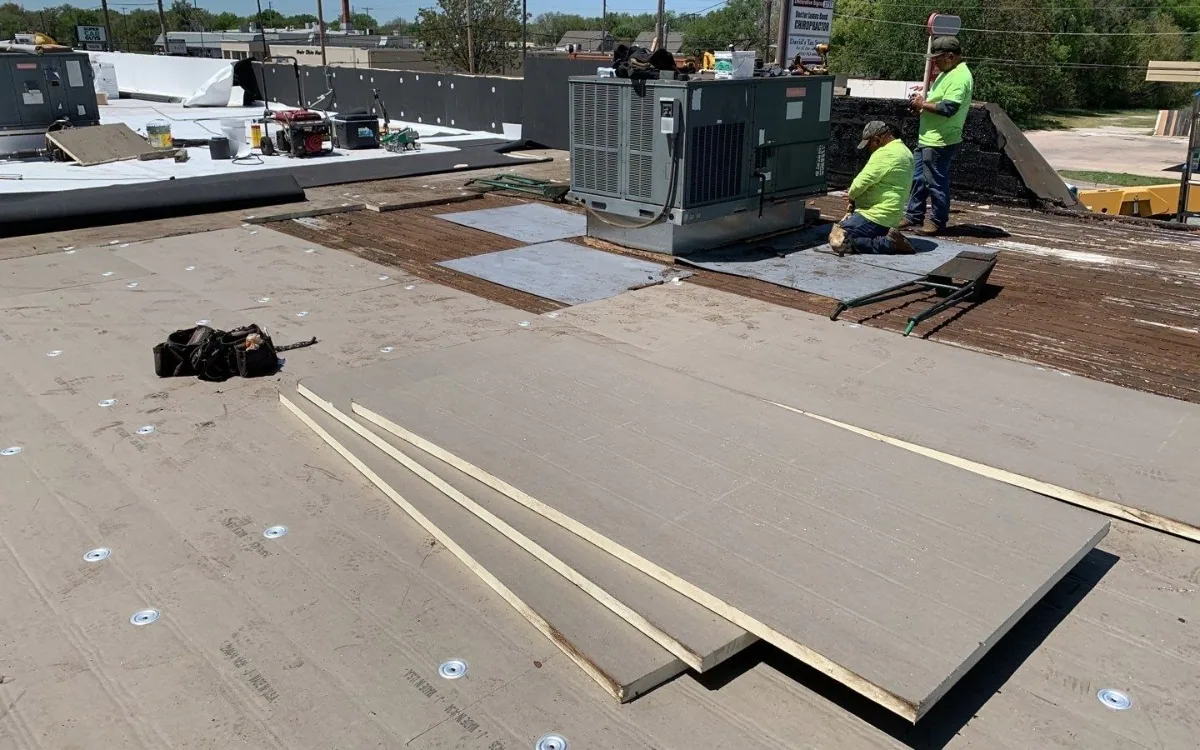
When tear-off is proposed, we define how much and how deep. Deck problems found during tear-off may need review, so measured quantities stay separate from allowances, with a clear approval process for changes.

Our roof insulation and cover board specification names the actual products and layout. Different surfaces may need different prep, and we keep the approved revision so purchasing and installation use the same design.
PVC Commercial Roofing in Glendale, CA

Heat-Welded Seams and Flashings

PVC seams are heat-welded using the manufacturer's procedures. We set welder temperature and speed for the actual membrane and the day's conditions, and run test welds, since one setting does not fit every product or situation.

We probe seams and record repairs. Corners, T-joints and accessories need as much attention as long field seams, and a neat-looking weld is only part of the evidence.

We coordinate skylight and penetration flashing with each curb, pipe and wall. Different details may be needed, and equipment access or other trades' work is assigned before we reach those spots.

Edge attachment and waterproofing are part of the roof scope. Existing walls and edges need a proper connection to the new membrane, and a coping allowance alone can leave prep and wood blocking undefined.

Drains and Rooftop Traffic

We locate drains and check finished roof heights. A PVC membrane does not fix ponding by itself, and standing water may need measurements and design input before adding tapered insulation or changing drains.

Our roof drain and scupper repair review lists which drains stay and which get repaired. Primary and overflow drains both need checking, and a clear drain opening does not prove the piping below is adequate.

We plan approved service routes and walkway pads with the operator, who tells us how often technicians need access. Later traffic and tool handling should follow those routes instead of improvising protection on the new roof.

Where equipment blocks inspection or installation, we describe the coordination needed and include it in the scope. A detail we could not reach is not treated as finished just because the surrounding roof was inspected.

PVC Projects in Glendale

Retail activity in the Galleria District off West Broadway makes tenant and delivery coordination important. We invite the contacts who can confirm restrictions and approve the material route for the building.

The Grand Central Creative Campus sits on the site of Glendale's former airport along Air Way. Creative-office projects there need equipment, access and sensitive-operation requirements gathered directly, since the area's history does not tell us the roof or schedule. A facility along San Fernando Road also confirms its own delivery route before a date is set.

Glendale has hot, dry summers and cooler-season rain. That helps with broad scheduling, but the surface conditions and the product's welding and adhesive limits decide each day's work, and weather averages do not set a fixed completion date.

Ventilation changes need the building staff's approval. We plan protection for unfinished work and communication when conditions change, while occupancy and sanitation decisions stay with the facility.
PVC Commercial Roofing in Glendale, CA

Comparing Bids and Keeping Records

We compare bids on exposure review, prep, insulation and details. The membrane price alone does not show whether the installed scope is equal, so we identify allowances and information still needed to set a quantity.

We review the issued roof warranty terms for the system. Warranty length and membrane type do not define every covered condition, and we keep the documents and their maintenance and notice requirements.

At closeout, we keep approved details, seam tests and authorized changes, and list open equipment or operator tasks. The owner can tell completed roof work apart from other trades' sign-offs.

Future service is planned from the installed product and the facility's needs. Later repairs should confirm compatible prep before applying another material, and the property file helps the next manager connect findings with a practical repair.

PVC works well in some commercial settings, including roofs exposed to restaurant exhaust, but the actual discharge and system specification should drive selection. We identify the membrane, insulation and attachment proposed, then check how the system reaches curbs, drains and edges. Seams are heat welded, so we keep surfaces clean and protect the finished field from grease, dirt and trade traffic. If exhaust or make-up air equipment is changing, we settle its location and curb before the roofing layout is fixed. The owner should retain the product data and completed detail photos. Later repairs can then use a compatible material rather than relying on color or a broad product label.

PVC selection for Downtown Glendale retail may account for nearby restaurant exhaust; a San Fernando Road industrial property may have a separate discharge pattern. We verify exposure and system compatibility at the roof under review.

Talk Through a PVC Roof for Your Building

Share your roof history and rooftop equipment details. We will explain the product review, prep and installation scope in plain terms.

Related Roofing Pages

Other services, systems and conditions Glendale owners often review alongside this one.
KEE-identified sheet
KEE Commercial Roofing

Scope, conditions and planning details for Glendale commercial buildings.

a TPO sheet alternative
TPO Commercial Roofing

Scope, conditions and planning details for Glendale commercial buildings.

retained-roof work
Roof Recover and Overlay

Scope, conditions and planning details for Glendale commercial buildings.

insulation and board specification
Roof Insulation and Cover Board

Scope, conditions and planning details for Glendale commercial buildings.

Questions About PVC Commercial Roofing

No. Formulations differ, so we check the actual exposure against the chosen product's guidance. The restaurant still needs grease containment and hood cleaning to control the source.

Not always. We identify the installed membrane and its approved repair method. Appearance does not prove compatibility, so the manufacturer's guidance sets the prep and accessories.

No. The insulation, cover board, attachment and flashing details still need to be specified, and prep depends on what the membrane goes over.

Product information, approved details, seam tests, changes, warranty terms and open items. Future service should start from that record.

ServicesRoof SystemsProperty TypesIndustriesService AreasDamage RepairCapabilitiesManufacturersAboutRequest a Roof Assessment555-555-5555
Call555-555-5555