Get Answers Fast

Send the Building Details

Request an
Assessment

Call Our Team

555-555-5555
Request an
Assessment
555-555-5555

KEE Commercial Roofing

A building with unusual rooftop exposure, such as grease, oils or chemical exhaust, needs the proposed membrane named precisely. The asset manager should see the manufacturer and product along with the reason it is being recommended. Calling a membrane KEE is only the start of that decision.

KEE commercial roofing in Glendale, CA, involves specific membrane products and their system requirements. FiberTite, for example, uses ketone ethylene ester (KEE) technology in its membranes. We match the selected product to what will actually reach the roof, the existing construction and the work needed to install it. The owner gets a supported recommendation and a clear cost, not a broad performance promise.

If PVC roofing or TPO roofing is offered alongside a KEE membrane, ask for each product's chemical resistance data and the full layer and detail plan. The asset manager needs a real construction comparison to explain the choice.

Knowing Exactly Which Membrane

We get current product data for the membrane being priced, including its construction, thickness and installation requirements. Products with similar names should not be assumed to perform or install the same way.

We ask the operator what may reach the roof: exhaust from fryers or process equipment, solvents, oils or cleaning chemicals. Knowing the actual substance and how often it lands on the roof is more useful than a general description of the building's use.

At a manufacturing plant, planned equipment changes can change exposure too. Open questions stay in the recommendation, and the product guidance should cover the conditions expected on the roof.

We keep product and specification revisions with the estimate. A substitute needs its own review where requirements differ, since a similar description does not carry over another membrane's chemical resistance or approved details.
KEE Commercial Roofing in Glendale, CA

Checking the Existing Roof

We review installation and repair records to plan the inspection. Separate roof sections often have different histories, and the building's age does not tell us how old the membrane is or what is underneath.

Our assessment locates visible defects and notes what we could not reach. We record what we saw and what remains uncertain, since the surface cannot show every material or the deck below.

Where core samples make sense, we record their purpose and findings. They answer specific questions, but a few cores cannot prove the whole roof is dry or that all existing layers can stay.

We list testing that affects prep and quantities and explain which decision each test supports. The estimate then separates confirmed installation items from work still needed to define the scope.

Preparing for the New Membrane

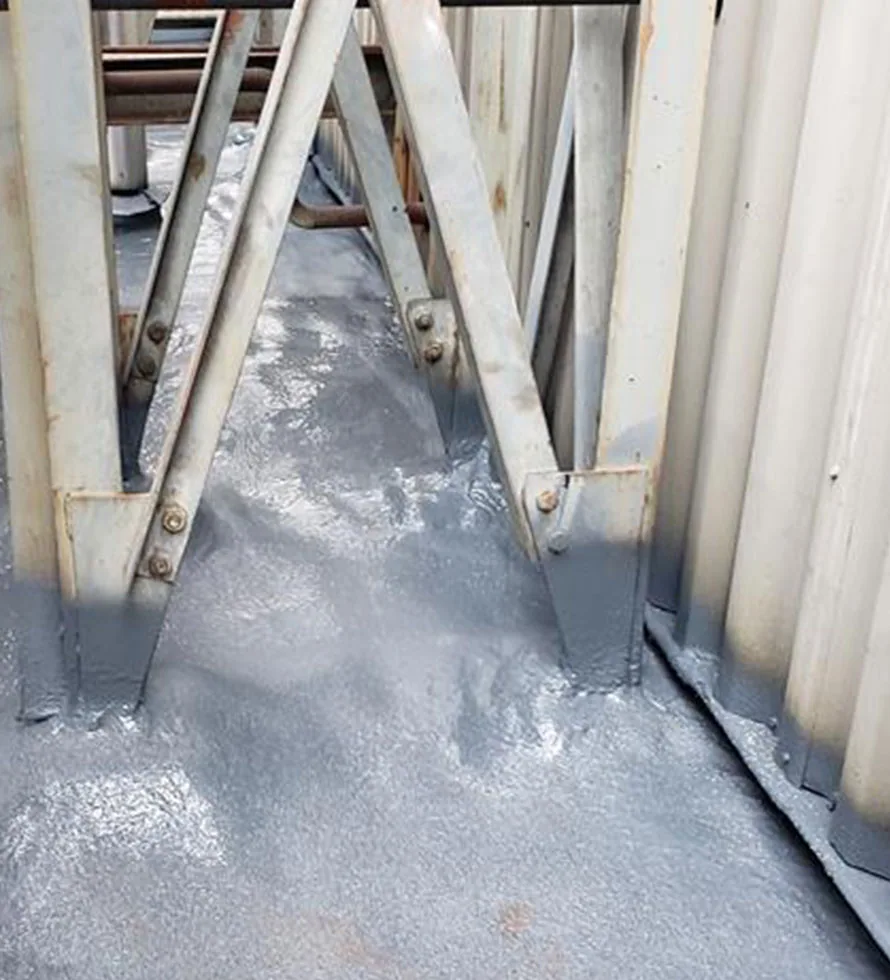
The new membrane needs a surface that suits the system. Cleaning, a separation layer and substrate repair belong in the prep description. A new membrane does not make untested existing materials acceptable.

A roof recover requires checking existing layers, moisture, attachment and code limits. We keep the evidence and any open questions next to the price, since good results in one area do not approve the whole roof.

For a commercial roof replacement, we define the work areas and how deep the tear-off goes. Deck or structural concerns found during tear-off may need an engineer. Allowances and the approval process are listed separately from measured quantities.

We measure the actual roof and its details. Building floor area cannot provide roof quantities, and additions and level changes may need their own prep within one project.
KEE Commercial Roofing in Glendale, CA

Insulation, Cover Board and Attachment

Insulation, cover board and attachment are specified along with the membrane. They are part of the roof you are buying, and a product family name does not describe all of that work.

Our roof insulation and cover board specification names the actual products and layout and checks the surface against their requirements. The estimate separates new layers from existing materials that still need testing.

Attachment must follow the approved project design for the actual deck. General wind data does not give a fastening pattern, and questions about the structure's capacity need an engineer, not just a roofer's observations.

We share approved details and changes with purchasing and the field crew. A later material change may affect prep or flashing, so those tasks are reconciled before installation follows an older specification.

Welded Seams, Flashings and Drains

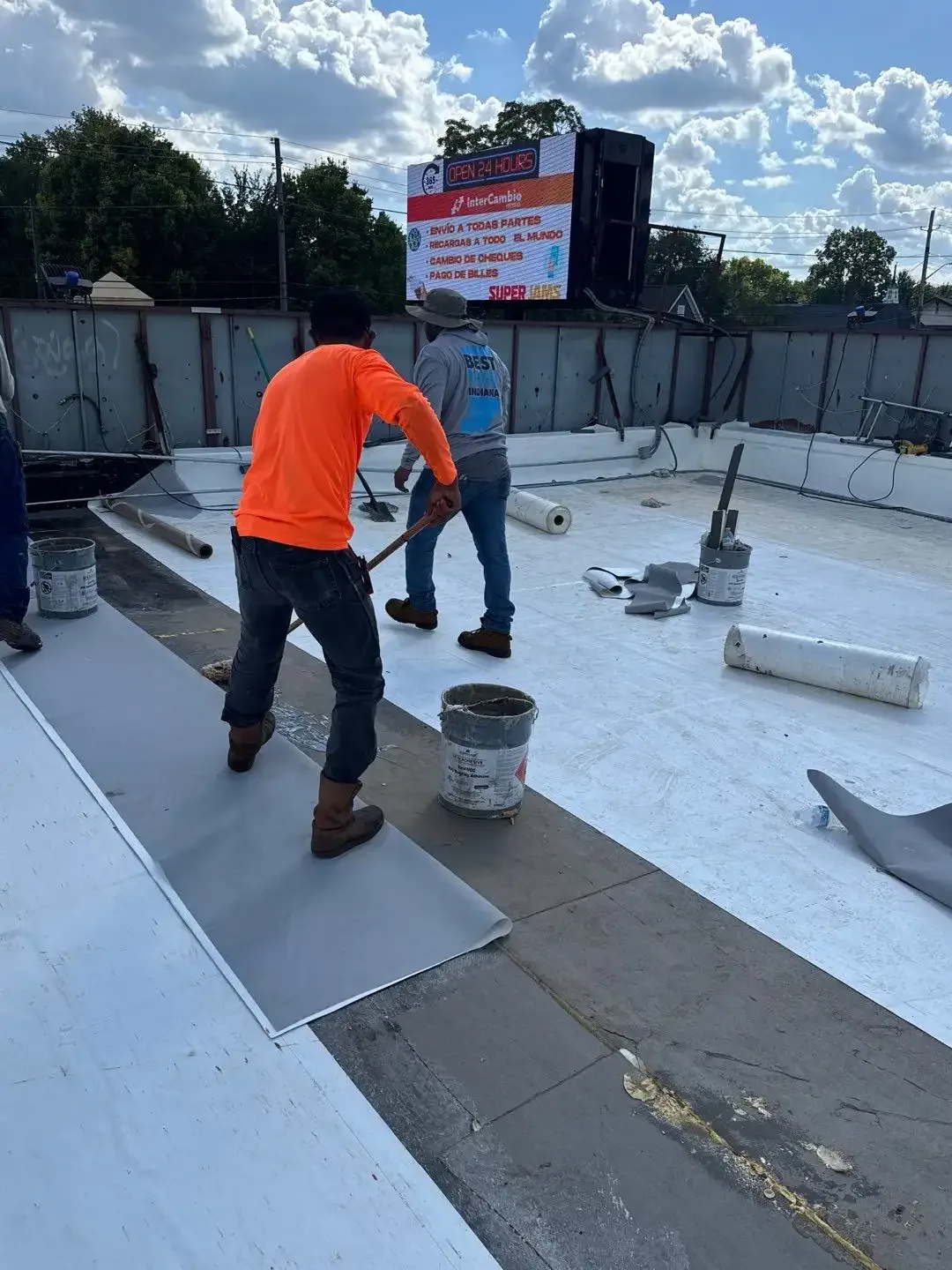
KEE membranes are heat-welded, and welding follows the product's procedures, with test welds and settings matched to the day's conditions. A seam that looks continuous is not the whole quality record, so we probe and document seams as required.

We coordinate skylight and penetration flashing for pipes, curbs and walls around their actual shapes. Curb repairs or equipment access may come first, and we assign those before the membrane work is considered ready.

We locate primary and overflow drains and check finished heights. A new membrane does not fix a low area or an undersized drain, and drainage changes may need measurements and design input.

We agree on equipment service routes and walkway protection with the operator. Future technicians need those instructions and the product information, so the roof is not treated as open work space by other trades.

Planning a KEE Project in Glendale

For a building in the Galleria District off West Broadway, we schedule the visit with tenant and delivery contacts and ask for access limits and staging arrangements. Being near a busy retail area does not set the schedule.

A facility along San Fernando Road in south Glendale needs its own approved material route. The operator's current instructions set delivery and equipment windows.

Glendale's summers are hot and dry, with most rain in the cooler months. That helps with broad planning, but the surface conditions and the welding procedure decide whether a given day works.

Ventilation and sensitive operations are handled with building staff. Any shutdown needs an approved process and time. We plan protection for unfinished areas and name who approves changes when weather or findings change the sequence.
KEE Commercial Roofing in Glendale, CA

Comparing Bids and Keeping Records

We compare bids on exposure review, prep, layers and details, keeping allowances and other trades' work visible. If equipment blocks our view of a detail, we list that access need and a contact, so management can arrange it before the quantity is final instead of leaving it as an unexplained exclusion. The membrane price alone does not explain the installed scope.

We review the actual issued roof warranty terms and service requirements. A product's reputation or warranty length does not define coverage, and the documents stay with the project record.

At completion, we keep test results, photos and approved changes, and list open tasks and contacts. A photo of the finished membrane cannot show every hidden layer or connected equipment.

Future maintenance is planned from the installed system and the facility's needs. New exposures or alterations may need a fresh review, so future repairs can be tied to documented construction.

KEE is used in PVC-family roofing, but the project still needs the exact membrane and accessory information in its submittal. We compare that system with the existing roof, the intended exposure and the detail at each curb or wall. A repair close to an older membrane should not assume that similar color means compatible material. We confirm the product, prepare the surface and follow the specified welding or flashing procedure. If equipment is being installed at the same time, we decide which trade completes the roof tie-in before work starts. We retain product data, field changes and inspection notes for the next owner or maintenance vendor.

A KEE membrane on a Downtown Glendale mixed-use property may meet different rooftop equipment than one on San Fernando Road. We confirm the installed product and curb details at the building before selecting compatible accessories.

Talk Through a KEE Roof for Your Building

Share your roof history and what reaches the roof. We will explain the product review, prep and installation scope in plain terms.

Related Roofing Pages

Other services, systems and conditions Glendale owners often review alongside this one.
PVC products
PVC Commercial Roofing

Scope, conditions and planning details for Glendale commercial buildings.

TPO products
TPO Commercial Roofing

Scope, conditions and planning details for Glendale commercial buildings.

recover option
Roof Recover and Overlay

Scope, conditions and planning details for Glendale commercial buildings.

removal and replacement
Commercial Roof Replacements

Scope, conditions and planning details for Glendale commercial buildings.

Questions About KEE Commercial Roofing

The manufacturer and exact membrane product, the insulation and attachment, and the prep. Products using similar technology do not necessarily install the same way.

Not by itself. We review what actually reaches the roof, such as grease, oils or chemicals, against the product's resistance data. Equipment and cleaning information matter too.

No. The deck, attachment and flashing details still need review. One product document cannot answer every project question.

The installed products, approved details, seam tests, changes and open items by location. Any later change in rooftop exposure or equipment should start from that record.

ServicesRoof SystemsProperty TypesIndustriesService AreasDamage RepairCapabilitiesManufacturersAboutRequest a Roof Assessment555-555-5555
Call555-555-5555