Get Answers Fast

Send the Building Details

Request an
Assessment

Call Our Team

555-555-5555
Request an
Assessment
555-555-5555

Cool Roof Installation

An office owner considering a reflective roof needs the full construction beside the surface-performance information. The asset manager has condition, equipment and budget questions as well as energy requirements. A white finish by itself cannot answer them.

Cool roof installation in Glendale, CA reviews the actual project scope and selected product documentation. We coordinate that performance question with the receiving assembly, preparation and details. The owner receives a supported recommendation and a complete installation price. Applicable compliance approaches and exceptions should be established through project review rather than one blanket rule for every commercial roof.

The building and proposed work

Identify whether the project involves replacement, recover, coating or another defined alteration. These scopes can have different implications. The applicable review should use the actual construction and accepted submission basis.

A condition assessment should locate accessible defects and relevant concealed questions. Surface appearance alone cannot establish material or retained-layer suitability. Reflective product information does not replace that evidence.

Review available roof records and planned equipment changes. Distinct roof areas can have different construction histories. Measure the relevant roof rather than use floor-space figures from a building description.

Keep the owner's objectives explicit. Energy-related performance may be one reason for the project, while waterproofing or equipment coordination supplies another. Explain the tasks and evidence supporting the complete recommendation.
Cool Roof Installation in Glendale, CA

The project requirements

California’s 2025 energy standards take effect for permit applications starting January 1, 2026, according to the Energy Commission. Review the roof scope through its applicable compliance approaches and relevant exceptions. Avoid presenting one numeric surface requirement as universal.

Glendale identifies the 2025 California standards and its amendments for projects submitted to Development Services beginning January 1, 2026. Confirm the accepted basis for the address and work with the appropriate authority. The date information does not alone settle every roof requirement.

Retain the selected product's relevant performance documentation and the accepted approach. Color is not a substitute for that information. The proposal should identify the material and basis actually being used for the project.

Other assembly and property-specific requirements remain part of the review. A qualifying surface characteristic cannot independently approve attachment, structural conditions or every fire-exposure provision. Assign those questions to the responsible project team.

The material and assembly choice

A TPO membrane may be one selected option, with its own installation and supporting components. Product thickness, attachment and compatible details belong in the specification. A membrane name does not define the complete roof.

A PVC system has product-specific requirements as well. Actual exposure and receiving materials should inform selection. General claims about grease or chemical resistance cannot approve every formulation.

Where coating restoration is considered, identify the actual substrate and preparation. A reflective finish is not an automatic correction for unresolved moisture, support or flashing defects. The selected system needs a condition-based scope.

Keep substitutions coordinated with accepted requirements and price. Another product may change performance information, preparation or interfaces. Reconcile the proposal before procurement proceeds on a broadly similar label.
Cool Roof Installation in Glendale, CA

The retained and exposed conditions

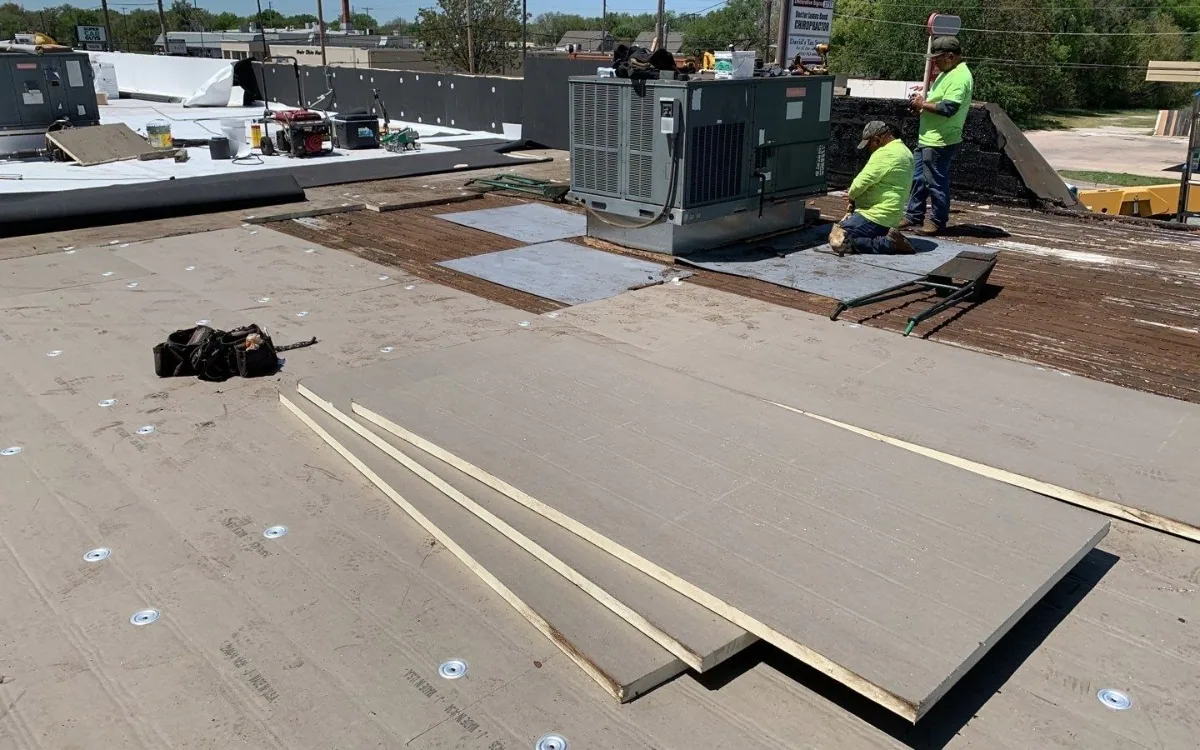
For recover work, review retained layers, moisture concerns, attachment and relevant project limitations. Suitable samples contribute local evidence. They do not independently settle every requirement for the complete retained assembly.

A replacement scope should define removal depth and boundaries. Exposed-condition findings can require supporting review or additional work. The manager needs clear allowances and an authorization process.

Specify compatible preparation and separation for the selected construction. A new reflective surface cannot make an unsuitable receiving layer adequate. Product and assembly instructions should guide the actual method.

Record the decision and its remaining uncertainty beside the price. Management can then compare supported options rather than assume that the energy objective dictates one universal roof construction or fixed economic outcome.

The layers and finished details

Coordinate insulation and board components with the selected system and project requirements. Identify products, quantities and attachment. Their condition cannot be inferred from the membrane surface above them.

Finished elevations can change curb, wall and outlet clearances. Measure the interfaces before assigning a typical retained detail. Document the alteration required at each affected location and the evidence supporting components that can remain. A uniform allowance across all details may miss those differences.

Review drainage and service routes with the planned assembly. A cool-roof surface does not independently remove low areas or establish an adequate outlet arrangement. Measurements and responsible design input may be needed.

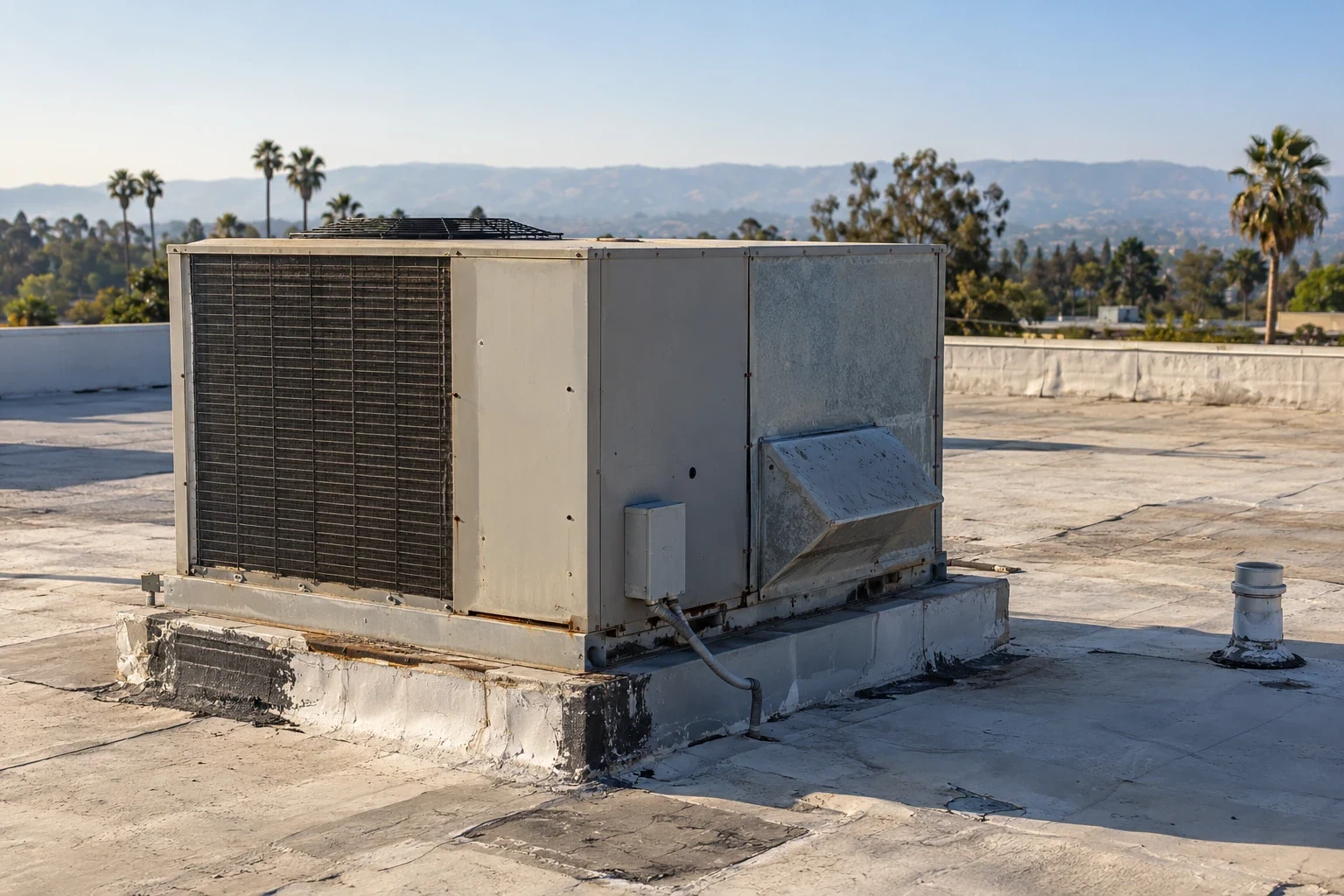
Equipment trades should confirm planned changes early. A new unit or support can affect the roof interface and access. Keep that coordination visible in the specification rather than assume later alterations fit the installed construction.

The Glendale work plan

At a property near Galleria District, obtain tenant and delivery restrictions directly. Its West Broadway setting helps locate the meeting. Actual operator instructions determine the installation interval and material route.

For a building along San Fernando Road, confirm staging and receiving arrangements at the site. South Glendale identifies the corridor among its distinct planning areas. The setting does not supply a standard roof layout or unrestricted access plan.

Glendale's hot dry summers and cooler-season rain inform broad timing. Current surfaces, forecasts and selected procedures govern application. Air-temperature averages and daylight cannot independently establish suitable bonding or curing conditions.

Define suitable temporary protection and a contact for changed weather or findings. Ventilation isolation, where needed, requires an operator-authorized procedure and interval. Sensitive-space and occupancy decisions should remain identified facility tasks.
Cool Roof Installation in Glendale, CA

The owner cost and record

Separate condition review, preparation, supporting layers, surface installation and details in the estimate. Keep performance documentation beside that scope. Comparable prices require comparable construction and review assumptions.

Record relevant installation checks and authorized changes. A photograph of a bright finished roof cannot demonstrate every concealed layer or accepted compliance task. Identify the actual information used at closeout.

Read issued warranty and upkeep requirements for the selected assembly. Surface performance and warranty coverage are different questions. Retain the applicable documents for later maintenance and alteration decisions.

The owner should receive completed quantities and outstanding tasks in plain terms. Future service can consult the actual system and accepted basis. The next manager then has a documented roof decision rather than a general note that a white surface was installed.

A reflective roof surface can reduce solar absorption, but the assembly beneath it still has to be sound and dry. We inspect the existing membrane, insulation, drains and penetrations before recommending a new system. The scope should show preparation, perimeter details, coating or membrane limits and the repairs that sit outside the reflective field. Glendale's hot, dry summers make the rooftop exposure familiar, yet the selected product and actual substrate still set application requirements. Coordinate rooftop equipment and access so the new surface is not immediately cut or damaged. At completion, note the material and repaired details by roof zone, giving the owner a useful maintenance baseline.

A Downtown Glendale office or retail roof may have different equipment access from an industrial property along San Fernando Road. We confirm the roof assembly and occupied-space requirements before choosing a reflective system.

Review the cool-roof choice with the whole project

Share the building records and proposed scope. We will explain suitable products, preparation, applicable review and the practical installation work in plain terms.

Related Roofing Pages

Other services, systems and conditions Glendale owners often review alongside this one.
condition assessment
Commercial Roof Inspection

Scope, conditions and planning details for Glendale commercial buildings.

TPO membrane
TPO Commercial Roofing

Scope, conditions and planning details for Glendale commercial buildings.

PVC system
PVC Commercial Roofing

Scope, conditions and planning details for Glendale commercial buildings.

coating restoration
Roof Coating Restoration

Scope, conditions and planning details for Glendale commercial buildings.

Questions About Cool Roof Installation

Use the selected product documentation and applicable project requirements. Appearance alone does not establish the relevant performance. Keep the accepted compliance basis with the scope.

Review work scope, compliance approaches and relevant exceptions. Project applicability requires the appropriate review. A blanket numeric rule may misdescribe the actual requirement.

Address documented waterproofing and retained-condition questions separately. The complete scope may include repair or broader work. Surface performance cannot independently correct those conditions.

Retain product information, accepted requirements, assembly details and relevant checks. Identify changes and outstanding tasks. Later service should use the installed construction record.

ServicesRoof SystemsProperty TypesIndustriesService AreasDamage RepairCapabilitiesManufacturersAboutRequest a Roof Assessment555-555-5555
Call555-555-5555