Get Answers Fast

Send the Building Details

Request an
Assessment

Call Our Team

555-555-5555
Request an
Assessment
555-555-5555

Solar-Ready Commercial Roofing

A mixed-use owner planning solar should decide the roof work while the array layout can still change. The asset manager needs the condition beneath the proposed equipment and the interfaces that may become harder to reach afterward. Those findings belong beside the solar budget.

Solar-ready commercial roofing in Glendale, CA coordinates the roof decision with responsible solar, structural and electrical personnel. We identify investigation, compatible preparation and waterproofing connections. The owner receives a practical status record and priced next tasks. The readiness description should explain what has been reviewed and what still requires acceptance for the actual project.

The proposed array

Obtain the current equipment layout, support concepts and service requirements. Compare them with existing rooftop systems and water routes. A preliminary diagram may leave significant connection or access questions unresolved.

Review the actual roof sections involved in the proposal. Different elevations or previous additions can have distinct materials and conditions. Floor area from a property description is not a panel or roof takeoff.

A pre-solar roof assessment should state examination coverage and limits. Installation records and accessible findings help establish the condition basis. A building's age cannot identify its current membrane or determine readiness.

Retain the array revision with the recommendation. A later equipment change can alter access, load and interface requirements. The earlier roof scope should be revisited where the accepted layout changes rather than assumed valid for any arrangement.
Solar-Ready Commercial Roofing in Glendale, CA

The supporting review

Structural personnel should receive the proposed equipment and support information needed for their review. Roof records and field observations can contribute inputs. The roofing scope should identify that dependency without acting as an independent capacity approval.

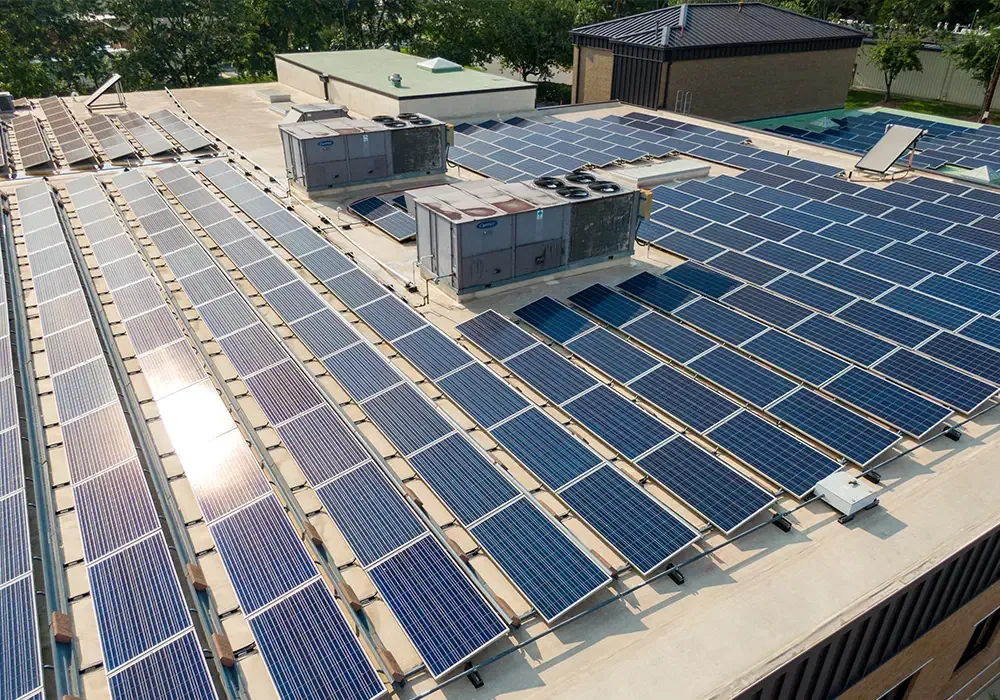
Ballasted and attached arrangements involve different questions. A concept without a penetration still needs load, contact and drainage considered. The responsible design establishes the accepted construction before the roof detail is finalized.

Coordinate mounting interfaces with selected assembly requirements. Identify preparation and supporting tasks. A general mounting category does not describe the complete connection at every location.

Assign electrical design and operating review to the qualified people responsible for that part of the project. Give the manager their contacts and required decisions. The roofing price addresses its own construction scope while the electrical team establishes acceptance of its systems.

The condition decision

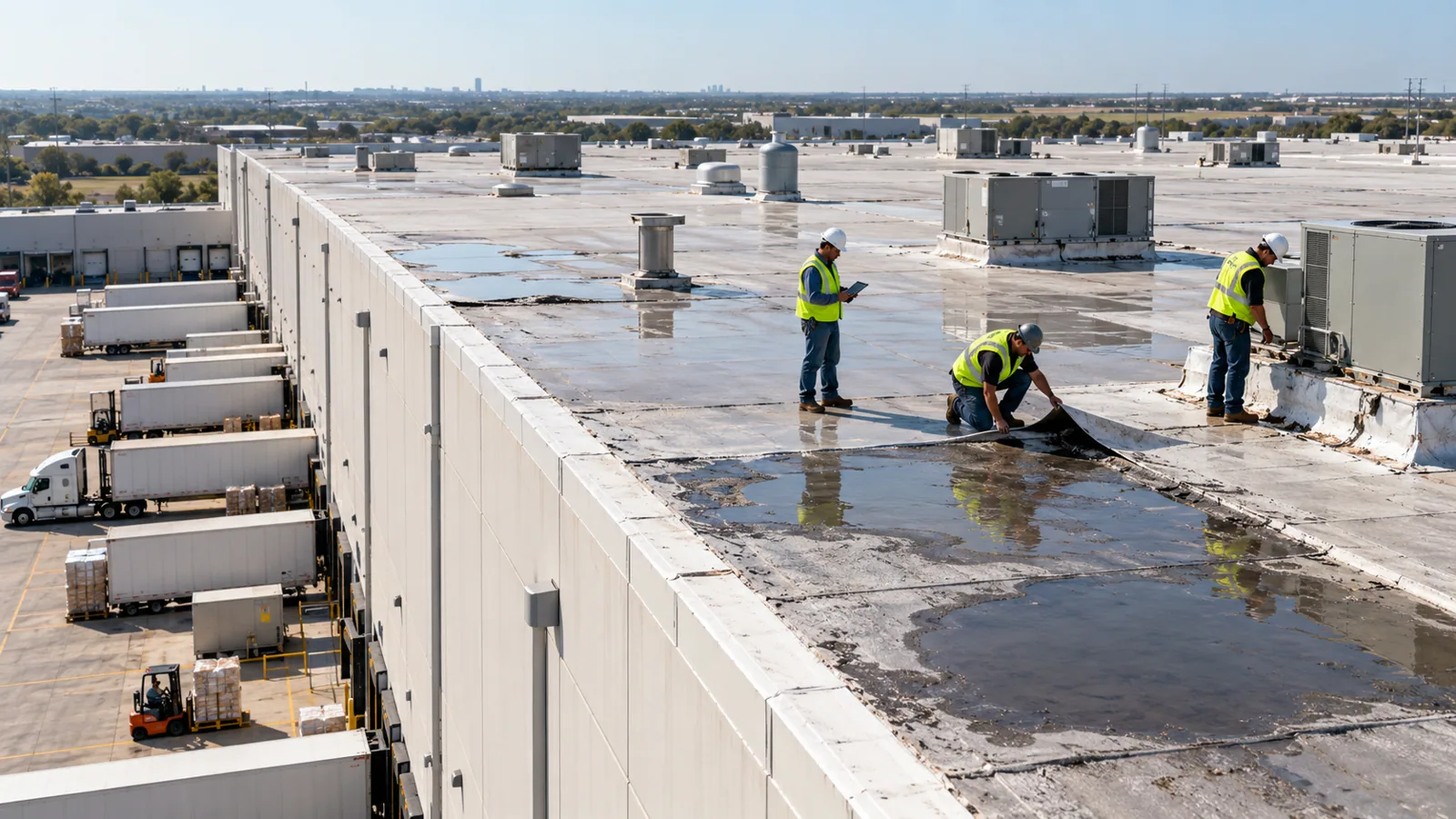
Review damage, previous repairs and consequential concealed questions in the intended equipment area. Surface appearance or patch count alone does not settle the roof's remaining suitability. The manager needs supported findings and the further evidence required.

Local correction may be appropriate where the condition and feasible access support it. Define the compatible method and measured boundary. Keep broader concerns outside the local repair visible to the owner.

Where replacement deserves consideration, explain the evidence and owner objectives. Future access beneath equipment may influence the decision. Avoid a universal roof-age cutoff or automatic cost ranking.

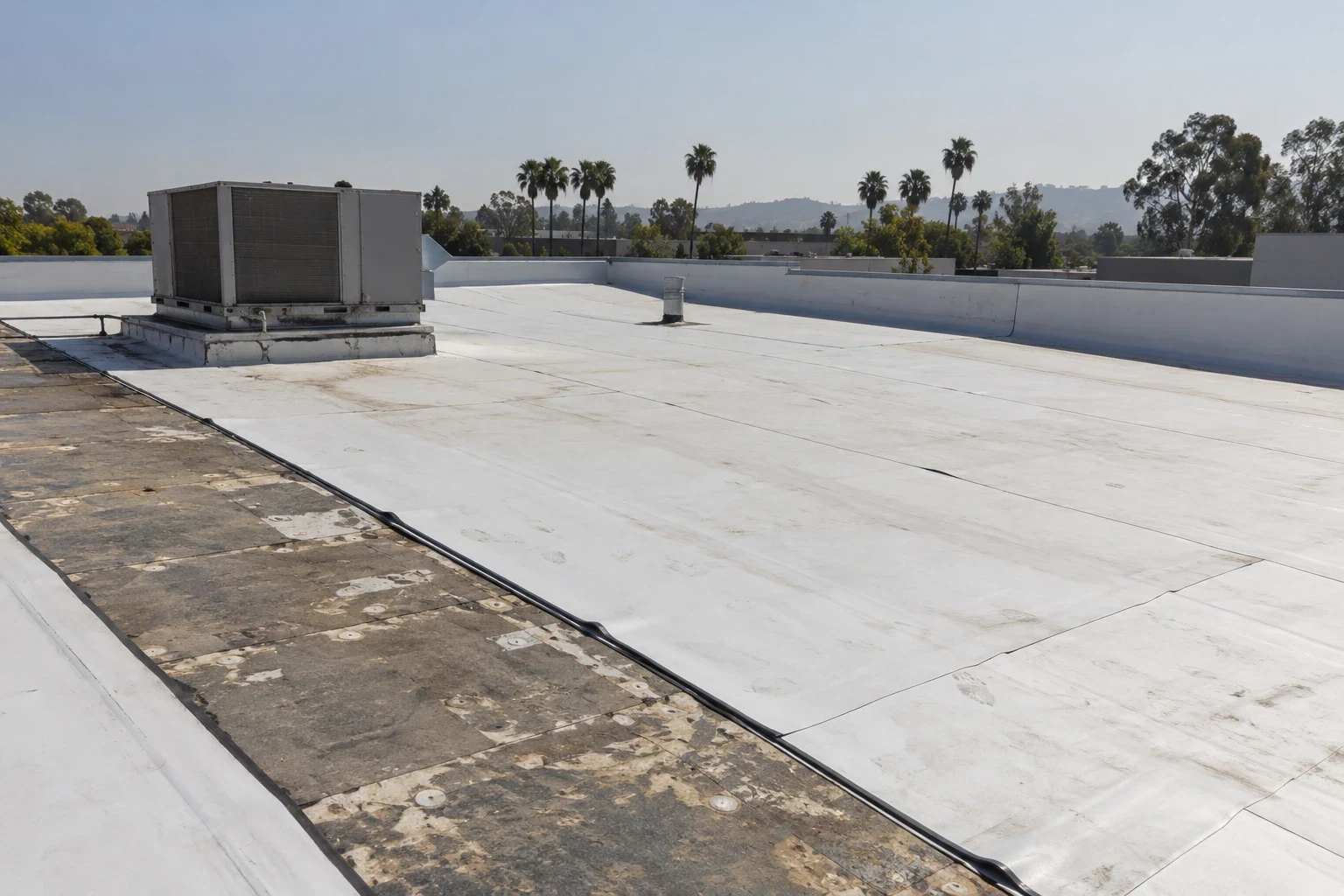
A recover review needs retained materials, moisture, attachment and relevant project requirements assessed. Samples establish local information. They do not independently approve the complete retained construction or every solar-related requirement.
Solar-Ready Commercial Roofing in Glendale, CA

The water and service layout

Compare support locations with primary and secondary drainage arrangements. The design should leave a supported water route. Equipment placement must not conceal an unresolved outlet or force an unreviewed relocation.

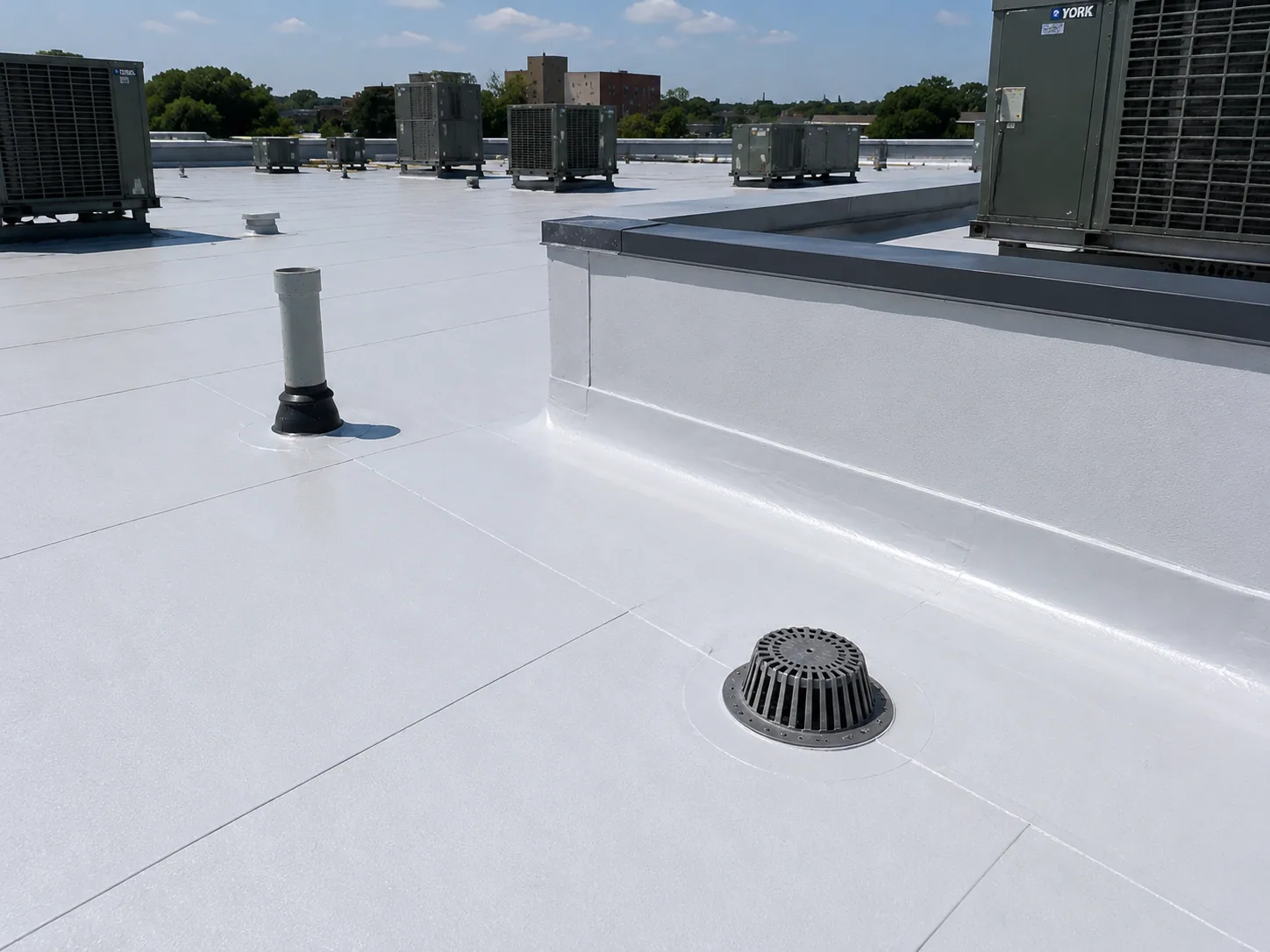
Review outlet interfaces alongside the array. Retained-water questions may require measurements and appropriate design input. Adding panels does not correct the cause of a roof drainage concern.

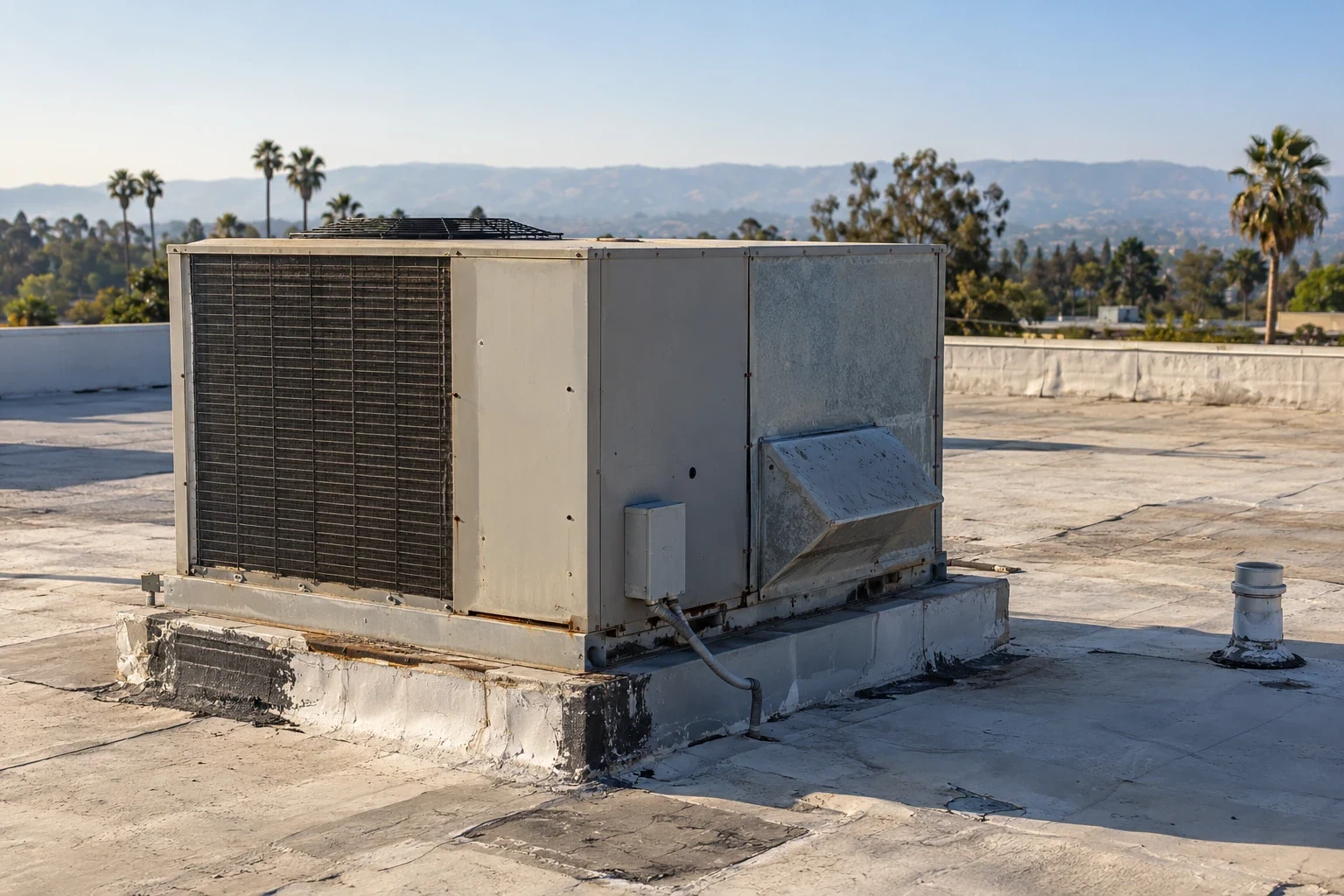
Obtain service needs for existing rooftop equipment and the new array. Access should suit the actual components and installed roof. A broad empty area on a drawing cannot establish that every route is usable for handling or maintenance.

Specify suitable contact protection and handling arrangements for the accepted supports. Later equipment personnel need those instructions. The roof should not become an improvised storage or work platform simply because more trades will visit it.

The roof documents

Keep the selected membrane and support information together. Compatibility and approval requirements can differ across systems. A product-family statement does not establish every interface or warranty provision.

Use warranty record review to identify relevant terms and required notices. The issued documents govern coverage. Resolve necessary coordination before an alteration is treated as accepted work.

Review the support connection again when a roof specification changes. Its earlier acceptance may have used another layer arrangement or membrane. Resolve the interface between the trades so the purchasing team and installers receive a coordinated revision for the actual construction.

Preserve the final connection record for later repair or equipment removal. It should identify installed components and authorized changes. A brief note that the roof is solar ready cannot substitute for the documents explaining that status.

The Glendale property coordination

A roof near the Grand Central area can involve creative-office activity and operator restrictions. The campus occupies a former airport setting on Air Way. Confirm camera, delivery and equipment arrangements directly rather than infer operating rules from its history. For a retail property by Glendale Galleria, the same meeting should obtain tenant and receiving restrictions at the actual building before either trade commits to a route.

At a building along San Fernando Road, discuss array-material handling with the facility contact. South Glendale planning recognizes the corridor. The approved site route and receiving schedule should come from the actual property.

Glendale's seasonal heat and cool-season rainfall inform broad roof planning. Current surfaces, forecasts and product procedures determine installation decisions. Regional climate does not supply a design load or establish that any planned interval is suitable.

Assign responsibility for protecting completed roof areas during solar work. Define reporting and examination when activity may have affected the membrane. Any equipment isolation needs responsible personnel and an authorized interval where applicable.
Solar-Ready Commercial Roofing in Glendale, CA

The owner budget and status record

Separate condition investigation, correction and mounting-interface work in the roof estimate. Identify quantities and tasks needing further review. Management can approve the next action without assuming a roofing line item includes the whole solar installation.

At completion, retain the actual array layout and roof details together. Record authorized revisions and relevant checks. Equipment commissioning and operating acceptance remain separate processes with their responsible parties.

Add access and interface information to roof maintenance planning. Restricted areas may require equipment coordination during later visits. Keep that requirement in the property file so service is arranged deliberately.

Describe the completed roof tasks and list any approval still needed in the final readiness record. The next manager should be able to see exactly which decision remains open and whom to contact. Photographs of panels or a finished membrane do not independently demonstrate acceptance of every connected system.

Solar planning is easier before rails, conduit and inverter locations are fixed. We review the roof's remaining service life, membrane condition, drainage and proposed attachment points with the solar and structural teams. Each support that penetrates the roof needs an approved connection and a clear installation handoff. If the roof is near replacement, compare that schedule with the array work so future tear-off does not require avoidable panel removal. Glendale's strong summer sun explains the interest in solar, but it does not establish the roof's capacity or condition. Keep the final attachment map and repair details with the property record for future roof service.

Discuss the roof before the solar order

Share the proposed layout and roof history. We will explain suitable investigation, mounting-interface work and the responsible review tasks in plain terms.

Related Roofing Pages

Other services, systems and conditions Glendale owners often review alongside this one.
pre-solar roof assessment
Commercial Roof Inspection

Scope, conditions and planning details for Glendale commercial buildings.

mounting interfaces
Rooftop Equipment Curbs and Supports

Scope, conditions and planning details for Glendale commercial buildings.

Local correction
Commercial Roof Repair

Scope, conditions and planning details for Glendale commercial buildings.

replacement
Commercial Roof Replacements

Scope, conditions and planning details for Glendale commercial buildings.

Questions About Solar-Ready Commercial Roofing

Review the actual completed tasks and outstanding approvals. Structure, equipment and interfaces may remain open. The readiness record should describe that project status.

Assess condition, feasible correction and future access with the proposed array. Different buildings can support different scopes. Avoid a universal age or patch-count rule.

Evaluate load, contact, drainage and service arrangements for the proposed design. Nonpenetrating concepts still need compatible details. Responsible reviewers should establish the accepted construction.

Define the reporting and suitable examination process before installation. Use locations and observations tied to the accepted plan. Compatible correction should update the shared completion record.

ServicesRoof SystemsProperty TypesIndustriesService AreasDamage RepairCapabilitiesManufacturersAboutRequest a Roof Assessment555-555-5555
Call555-555-5555