Get Answers Fast

Send the Building Details

Request an
Assessment

Call Our Team

555-555-5555
Request an
Assessment
555-555-5555

Fire Damage Commercial Roof Repair

After a fire at an office or retail building in Glendale, the first roofing question is not what a new roof costs. It is whether anyone can safely get on the roof yet. Fire crews, the insurer and a structural engineer may all need to look first. Commercial Roofers Glendale works inside that sequence.

The membrane you can see is only the top layer. Heat and fire-hose water can damage the insulation, deck and framing below, and knock out rooftop units. A photo of the surface cannot tell you whether those parts are sound.

We give the owner a plain breakdown: roofing work we can price now, work that waits on another specialist, and the repairs that give the new roof a solid base. You can compare costs without assuming the roof fixes the whole building.

Site access after the fire

Start with who controls the site. The fire department, owner and insurer may each set rules about access. The fire being out does not mean every part of the roof is open to contractors.

If the fire reached the deck or framing, a structural engineer needs to say whether it can carry people and materials. We can point the engineer to the worst areas, but we do not sign off on load capacity.

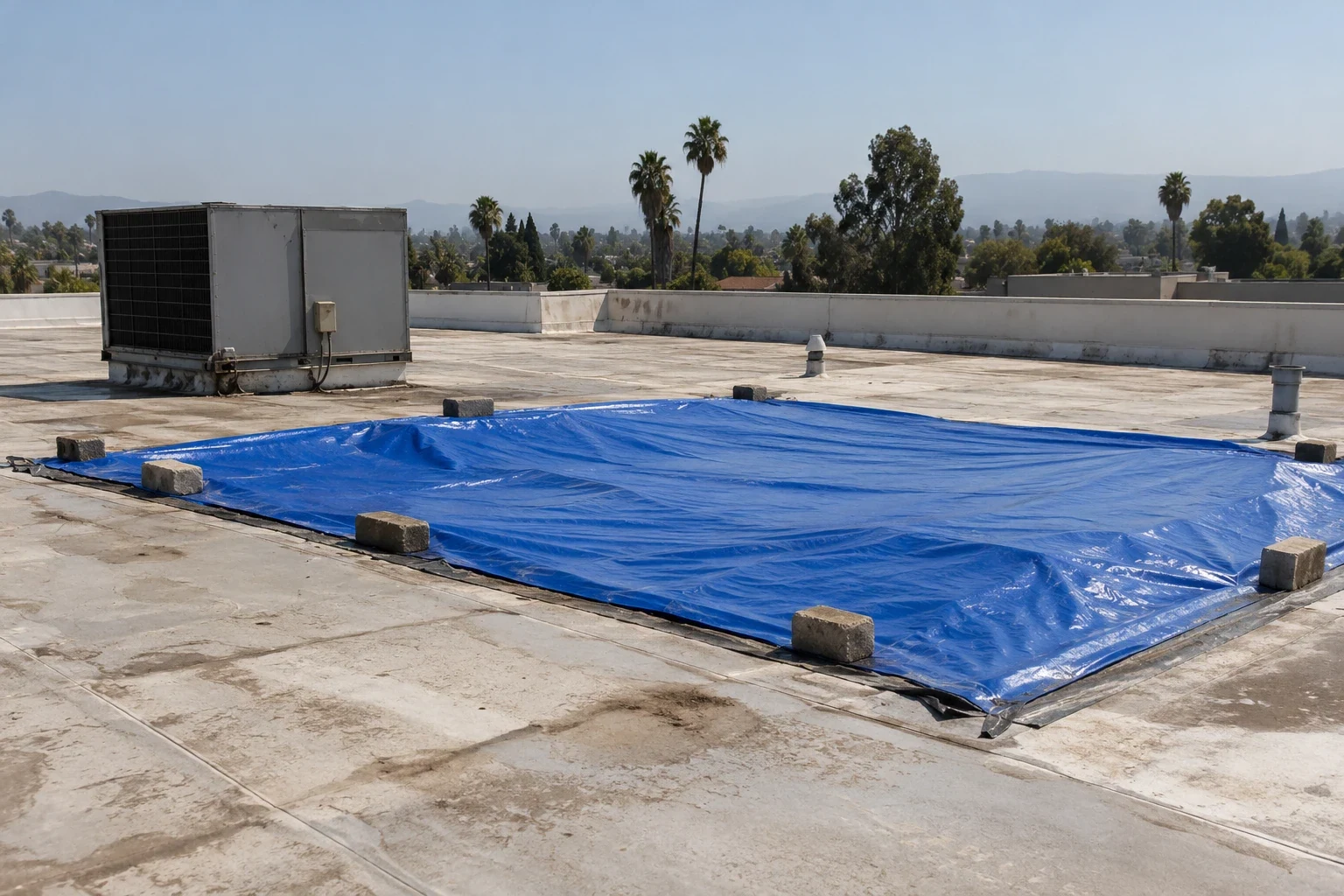
Emergency roof repair is the short-term work: tarping, sealing vent holes cut by fire crews and keeping rain out. It is temporary by design, with a person who checks it and a date for the permanent fix.

A building on Brand Boulevard and a property off San Fernando Road have very different access and neighbor issues. We plan around the actual address, and we do not restart rooftop equipment unless the owner and the mechanical contractor say it is safe.

We ask for one person on the owner's side who makes access calls. When the engineer clears or restricts an area, that person tells us before anyone opens the roof.
Fire Damage Commercial Roof Repair in Glendale

What we inspect and what others inspect

On the roof we map the damage we can reach: burned or blistered membrane, warped flashing, damaged curbs and equipment, and openings made by fire crews. Each finding gets a dated photo and a spot on a roof plan. Areas we could not reach are marked as not inspected.

A commercial roof inspection covers the roofing system. Structural members, possible asbestos in old roofing layers, and damaged mechanical or electrical equipment belong to other specialists. We list those so nobody forgets them.

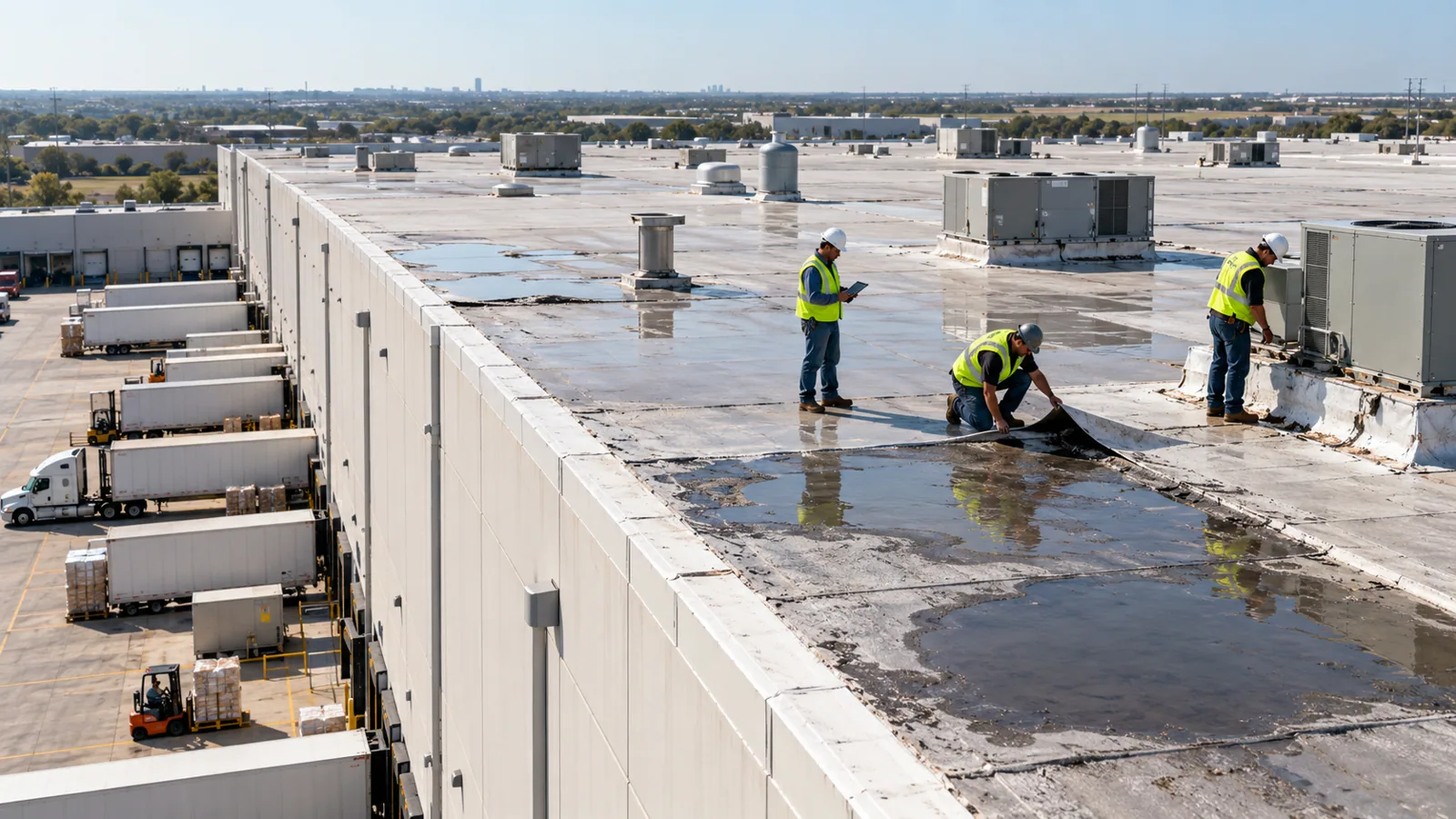
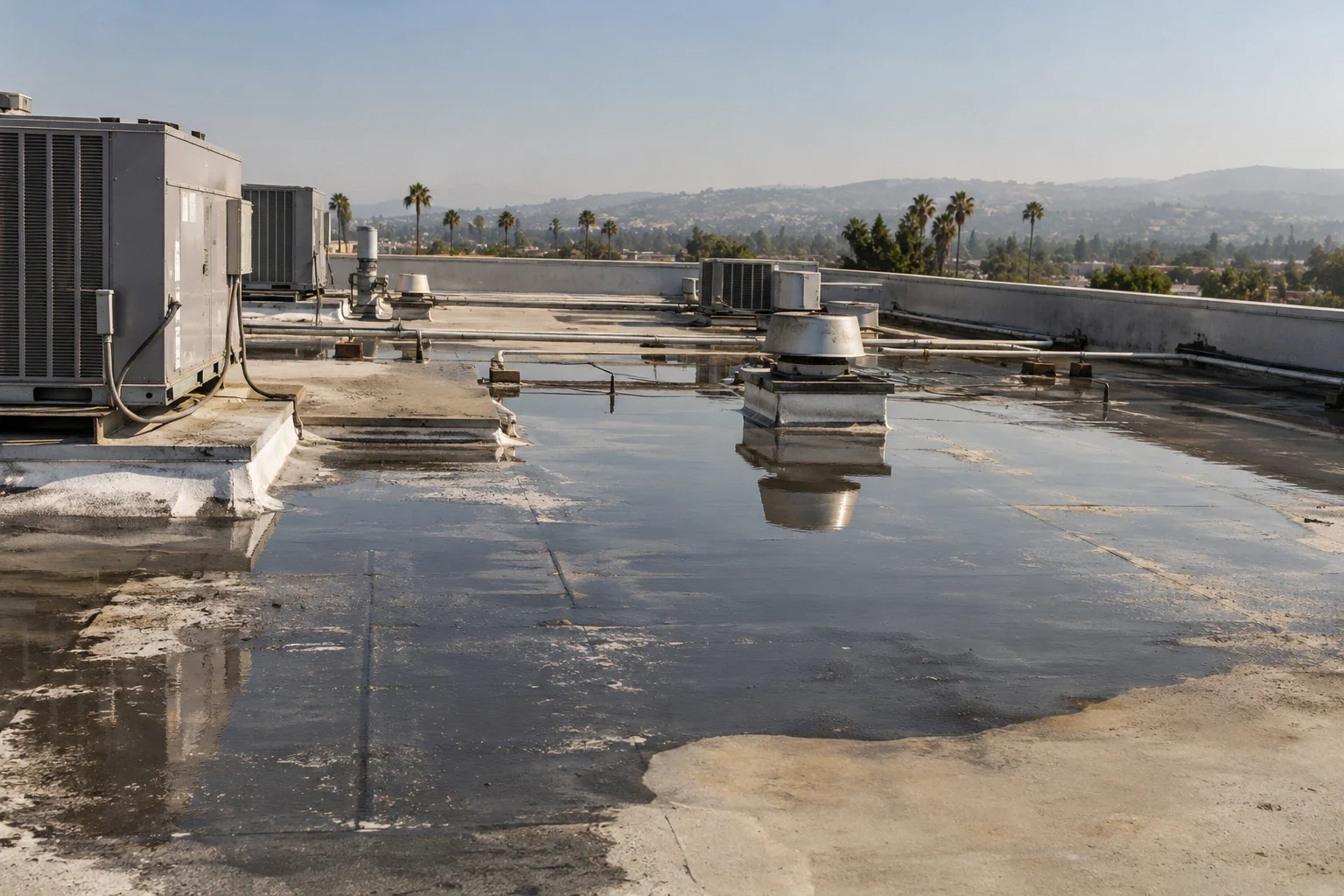
A lot of water may have gone onto the roof during the fire, and more comes with the next rain. Wet insulation is common under a membrane that looks fine. Infrared scans point to wet areas; core cuts confirm them. One core describes that spot, not the whole roof.

If the insurer or a fire investigator needs evidence preserved, we agree on that before removing anything. Our report describes the roof and stays out of guessing at the fire's cause or what the policy covers.

Engineering reports often arrive after our first visit. When one changes the roof scope, we revise the plan and note which report drove the change.

Fire photos can be sensitive. We agree up front on who receives our reports, usually the owner, property manager, adjuster and engineer.

Tear-off limits and the rebuild price

The estimate shows exactly which roof areas and layers come off: membrane, cover board, insulation and any deck sections. If testing finds asbestos in older layers, its removal follows those rules and is priced separately.

A commercial roof replacement only works on a sound base. Once the engineer has weighed in, we list the deck repairs, insulation and waterproofing needed. A new membrane over a damaged deck just hides the problem.

The price also covers lift or crane time, temporary protection, haul-off and protection for open tenants next door. Disconnecting and resetting rooftop units can change the schedule and cost, so those items sit next to the square footage.

Fire jobs almost always uncover hidden damage. We photograph and measure it and send a written change for approval before the tear-off area grows. Any allowance says what it is based on.

Near the Glendale Galleria, foot traffic, delivery routes and shared walls affect how a crew gets material up and debris down. We confirm those arrangements rather than assuming we can use a neighbor's loading area.
Fire Damage Commercial Roof Repair in Glendale

Deck repairs, rooftop equipment and the other trades

Framing and deck repairs need to be finished and checked before roofing starts. We agree with the general contractor or owner on who repairs each area and who inspects it. Material on site does not mean the base is ready.

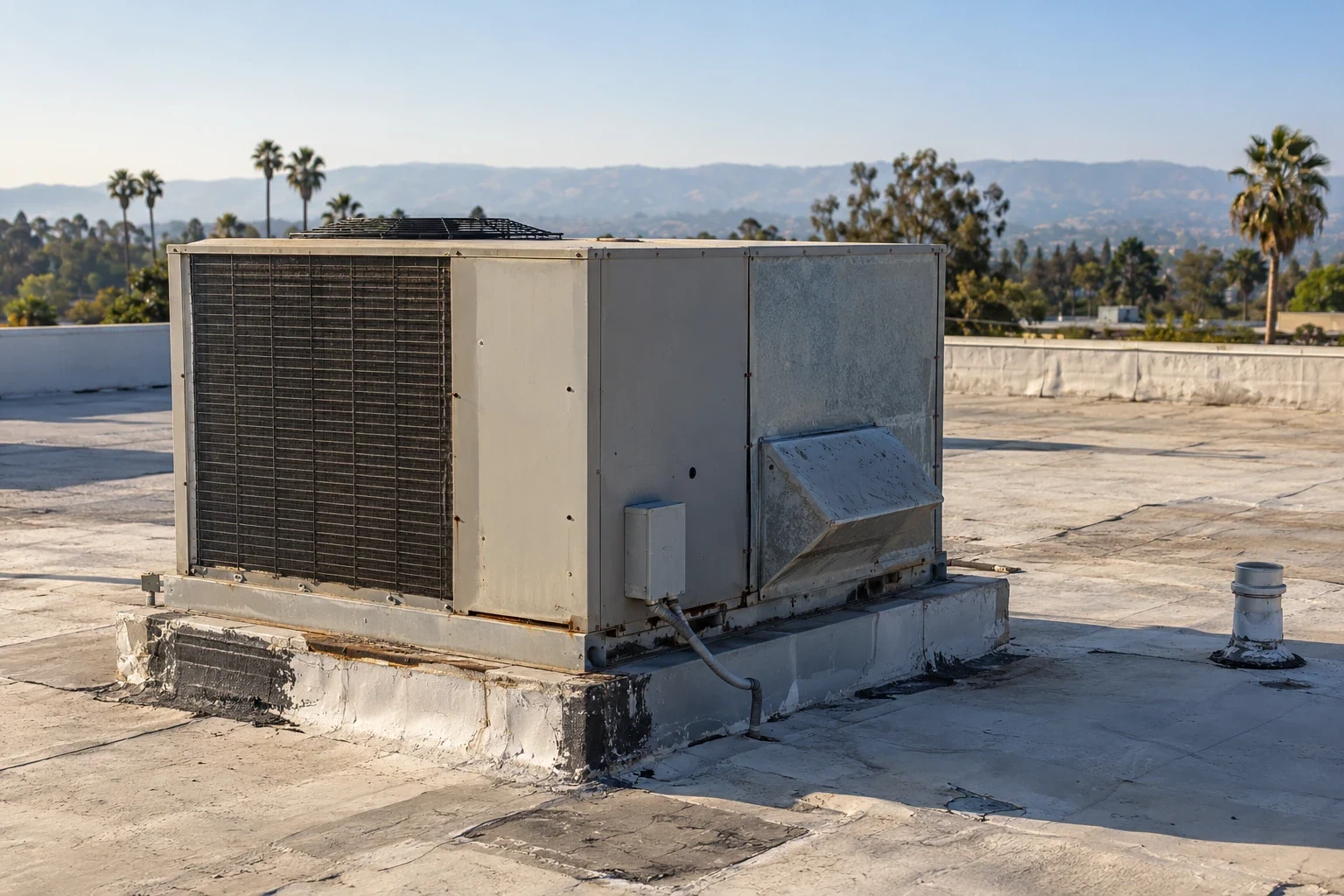
Rooftop equipment curbs and supports often need rebuilding after a fire. HVAC and electrical contractors handle the units; we handle the curbs and flashing around them. A finished roof does not mean the equipment is safe to run.

Permit requirements depend on how much roof and structure is being rebuilt. The City of Glendale publishes the building codes it uses and its local amendments, and we review the scope with the design team and building department first.

We open only as much roof as the crew can close in the same day. If a deck detail changes midway, the schedule can shift, and temporary protection stays in place if the full rebuild cannot be approved yet.

Material orders can wait on a pending engineering report or measurements we cannot take yet. We tell the owner which decisions still block the order, so the completion date is realistic.

Closeout records and what the roof sign-off covers

Before new insulation covers the deck, we photograph the repaired base. The closeout file lists materials installed, approved change orders, inspections and where each detail sits. Work outside our scope is listed separately.

Insurance claim support means clear roof findings and a line-item scope the adjuster can review. Policy terms and payment are between the owner and the insurer, and our paperwork does not promise an outcome.

A roof condition report notes anything still waiting on testing. A small membrane puncture repair suits an isolated hole away from the fire, not a roof area that took real heat.

For buildings in the San Fernando Road corridor, we keep the access notes and corrections for that building. A later visit gets its own date; the original report stays as it was.

Moving tenants back in and restarting equipment can each need separate approval. We list those before closing our file, so the owner knows what the roof sign-off covers.

Rebuilt flashing at walls and curbs needs sound backing. We record how each wall was prepared and finished as part of the fire scope.

Fire damage on a roof comes from flame, radiant heat, smoke residue, hose water and vent holes cut by crews. We set up access with the owner and recovery team before going up. We record what is damaged and where, but we do not guess at hidden deck damage from the surface. A few test openings are often needed before we can give a firm repair quantity, and temporary protection stays in place, checked after every storm, while that happens. Photos before tear-off and after close-in give the owner a clear record of the roofing work.

Plan the fire damage roof rebuild

Once the site is cleared for access, we can inspect the roof, explain what we find and walk your Glendale property team through the repair plan and estimate in plain terms.

Related Roofing Pages

Other services, systems and conditions Glendale owners often review alongside this one.
Emergency roof assessment
Emergency Commercial Roof Repair

Scope, conditions and planning details for Glendale commercial buildings.

Commercial roof inspection
Commercial Roof Inspection

Scope, conditions and planning details for Glendale commercial buildings.

Commercial roof replacement
Commercial Roof Replacements

Scope, conditions and planning details for Glendale commercial buildings.

Equipment curb and support coordination
Rooftop Equipment Curbs and Supports

Scope, conditions and planning details for Glendale commercial buildings.

Questions About Fire Damage Commercial Roof Repair

Not always. Someone with authority over the site has to clear access, and if the fire reached the deck or framing, an engineer should confirm the roof is safe. Emergency tarping can sometimes happen sooner.

No. It stops water getting in, but damaged framing, rooftop equipment, wiring and interiors each need their own repair and sign-off.

We size the obvious areas with test cuts and moisture scans, then carry an explained allowance for hidden damage. Anything beyond it is measured, photographed and approved in writing first.

No. Reoccupancy and equipment restart may need approval from the city, the engineer or the mechanical contractor. Our closeout lists what still needs sign-off.

ServicesRoof SystemsProperty TypesIndustriesService AreasDamage RepairCapabilitiesManufacturersAboutRequest a Roof Assessment555-555-5555
Call555-555-5555