Get Answers Fast

Send the Building Details

Request an
Assessment

Call Our Team

555-555-5555
Request an
Assessment
555-555-5555

Commercial Roof Flashing Repair

A leaking flashing on an office roof often needs more than a fresh bead of caulk. The owner sees one curb or wall corner; the roofer sees the old patches, the tight space under a rooftop unit and the wet material behind it. Commercial Roofers Glendale explains the whole repair before you approve it.

A retail building may leak at a parapet wall or a pipe instead. Tenant equipment, years of patching and extra roof layers change how each detail is built. We look at the actual flashing rather than treating every leak as the same quick fix.

You get a marked location, a repair that will hold, and a list of anything else needed to finish it, such as moving a unit or replacing rotted wood. If an equipment question is still open, we say who owns it.

Where the flashing meets the roof

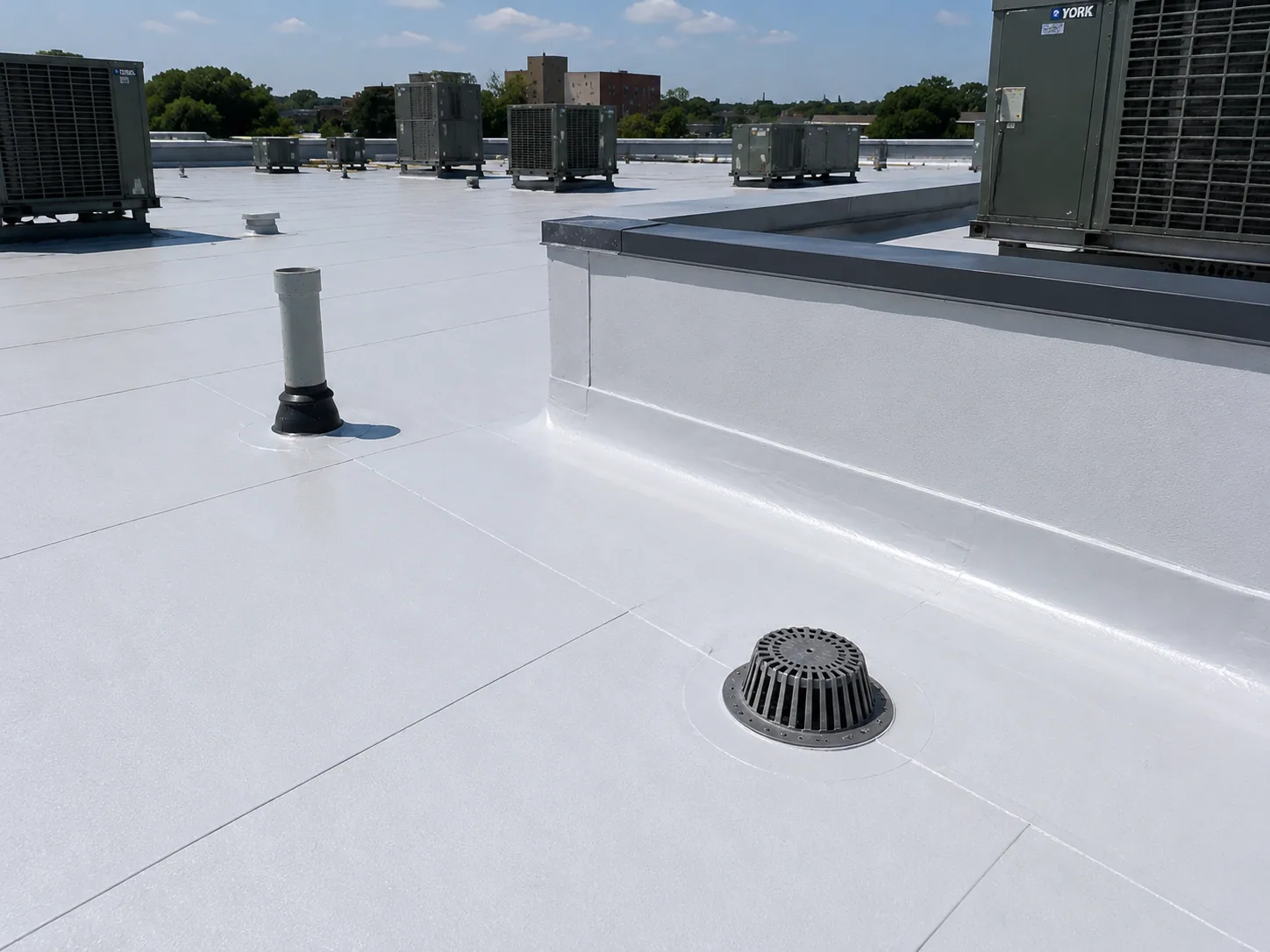
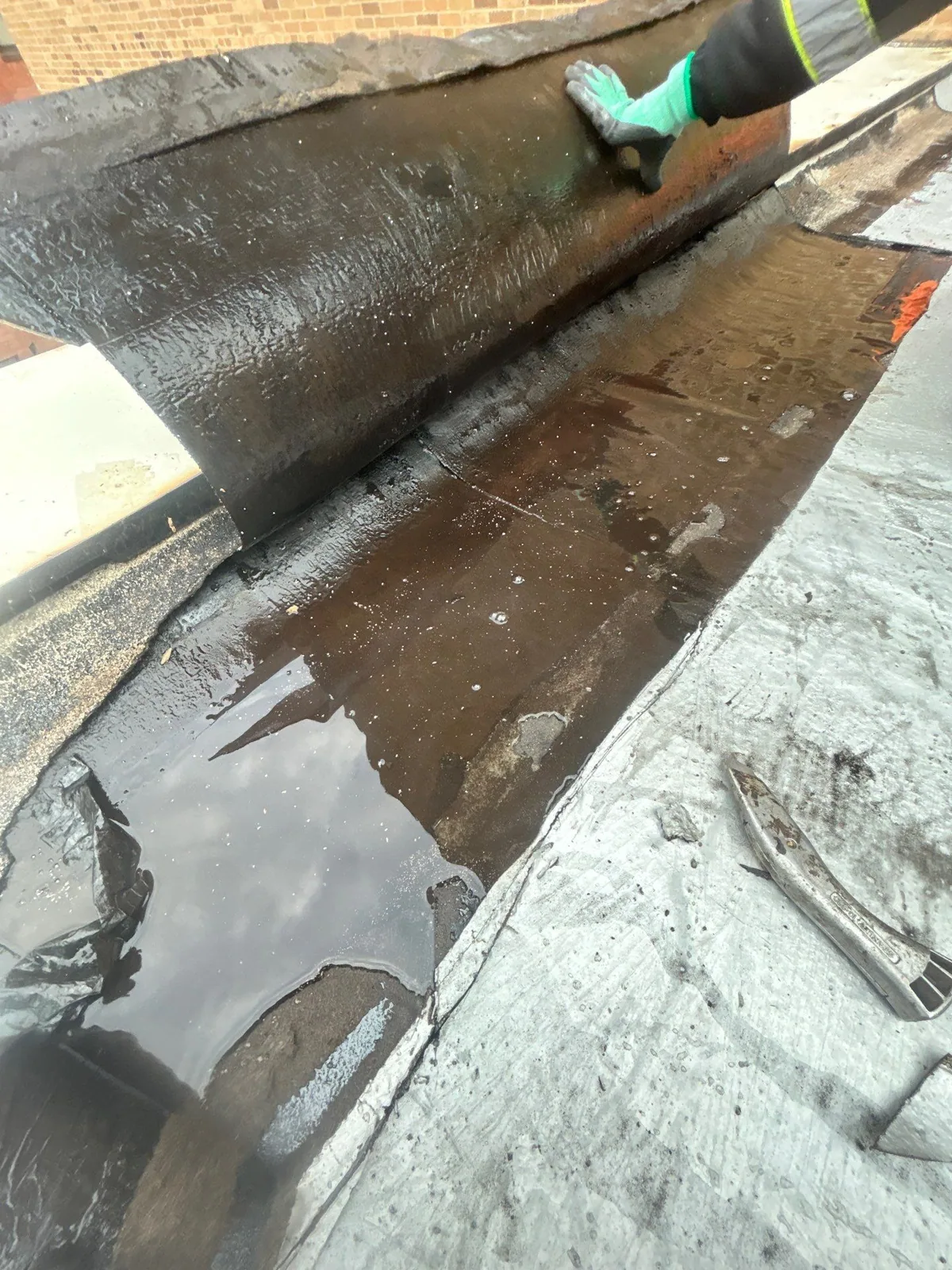
Flashing is where the flat roof turns up a wall, a curb or a pipe. We note the membrane type, what it is attached to, and how it is terminated at the top. Old coatings and patches can hide the original detail and change the prep work.

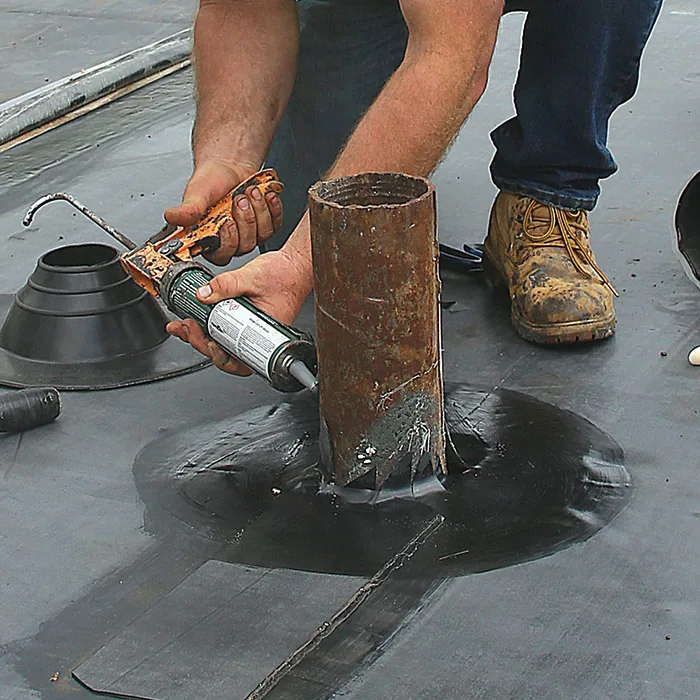
Penetration and skylight flashing varies by detail. A pipe boot, a wall base and an HVAC curb are each built differently, so the estimate names which ones are included instead of using a vague flashing allowance.

An office near Brand Boulevard and a shop off San Fernando Road can have very different roofs. The location helps us plan the visit; it does not tell us how the roof was built, and we do not move a tenant's unit without its owner's approval.

We measure the flashing height and the room to work. An extra roof layer or a short curb can leave too little membrane height to seal properly, and that has to be solved before materials are ordered.
Commercial Roof Flashing Repair in Glendale

Finding the leak and sizing the repair

We compare where water shows up inside with the flashing details above it and when the leaks happen. Water can run along the deck or insulation and drip well away from the opening, so a bad corner nearby is a suspect, not automatically the cause.

A commercial roof leak repair visit traces the leak and records what we confirmed. Sometimes the water is coming through a unit's housing or a wall, not the roof, and that goes to the right trade.

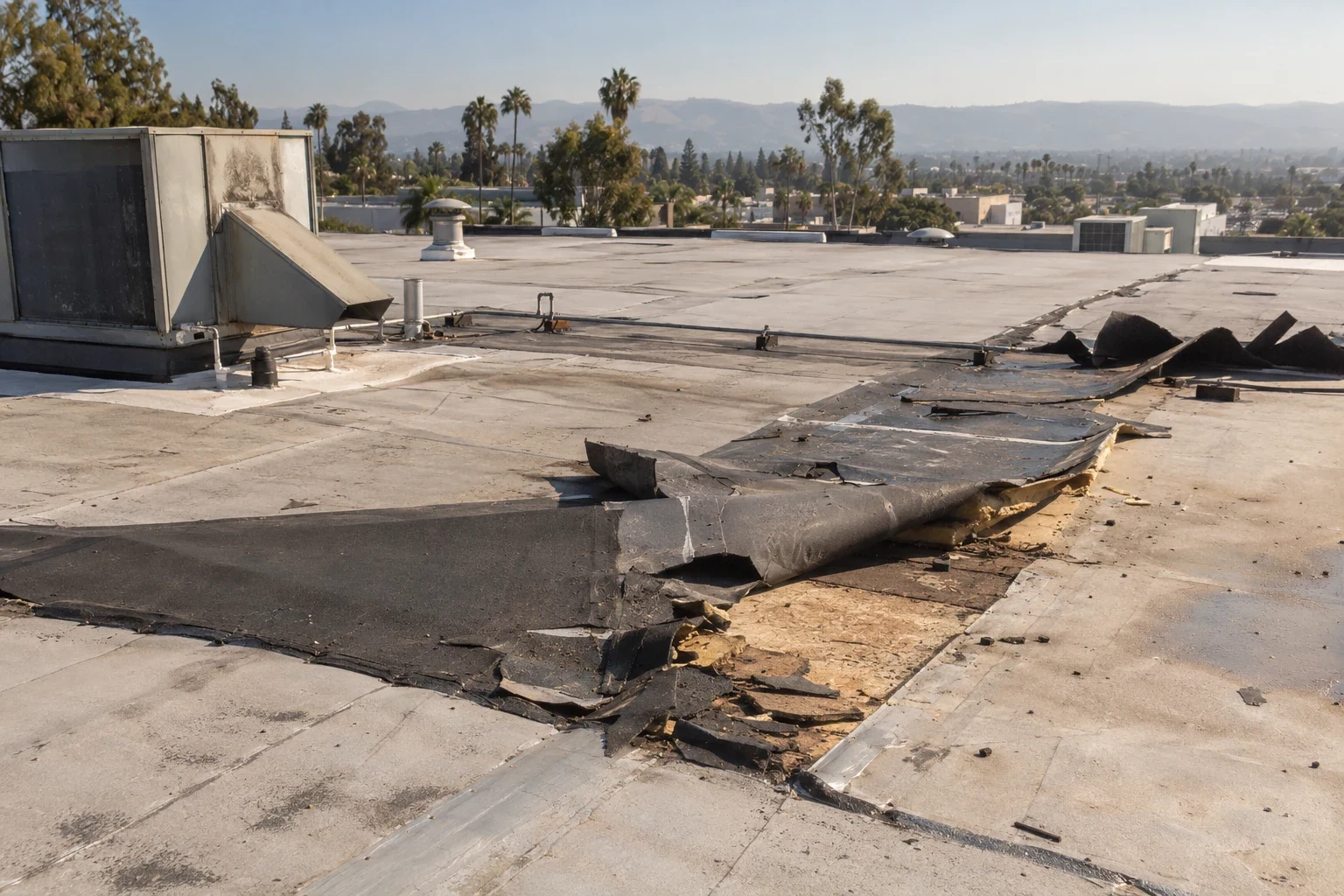
When we need to open the roof to see wet insulation or rotted blocking, we agree on access first and close the opening the same day. One test cut tells you about that spot; a bigger repair needs more evidence.

Infrared scans can help find wet areas when conditions are right, but they need core cuts to confirm. A scan alone does not prove where the water gets in or how much roof has to come off.

The new flashing has to tie into sound membrane. If the surrounding roof is brittle or covered in incompatible patches, we explain the extra prep, so the owner understands why a small-looking leak needs a larger repair.

The work behind the finished flashing

A full price covers tearing out the old flashing, prepping the surface, compatible new material and any wood blocking or backing it needs. Access, haul-off and protection for the space below belong in the price too.

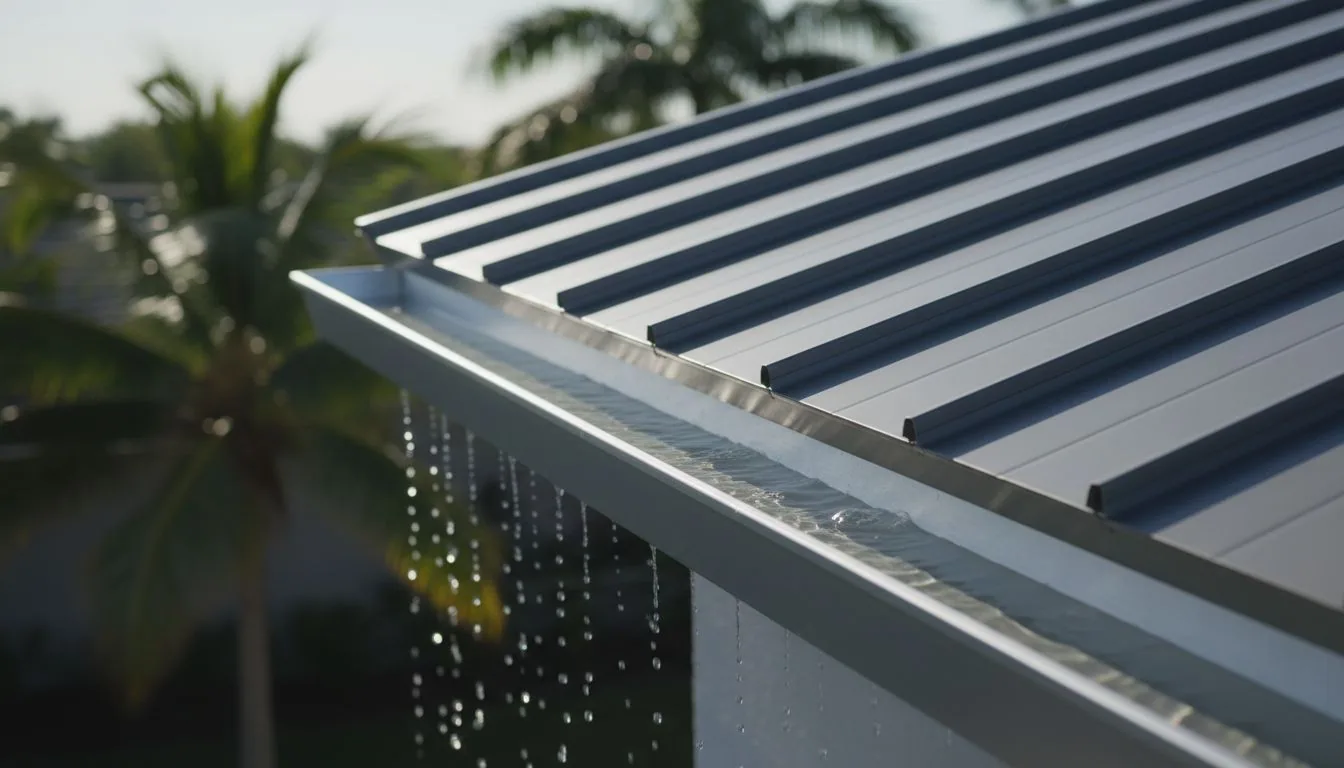
Edge metal and coping often sit on top of the wall flashing. New metal on top does not fix a failed membrane or rotted wood underneath, so we spell out which layers are being rebuilt.

Sealant has a place in many flashing details. It is not a substitute for membrane that has pulled away or a wall base that has rotted, and the repair has to follow the manufacturer's detail for that roof.

If we might find more damage once the old flashing is off, the estimate includes a unit price and an approval step. We photograph and measure anything new before the scope grows.

Near the Glendale Galleria, deliveries and shopper traffic affect where we stage materials. We use the access the building manager agrees to, not a neighbor's lot.
Commercial Roof Flashing Repair in Glendale

Rooftop units and scheduling

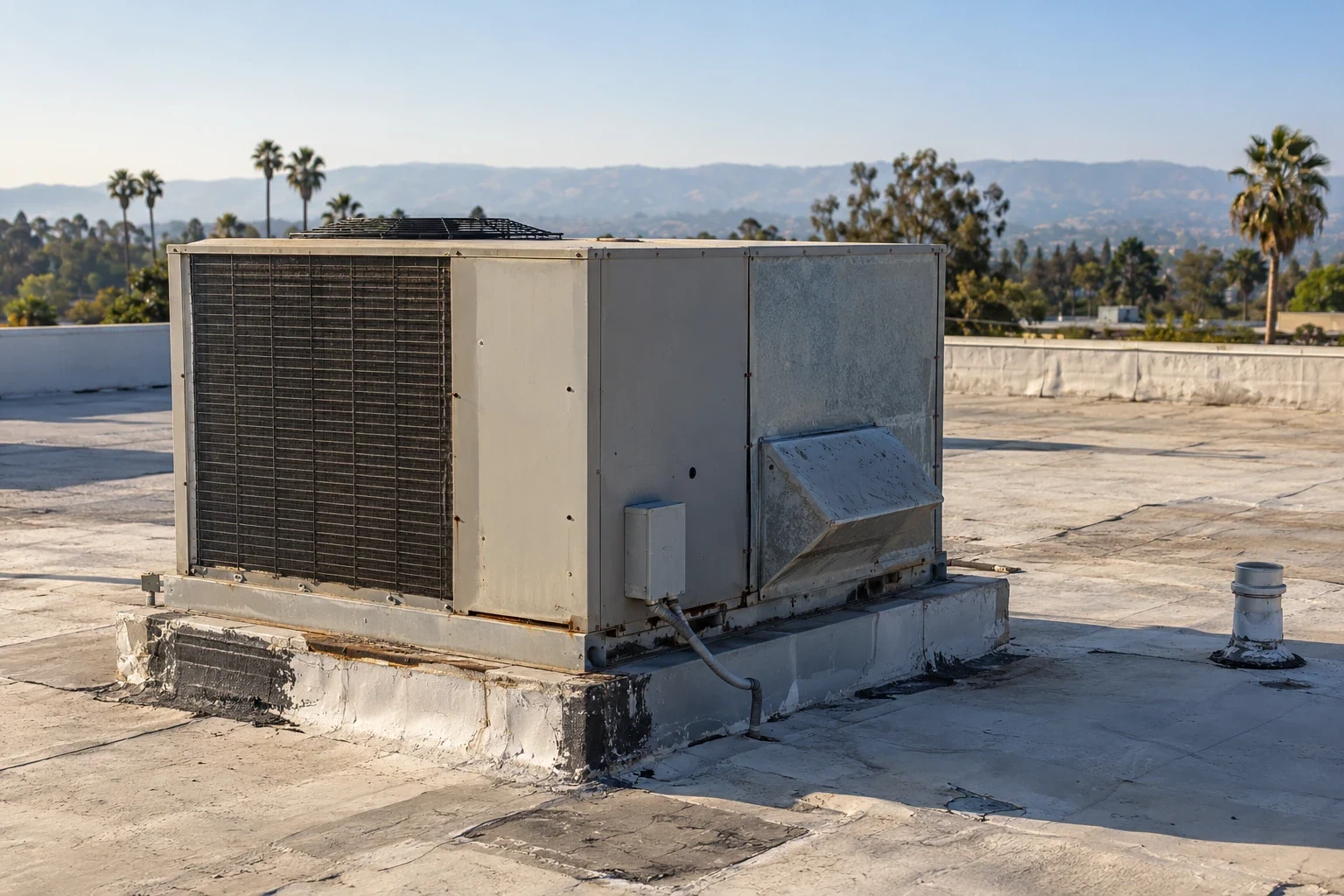
Rooftop equipment curbs and supports often need attention first. A unit may have to be lifted or reset so we can flash the top of the curb properly, and we agree who does that before scheduling.

The HVAC and electrical contractors and the facility manager control shutting units down and restarting them. Permission to get on the roof is not permission to turn off equipment, so the schedule names when each trade is needed.

We ask what is under the work area. Stored inventory or an occupied office may call for extra protection or a shorter work window, and that goes into the proposal rather than rushing the repair.

The weather and the surface have to suit the material we are installing. If conditions change before the flashing is finished, we leave the area sealed and come back.

Permits, design and warranty

We check which building department has jurisdiction for the address. The City of Glendale publishes the building code edition it uses, tied to when a permit is applied for, along with its local amendments. Whether a permit is needed depends on the size of the job.

If the repair changes equipment supports or other engineered parts of the building, the engineer or designer stays involved. We can flag a concern, but we do not approve structural changes.

Before deciding, look at the roof warranty and the manufacturer's instructions. Notice and repair rules can affect who should do the work, and having a well-known membrane brand does not mean every detail is covered.

Closeout records and later leaks

We photograph the prep work before the new flashing covers it. The record shows where the repair is, what was installed and any approved changes, so the owner sees what the money fixed.

Seam failure repair next to the flashing is often a separate item. We note whether it was included, and nearby problems left out get their own recommendation.

Our roof condition reports note what we could not inspect and what other trades still owe. For buildings in the San Fernando Road corridor, the report uses that building's own roof plan.

If water shows up again later, we date the new report and note any equipment changes. A leak in the same room does not always come from the same spot outside.

Any later changes to the roof are logged with the date and who made them.

A nearby membrane puncture repair needs its own patch and prep. If it is part of the job, we mark it separately so each quantity traces back to the damage we found.

Most flashing leaks happen at a transition, so we check the membrane, the curb or wall, and the connection between them together. We look at laps, the top termination, movement and the surface the new flashing will bond to. If equipment is being replaced, its support and final height are settled first. Caulk can be part of a proper detail but does not replace rebuilding a failed one. The area stays protected while it is open, and we check the finished flashing before other trades go back to work. Before-and-after photos show what was repaired and anything nearby left for later.
Commercial Roof Flashing Repair in Glendale

Get the flashing fixed properly

Schedule a roof visit in Glendale. We will look at the leaking detail, explain what it takes to fix it and give you a clear price before any work starts.

Related Roofing Pages

Other services, systems and conditions Glendale owners often review alongside this one.
Skylight and penetration flashing work
Skylight and Penetration Flashing

Scope, conditions and planning details for Glendale commercial buildings.

Commercial roof leak investigation
Commercial Roof Leak Repair

Scope, conditions and planning details for Glendale commercial buildings.

Edge metal and coping work
Roof Edge Metal, Coping and Gutters

Scope, conditions and planning details for Glendale commercial buildings.

Rooftop equipment curb and support coordination
Rooftop Equipment Curbs and Supports

Scope, conditions and planning details for Glendale commercial buildings.

Questions About Commercial Roof Flashing Repair

Sometimes, if the membrane and backing are sound and only the sealant has aged. If the flashing has pulled loose or the wood behind it is wet, it needs to be rebuilt.

We need enough room to flash the top of the curb properly. If the unit sits too low or too tight, the HVAC contractor may have to lift or reset it.

We include a unit price for items like rotted blocking or wet insulation, with photos and your approval before we replace more than planned.

Keep the before-and-after photos, the list of materials installed, any approved changes and notes on work left for other trades.

ServicesRoof SystemsProperty TypesIndustriesService AreasDamage RepairCapabilitiesManufacturersAboutRequest a Roof Assessment555-555-5555
Call555-555-5555