Get Answers Fast

Send the Building Details

Request an
Assessment

Call Our Team

555-555-5555
Request an
Assessment
555-555-5555

Commercial Roof Seam Repair

An open seam on an office roof is more than a length of tape to replace. Before pricing it, we need to know whether the membrane on both sides is still good enough to weld or bond to, and how much cleaning and prep that will take. Commercial Roofers Glendale checks the seam and explains the full job behind the number.

Retail roofs often have old patches and equipment changes right where seams fail. Those can change what materials are being joined and how much room there is to work. We confirm what is actually there before choosing a method.

You get a marked location and a clear next step. A simple seam repair is priced separately from any testing for hidden water, so one open lap does not turn into a verdict on the whole roof.

Identifying the seam and the roof system

We note the roof system and how its seams are joined: heat-welded TPO or PVC, or taped and glued EPDM. Each needs different prep and repair materials, even when two roofs look alike from the ground.

A commercial roof inspection marks open seams, old patches and nearby details. Dated photos tied to units and walls let the next inspector find the exact same spot.

Roofs on Brand Boulevard and along the San Fernando Road corridor vary widely. The building itself tells us the roof type, access and tenant limits; the neighborhood tells us nothing about the seams.

If we are not sure of the membrane, product records help. Old coatings and repairs affect what the new material will bond to, and we flag any doubt before ordering patch material.

Seams are checked with a proper probe, not by pulling at them. Tugging on a lap can damage it without telling you much. If we need to open a seam to look inside, we say why, who does it and how it will be resealed, and we keep that separate from routine maintenance.
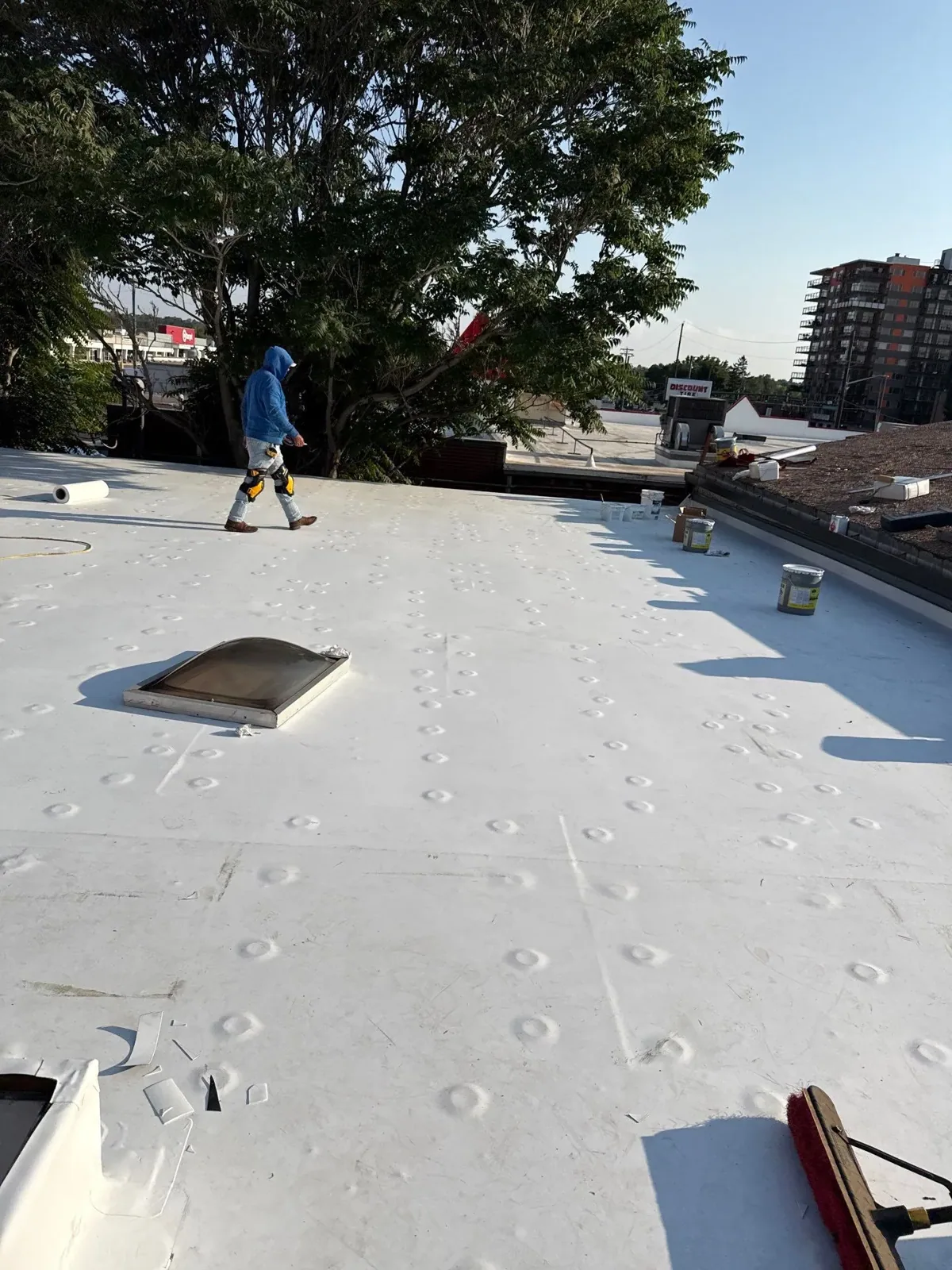
Commercial Roof Seam Repair in Glendale

Tracing the leak and checking for wet insulation

We compare the open seam with where and when water shows up inside. Water can travel under the membrane, and a unit or wall may also be leaking. An open seam nearby is a likely cause, not a proven one.

Commercial roof leak repair fixes what the inspection supports. If another leak path is still open, we name it and who should check it, separate from the seam repair you are approving.

On the right roof and on the right night, an infrared moisture survey can show where wet insulation may be. The readings still need core cuts to confirm them; temperature differences alone do not measure wet area or show where water got in.

Each core tells you about one spot. We protect and reseal every opening the same day, and any larger wet area is sized with enough cores to back it up.

The repair has to tie into sound membrane. If the sheet around the seam is brittle or shrinking, we explain the extra prep or the bigger option, so the owner sees the reason instead of just a larger allowance.

What the seam repair price includes

Seam length is a starting point, but prep drives a lot of the cost: cleaning, removing failed old patches and sometimes replacing a strip of membrane. Access and the right detail for the system go into the price too.

On TPO roofing, older or dirty membrane may not weld well without careful cleaning or a primer, and some aged sheets will not take a weld at all. The material name alone does not guarantee a good repair.

Where a seam runs into a wall or curb, flashing failure repair is a separate item. That corner is built differently from a flat field seam and is priced on its own.

The estimate explains how extra findings are handled: location, fix and price, approved before we go further. Haul-off and protection for occupied space are included where they apply.

If a coating or larger repair is proposed, the roof has to qualify first. A coating will not hold open seams together. We compare every option against the same findings.
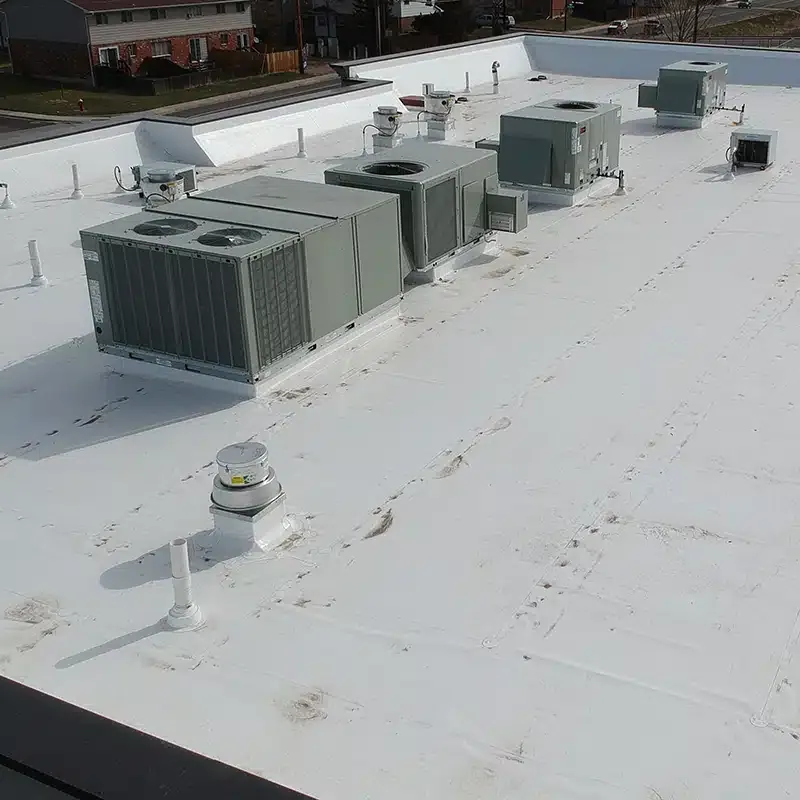
Commercial Roof Seam Repair in Glendale

Tenants, equipment and weather

Near the Glendale Galleria, we confirm the building's delivery routes and shopper traffic before setting up. We use only the access the owner approves.

Work over occupied space means knowing what is below. Sensitive stock, offices or equipment may need extra protection, or a different time of day, before we open a seam.

The HVAC and electrical contractors and the facility manager decide when units are shut down. Our crew does not disconnect equipment or block air intakes to reach a seam.

Welding and adhesives need a dry, clean surface and the right temperature. The scheduled date is a target until conditions are right, and if we cannot finish, the seam is temporarily sealed.

Seam repairs rarely need a permit, but larger work may. The City of Glendale publishes its code edition and local amendments, and we check what applies to the scope.

Closeout records and the next inspection

We keep photos of the prepped and finished seams at marked locations, plus the products used and any approved changes. If we probe the new welds, we record where. That check covers those seams, not every seam on the roof.

A roof condition report separates finished work from open questions. Buildings in the San Fernando Road corridor keep their own roof plans and references.

Check the warranty terms. Many require notice or approved contractors for repairs, and one good repair does not mean other defects are covered. Keep the warranty with the repair record.

If water shows up again, the new report gets a date and any equipment changes since the repair. A leak in the same room does not always mean the same seam failed.

Before closing the file, we assign any maintenance or equipment items still open, so the next manager can see what was fixed and what still needs approval.

A puncture next to the seam gets its own patch if it is included. We check the membrane around it and record both repairs so the cost is easy to follow.

A seam repair has to reach sound membrane on both sides of the opening. We confirm whether the roof is thermoplastic or rubber, look at the bond line and check for wet insulation underneath. The method depends on the system, and the wrong patch material just creates a new weak spot. Prep, matching materials and a final check are all part of the job. We note whether foot traffic, old repairs or ponding water played a part, and label anything unconfirmed as a question. At closeout we mark the repaired length and keep photos so the same section can be compared after the next winter rain.

Get your roof seams checked and repaired

Schedule a roof visit in Glendale. We will check the seams, explain the prep and repair and give you a clear price before you approve any work.

Related Roofing Pages

Other services, systems and conditions Glendale owners often review alongside this one.
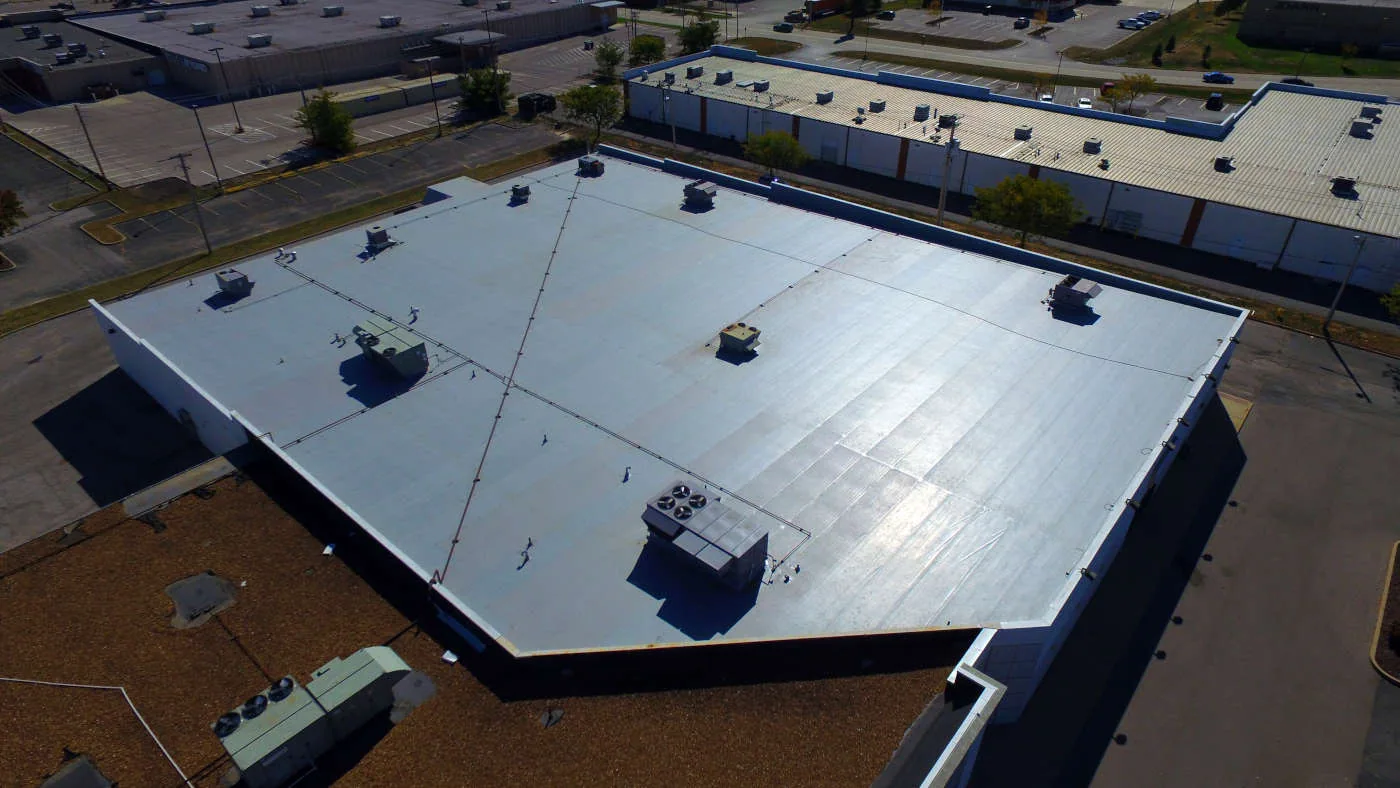
Commercial roof inspection
Commercial Roof Inspection

Scope, conditions and planning details for Glendale commercial buildings.

Commercial roof leak investigation
Commercial Roof Leak Repair

Scope, conditions and planning details for Glendale commercial buildings.

Infrared moisture investigation
Infrared Roof Moisture Survey

Scope, conditions and planning details for Glendale commercial buildings.

TPO roofing
TPO Commercial Roofing

Scope, conditions and planning details for Glendale commercial buildings.

Questions About Commercial Roof Seam Repair

Usually, yes. If the membrane on both sides is sound, the seam can be cleaned and rewelded or stripped in with matching material.

No. It can point to possible wet insulation, but core cuts confirm it, and the leak source still has to be traced on the roof.

Old patches, coatings or brittle membrane may have to be removed or replaced before a new weld or tape will hold.

Photos of the repair, the products used, approved changes, what we could not inspect and any work still open.

ServicesRoof SystemsProperty TypesIndustriesService AreasDamage RepairCapabilitiesManufacturersAboutRequest a Roof Assessment555-555-5555
Call555-555-5555